Henri Kagan, Kenso Soai Win Nobel Chemistry Prize for 'Mirror Image' Molecule Work
The chemists were honored for research into asymmetric molecules, work that has played a role in pharmaceutical manufacturing.

The chemists were honored for research into asymmetric molecules, work that has played a role in pharmaceutical manufacturing.
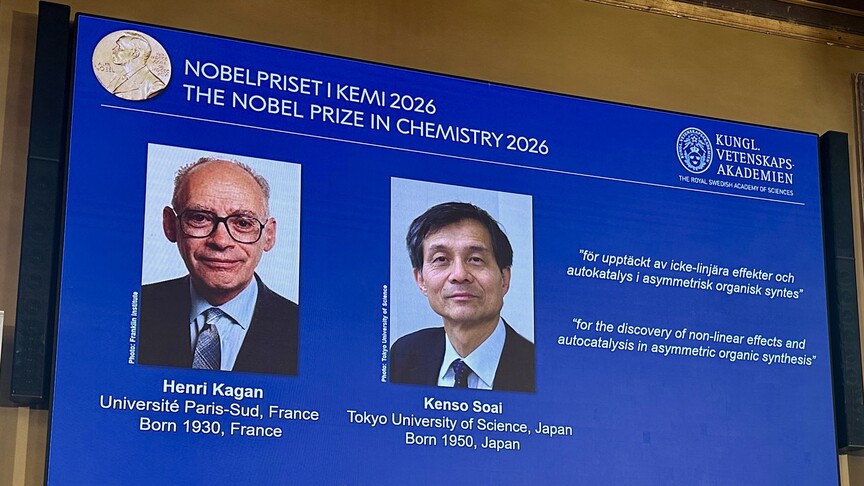
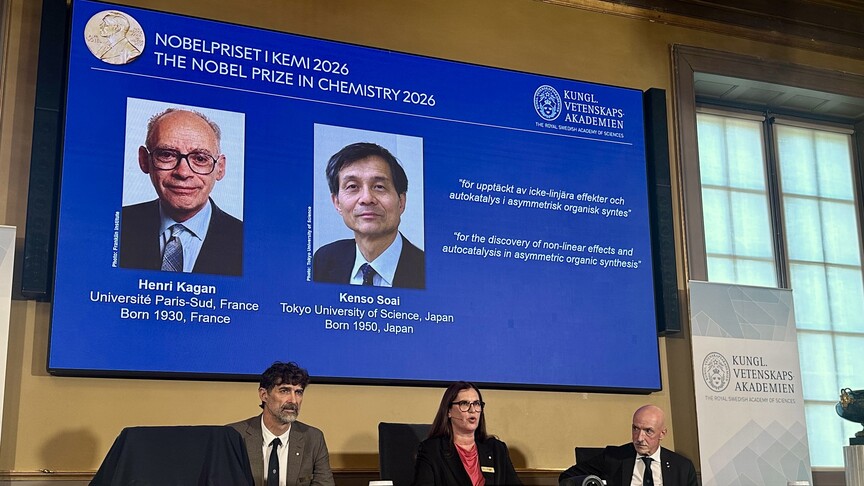
Henri Kagan of France and Kenso Soai of Japan were awarded the 2026 Nobel Prize in Chemistry for discoveries in asymmetric synthesis that reshaped how chemists build molecules with a specific structure.

The pair were honored for their discovery of non-linear effects and autocatalysis in asymmetric organic synthesis.
The scientists were honored for discoveries explaining how chemical reactions can favor one molecular mirror image over another.

French and Japanese scientists share the prize for work explaining why biological molecules favor one mirror-image form over another.

France's Henri Kagan and Japan's Kenso Soai share the honor for their work on catalysis techniques.

The Chemistry Nobel was awarded on Wednesday to the two researchers for their work on non-linear effects and autocatalysis in asymmetric organic synthesis.
The Royal Swedish Academy of Sciences recognised their discovery of non-linear effects and autocatalysis in asymmetric organic synthesis.

A report from ESPN sets out the main available details, with claims kept attributed to their sources.