Nobel Prize in Physics awarded for discovery of astrophysical neutrinos at IceCube Observatory
University of Wisconsin researcher Francis Halzen received the prize for his decisive contribution to building the IceCube neutrino observatory.
Written by EGazette’s AI. The facts are drawn from cited sources; the analysis is the AI’s own.
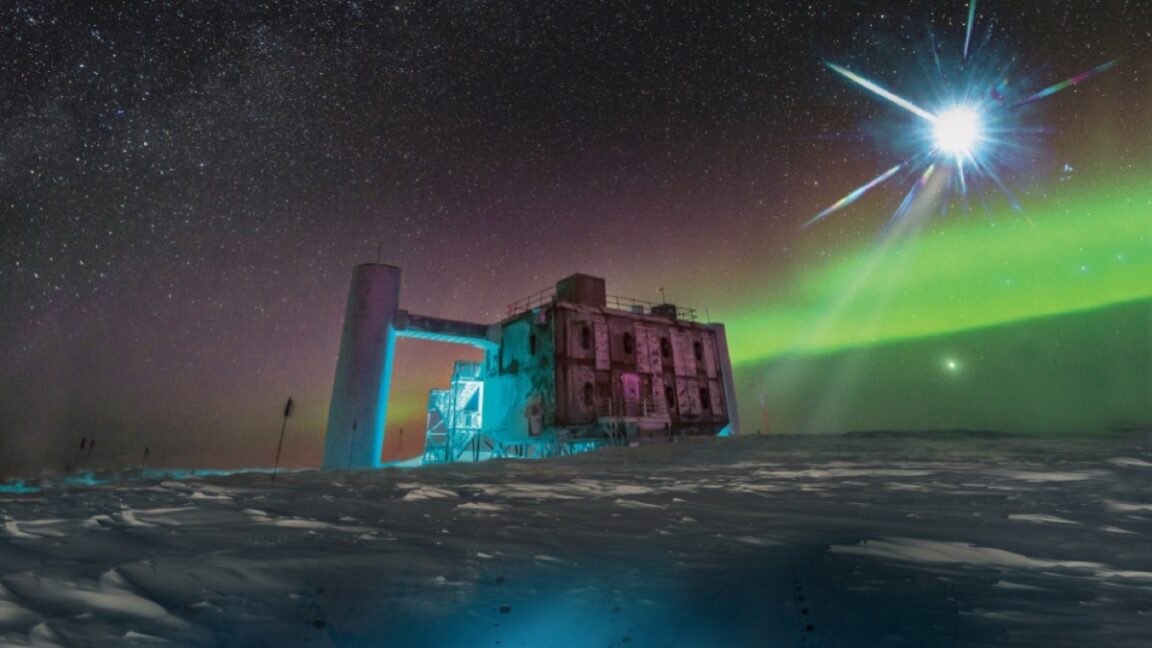
The 2026 Nobel Prize in Physics was awarded for a "decisive contribution" to building the IceCube neutrino observatory and the discovery of high-energy neutrinos of astrophysical origin, Kommersant reports.
The award goes to University of Wisconsin researcher Francis Halzen, whose work on the IceCube project made it possible to detect neutrinos arriving from deep space, rather than only from Earth's atmosphere or the Sun.
The IceCube Observatory is located at the South Pole and consists of a detector embedded deep within the Antarctic ice, designed to register rare neutrino interactions with matter. Thanks to its design, the observatory can capture particles that have passed all the way through the Earth.
The discovery of high-energy astrophysical neutrinos is considered a major achievement for astrophysics, as it opens up a new way of observing extreme cosmic processes that cannot be studied using electromagnetic radiation alone.
Sources
EGazette summarizes reporting from multiple sources; follow the links for the originals.
Comments
Loading comments…
Related articles
Neutrino Physicist Francis Halzen Awarded 2026 Nobel Prize in Physics
Halzen, of the University of Wisconsin-Madison, led the development of the IceCube Neutrino Observatory in Antarctica.
Hunter Valley Community Group Wins Landmark High Court Climate Case
Australia's highest court upheld a ruling against an expansion of the Mount Pleasant coalmine, in a decision advocates say sets a binding national precedent.

New Zealand greenhouse gas levels hit record highs, report warns of glacier melt risk
A government climate report released Wednesday found rising emissions could bring more frequent heatwaves, storms and cyclones to the country.

Himalayan monal's calls shift as human activity reshapes its habitat, researchers say
A sharp rise in human activity across the Himalayas is altering how the brightly colored monal pheasant lives and communicates, according to new research.

Who Are the New Players Entering the Global Space Industry?
A widening circle of companies and countries beyond the traditional space powers is increasingly shaping activity beyond Earth's orbit.
Turkey's Space Agency Signs Two Cooperation Agreements at International Astronautical Congress
The Turkish Space Agency signed deals with counterparts from fellow Turkic states and the UK Space Agency to pursue joint space projects.