Taurid meteor showers set to light up the fall sky with bright fireballs
The Taurid meteor showers, among the longest-running of the year, will stretch from mid-September through mid-December, offering skywatchers a chance to spot vivid shooting stars.
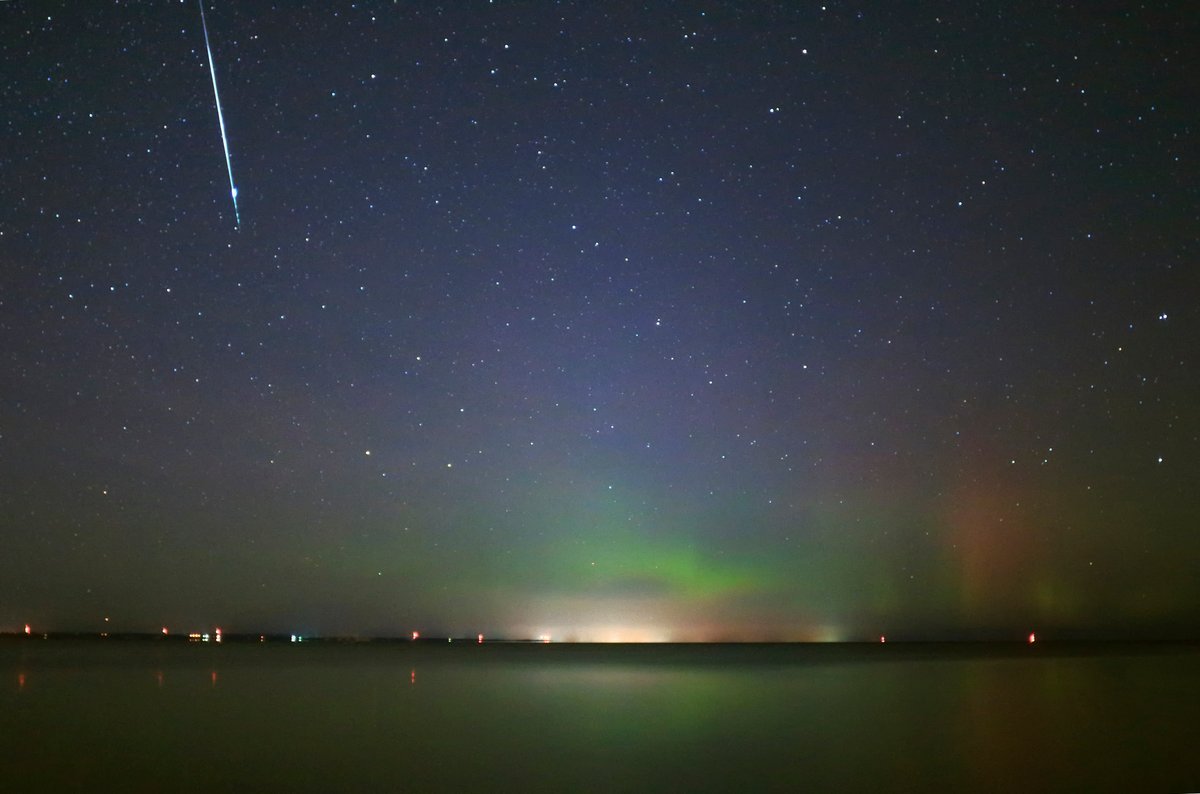
Skywatchers have an extended opportunity to catch bright meteors this fall, as the Taurid meteor showers get underway, according to Scientific American. The Taurids are known for running from mid-September until mid-December, making them among the longest-lasting meteor showers of the year.
Unlike many meteor showers that peak sharply over just a night or two, the Taurids unfold gradually over several months, giving observers a wider window to catch activity rather than a single concentrated peak.
The shower is often noted for producing a higher proportion of bright fireballs relative to some other annual meteor showers, making individual sightings potentially more dramatic even though the overall rate of meteors per hour tends to be modest.
The Taurids are associated with debris left behind by a celestial body traveling through the inner solar system, with Earth passing through the resulting trail of particles as it orbits the sun during these months.
Skywatchers hoping to catch a glimpse are typically advised to find a location away from bright city lights and allow their eyes time to adjust to the dark, standard practice for observing most meteor activity.
Sources
- See the Taurids light up the fall sky with brilliant shooting stars — Scientific American
EGazette summarizes reporting from multiple sources; follow the links for the originals.
Related articles

When and How to See the Harvest Moon in 2026
September's full Moon rises on Saturday 26 September, with the best UK viewing conditions expected across southern and eastern regions.
Hubble Telescope Reaches Milestone While Searching for Elusive Supernova
NASA's Hubble Space Telescope captured a new image of a massive galaxy cluster as it looks for the reappearance of a supernova first spotted by Webb in 2025.

Hubble Space Telescope marks 200,000th orbit around Earth
NASA's observatory reached the milestone on September 19, having traveled more than 5 billion miles and completed over 1.7 million observations across 36 years.

Experts warn of ‘perfect storm’ that could leave rubbish piling up on Scotland’s streets
Reduced landfill capacity combined with a breakdown at Glasgow’s main incinerator has raised concerns about waste disposal.

Olive Ridley Sea Turtles Spotted Nesting on California Beaches for First Time
Scientists are studying whether recent nestings at Huntington and Seal beaches were a one-off event or the start of a broader trend.

NASA Welcomes Croatia as 74th Signatory to Artemis Accords
Croatia signed the Artemis Accords during a ceremony in Zagreb attended by NASA and US State Department officials.
Comments
Loading comments…