2026 Nobel Prize in Chemistry Awarded for Discoveries Tied to Drug Development
Henri Kagan of Paris-Sud University and Kenso Soai of Tokyo University of Science will share the award.
Written by EGazette’s AI. The facts are drawn from cited sources; the analysis is the AI’s own.
The 2026 Nobel Prize in Chemistry has been awarded for the discovery of “nonlinear effects and autocatalysis in asymmetric organic synthesis.” The laureates are Henri Kagan of Paris-Sud University (France) and Kenso Soai of Tokyo University of Science (Japan), who will share the award.
Asymmetric organic synthesis is a field of chemistry concerned with producing molecules of a specific spatial configuration, which is important for drug development because different spatial forms of the same molecule can have different biological effects. The laureates' work on nonlinear effects and autocatalysis in this field expanded understanding of the mechanisms that allow the desired molecular configurations to be obtained with high precision.
Significance for Pharmaceuticals
Advances in asymmetric synthesis are directly tied to the development of new drugs, since control over the spatial structure of molecules makes it possible to create more effective and safer medications. The Nobel Committee for Chemistry has traditionally recognized work that has had a significant impact on fundamental science and its practical application in medicine and industry.
The report does not provide details on the specific practical application of the laureates' discoveries in the development of individual drugs.
Sources
EGazette summarizes reporting from multiple sources; follow the links for the originals.
Comments
Loading comments…
Related articles

French and Japanese Scientists Win 2026 Nobel Prize in Chemistry
The Royal Swedish Academy of Sciences awards the prize for research in asymmetric organic synthesis that contributed to the development of the pharmaceutical industry.
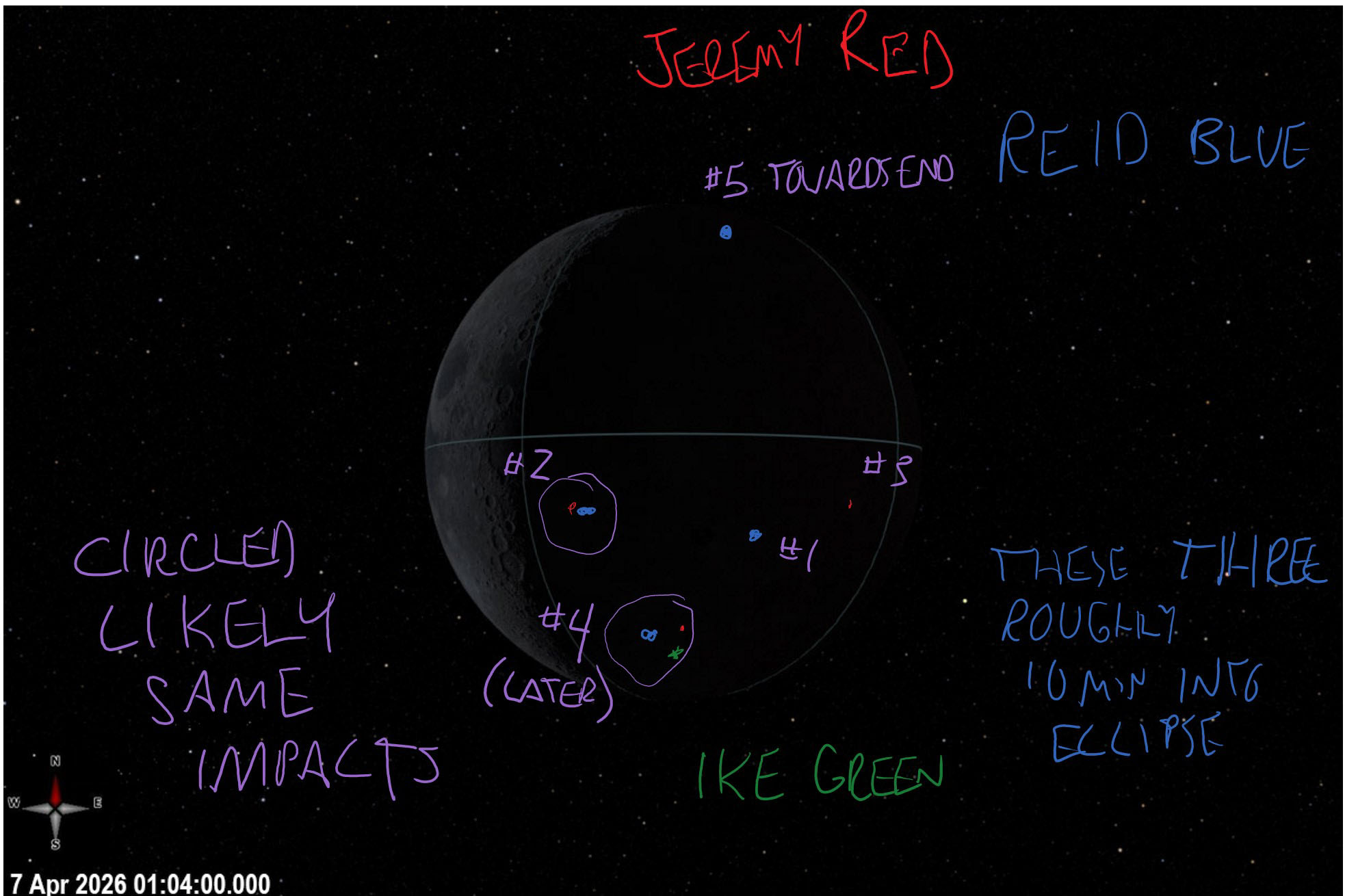
Artemis II astronauts annotate photo of Moon eclipsing the Sun from lunar mission
NASA released a crew member's handwritten notes on an image capturing impact flashes during a solar eclipse observed from the Artemis II mission.

Tropical Storm Isaias forms in southern Gulf of Mexico, expected to strengthen rapidly
The US National Hurricane Center says a tropical depression has intensified into a named storm, with significant further strengthening forecast in the coming days.

Gut microbes may have followed migrating humans across continents, study suggests
New research finds striking similarities between the gut microbiomes of hunter-gatherers in Tanzania and horticulturalists in Bolivia.

World's largest chinstrap penguin colony hit by 'alarming' population decline
Scientists blame climate change for a dramatic drop in the number of chinstrap penguins on a remote volcanic island.

Crew Dragon Spacecraft With Russian Cosmonaut Fedyayev Undocks From ISS
The Crew-12 mission, which has been working aboard the International Space Station since mid-February, has begun its return journey.