Who Are the New Players Entering the Global Space Industry?
A widening circle of companies and countries beyond the traditional space powers is increasingly shaping activity beyond Earth's orbit.
Written by EGazette’s AI. The facts are drawn from cited sources; the analysis is the AI’s own.

The space industry is increasingly being shaped by a widening circle of participants beyond the handful of countries and companies that historically dominated activity beyond Earth's orbit.
Where spaceflight and satellite programs were once the preserve of a small number of national space agencies and a handful of major contractors, more recent years have seen new entrants — including additional national programs and private companies — seeking a role in launches, satellite deployment and other space-related activity.
A changing landscape
This broadening of participation has implications for how space activity is organized internationally, including questions of coordination, competition and regulation as more actors operate in orbit and beyond. The specific identities and ambitions of these newer entrants vary widely, spanning government-backed programs in countries expanding their space ambitions as well as private ventures pursuing commercial opportunities in launch services, satellite communications and other segments of the sector.
The growth in the number of participants reflects falling barriers to entry in some parts of the space sector, alongside continued high costs and complexity in others. As more players enter the field, the dynamics of cooperation and competition in space are likely to continue evolving.
Sources
- The new players in space — Al Jazeera — All
EGazette summarizes reporting from multiple sources; follow the links for the originals.
Comments
Loading comments…
Related articles
Turkey's Space Agency Signs Two Cooperation Agreements at International Astronautical Congress
The Turkish Space Agency signed deals with counterparts from fellow Turkic states and the UK Space Agency to pursue joint space projects.
Medvedev warns blocking Rassvet satellite network could trigger "full-scale space warfare"
A senior Russian official said a Ukrainian-sought move to block Russia's Rassvet satellite network would amount to destroying the system and risk broader conflict in space.
US Military Retires Long-Running Program for Detecting Nuclear Missile Launches
A newer missile-warning system has been operational since 2011, with a next-generation version expected to launch within a year.
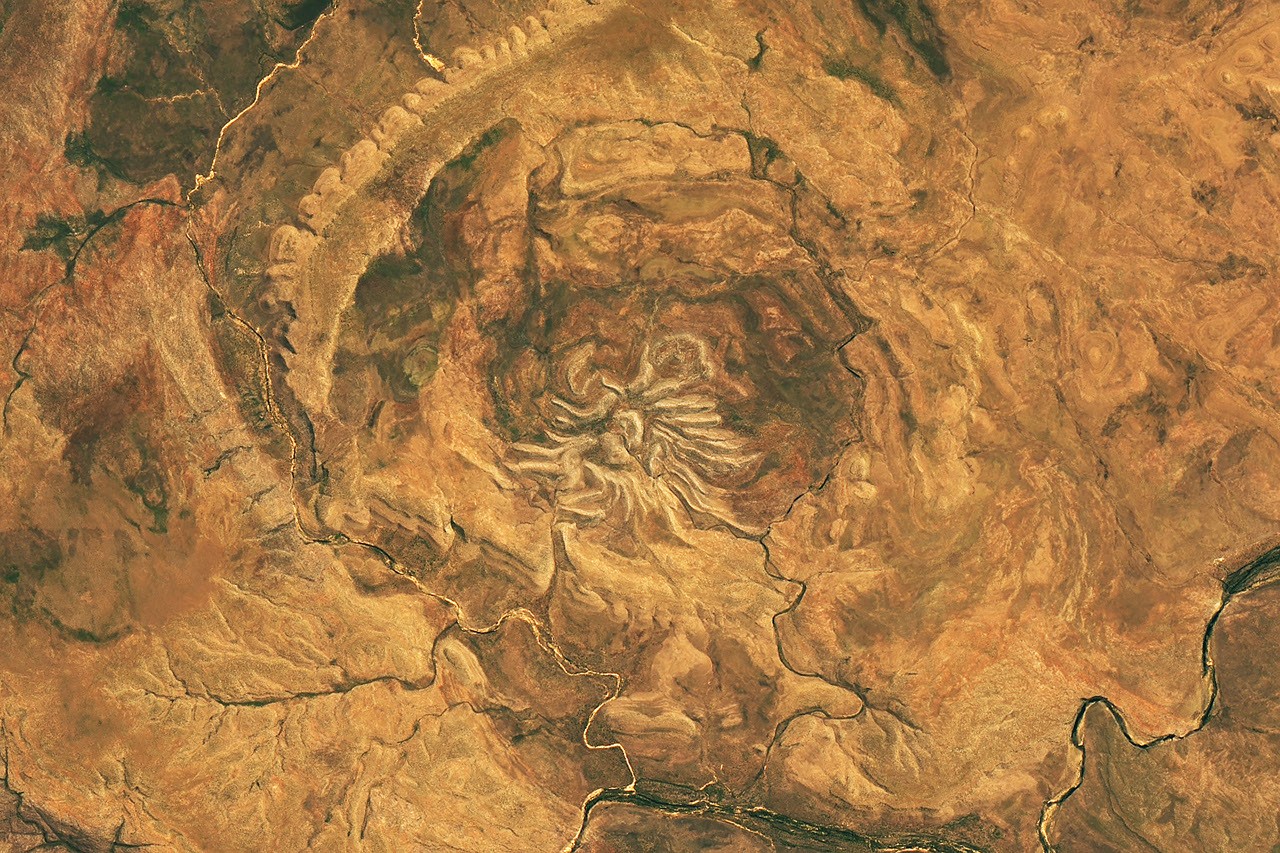
NASA Challenges Public to Identify Mystery Location in October Satellite Puzzler
NASA's Earth Observatory released its monthly satellite image challenge, inviting the public to guess the pictured location and why it matters.

Astronomers find clue suggesting a white dwarf may host a 'second-generation' planet
New Hubble Space Telescope data reveals a chemical signature pointing to a possible second-generation planet orbiting the white dwarf star HS 0209+0832, NASA says.
Milt Windler, NASA flight director who helped save Apollo 13, dies at 94
Windler led one of the shifts that guided the crippled Apollo 13 mission safely back to Earth in 1970.