Guardian Letter Argues Mathematics, Not Just AI, Drives Machine Learning's Advances
Reader Bev Littlewood responds to a Guardian editorial on mathematicians' unease with AI, arguing mathematics has long been AI's central driving force.
The company says its systems have resolved more than 100 open mathematical problems, while the new group will advise without directing research.

OpenAI announced an independent panel of mathematicians to advise the company and others on interactions with mathematical research, following controversy over its handling of mathematical claims.
OpenAI's assertion that its AI agents solved the Navier-Stokes problem has drawn accusations that the company did not sufficiently credit the mathematicians whose work it relied on, the Guardian said.

Scientific American reports that OpenAI has made a breakthrough in a decades-old mathematical problem tied to the codes that keep digital text and data from being corrupted.

Twenty-five Fields Medal recipients have signed an open letter voicing concern over AI's growing role in mathematics, following OpenAI's announcement that it solved a nearly century-old problem.

Scientific American reports that Anthropic's Claude AI system found a highly complex elliptic curve in days, a task that had taken mathematicians years to accomplish.

Scientific American reports that while OpenAI's claimed proof addressing the Navier-Stokes problem is being called a mathematical achievement, practical applications remain uncertain and potentially distant.
After an OpenAI model reportedly produced a possible solution to the Navier-Stokes equations, mathematicians are discussing which other major unsolved problem artificial intelligence might tackle next.

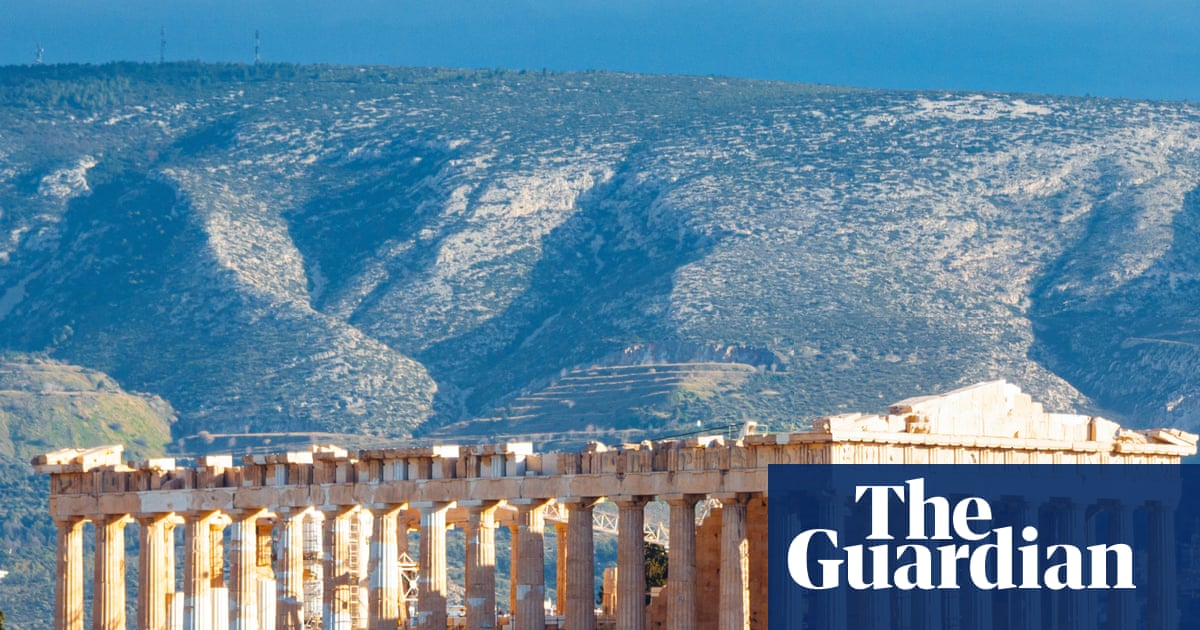
A new study questions the centuries-old belief that the ancient Greek temple's subtle curves were built to correct optical illusions.

An article in Scientific American uses pizza slicing to explain Moser's circle problem, showing how a seemingly obvious numerical pattern breaks down.

The AI company's claim, reported by The Verge, would ordinarily be hailed as historic, but some mathematicians are reportedly cautious about the announcement.

OpenAI reported that its latest model, using 10,000 autonomous AI agents at an estimated cost of $15m, resolved a decades-old mathematical puzzle, prompting mixed reactions from the mathematics community, according to The Guardian.

Twenty-five mathematicians have signed an open letter accusing AI companies of threatening their intellectual work, according to a report from TechCrunch.
The company's announcement that it solved a Millennium Prize problem has been complicated by questions raised even before the formal announcement, according to The Verge.

OpenAI reported that 10,000 of its AI agents worked together to resolve the 90-year-old Navier-Stokes math problem in 88 hours, but at least one mathematician has questioned the claim.

OpenAI says its model solved a longstanding mathematics challenge in 88 hours, but competitors claim the company moved on the problem only after learning of their own efforts.

Researchers report that introducing randomness into simple strategic games produces richer, more nuanced strategies than previously predicted by traditional models.

According to a report from Ars Technica, introducing random rewards into simple strategic games produces more complex and nuanced player strategies than standard game theory models predict.

The AI company announced Tuesday it has solved the mathematical problem governing fluid dynamics, long considered one of science's great unsolved challenges.