Pizza Puzzle Illustrates How Math Patterns Can Mislead, Scientific American Reports
An article in Scientific American uses pizza slicing to explain Moser's circle problem, showing how a seemingly obvious numerical pattern breaks down.
Scientific American has published an article explaining how a classic mathematical puzzle known as Moser's circle problem can be illustrated using a pizza, demonstrating how number sequences that appear predictable can suddenly diverge from expectations.
According to the publication, the puzzle involves placing points around the edge of a circle and connecting every point to every other point with straight lines, then counting how many regions the circle is divided into. Scientific American describes how this concept translates neatly into slicing a pizza, producing pieces that follow a pattern most people would intuitively predict—at first.
The article states that with one point on the circle's edge, there is only one region. Adding a second point and connecting the two creates two regions. A third point, connected to the others, produces four regions. A fourth point yields eight regions, and continuing this pattern, a fifth point results in 16 regions, according to the publication.
Based on this progression, Scientific American notes that many would expect the pattern to double again, with a sixth point producing 32 regions. However, the article reports that adding a sixth point actually results in only 31 regions—breaking the doubling pattern that had held for the previous several steps.
Scientific American explains that this discrepancy occurs because the simple doubling sequence does not account for the complexity of intersections created as more points and connecting lines are added inside the circle. The publication describes Moser's circle problem as a well-known example in mathematics of how a pattern that appears consistent across several early terms can fail to hold as more elements are introduced.
The article uses the pizza-slicing analogy to make the concept accessible, framing the mathematical exercise as a way to divide a pizza into one, two, four, eight, 16 or 31 slices depending on how many points and connecting cuts are made around the circular pie.
According to Scientific American, the puzzle serves as a broader lesson about mathematical reasoning: sequences of numbers that look predictable based on a handful of examples are not always reliable indicators of what comes next, and careful calculation—rather than assumption—is required to determine the true pattern.
Sources
- How pizza can solve this unusual math puzzle — Scientific American
EGazette summarizes reporting from multiple sources; follow the links for the originals.
Related articles
Scientific American's October Retrospective Looks Back at Smallpox, Skyscrapers and Racetrack Research
A historical column published by Scientific American revisits science and technology milestones from 50, 100 and 150 years ago, touching on smallpox eradication efforts, skyscraper excavation work and research conducted at racetracks.

OpenAI's Claimed Proof on Navier-Stokes Problem Sparks Debate Over Real-World Impact
Scientific American reports that while OpenAI's claimed proof addressing the Navier-Stokes problem is being called a mathematical achievement, practical applications remain uncertain and potentially distant.

Poison suspected in deaths of ten lions at Tanzania game reserve
The lions were discovered dead in the Ngorongoro Conservation Area, prompting wildlife officials to investigate.

European Space Agency Launches Two Satellites to Monitor Climate Change
The new satellites will help scientists study the effects of climate change, with one instrument dedicated to observing plant life

Exceptional Discovery of Denisovan Fossils in a Southwestern Chinese Cave
Extremely rare remains of these Asian "cousins" of Neanderthals have been unearthed alongside stone tools, shedding new light on their way of life.
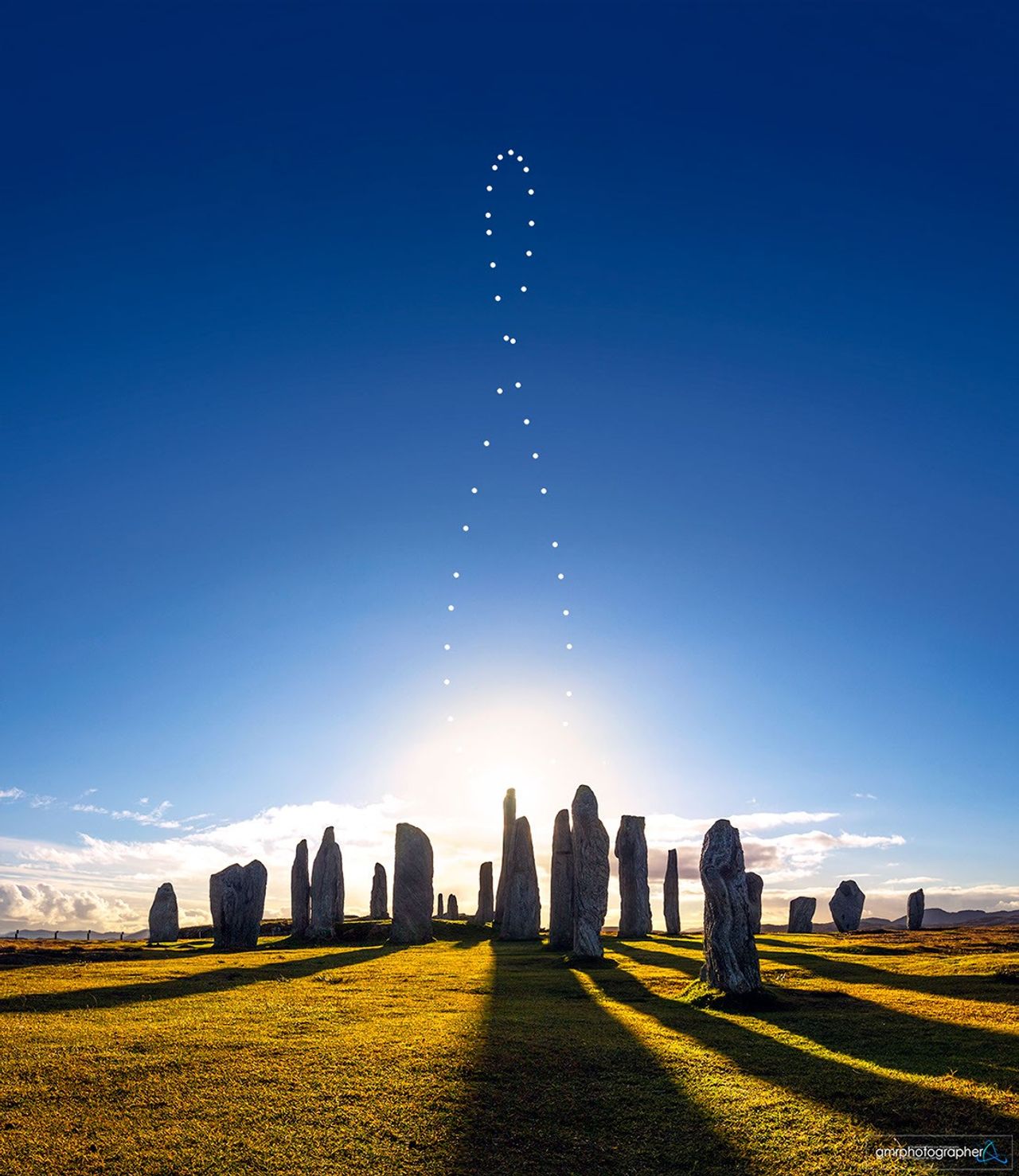
NASA's Astronomy Picture of the Day Features Analemma Over Scotland's Callanish Stones
The September 20, 2026 edition of NASA's long-running APOD series highlights a composite image showing the sun's yearly path above the ancient Callanish Stones.
Comments
Loading comments…