UK Mathematician Challenges Long-Held Theory on Parthenon's Curved Design
A new study questions the centuries-old belief that the ancient Greek temple's subtle curves were built to correct optical illusions.

A mathematician in the UK has challenged what may be one of the longest-standing myths in architectural history, questioning the widely held belief that the Parthenon's distinctive curves were designed to correct optical illusions, according to a report by The Guardian.
The Parthenon, the ancient Greek temple that overlooks Athens from the Acropolis hill, has been admired by scholars for more than 2,000 years. Architects of the structure have long been praised for their sophisticated use of geometry, with many attributing the temple's subtle curves to a deliberate effort to counteract visual distortions that might otherwise have marred its clean lines.
According to the report, this new study challenges that long-accepted explanation, suggesting the popular theory about optical illusion correction may not hold up under closer mathematical scrutiny.
The Guardian's report did not provide further detail in the excerpt regarding the specific findings of the mathematician's analysis or the methodology used to reach these conclusions. The full study's implications for how historians and architects understand the Parthenon's design remain to be detailed.
The Parthenon, built in the fifth century BCE, has for centuries been held up as an example of classical Greek architectural genius, with its structural nuances studied extensively by scholars of art, mathematics and architecture alike.
Sources
- UK mathematician debunks myth around Parthenon’s optical illusions — The Guardian — World
EGazette summarizes reporting from multiple sources; follow the links for the originals.
Related articles

Alaska Storm Damages Archaeological Site; Researchers Race to Recover Artifacts
Typhoon remnants destroyed homes and an active dig site; archaeologists are working to salvage remaining artifacts before the next storm arrives.

Ancient Teeth Show Grooves Linked to Betel Nut Use, Study Finds
New research on ancient human remains points to habitual betel nut use, a mind-altering plant seed still popular across parts of Asia despite known health risks.
Ancient Teeth Point to Long History of Betel Nut Use, New Research Suggests
Findings from ancient human remains indicate that betel nuts, a widely used mind-altering substance in parts of Asia today, may have been consumed by people in the distant past.

OpenAI's Claimed Proof on Navier-Stokes Problem Sparks Debate Over Real-World Impact
Scientific American reports that while OpenAI's claimed proof addressing the Navier-Stokes problem is being called a mathematical achievement, practical applications remain uncertain and potentially distant.
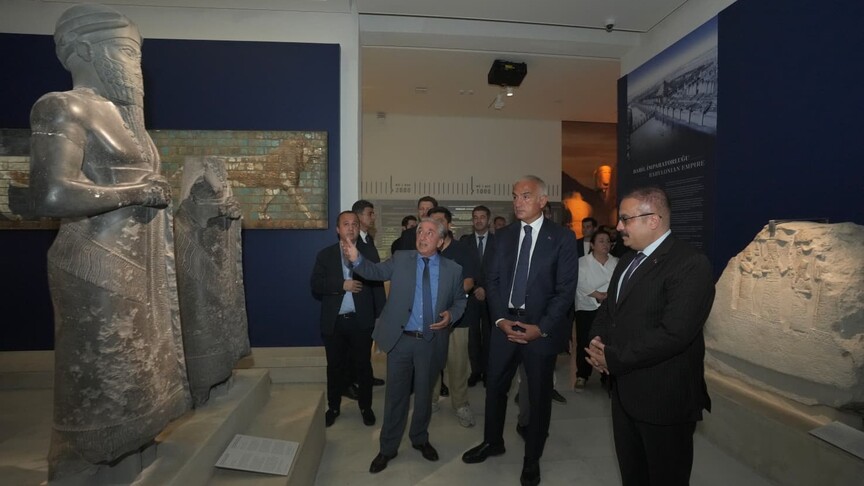
Istanbul Archaeological Museums Reopen After Extensive Restoration
Renovation project included conservation plans for 54,000 tiles and new outdoor displays for nearly 180 artifacts, according to Anadolu Agency.
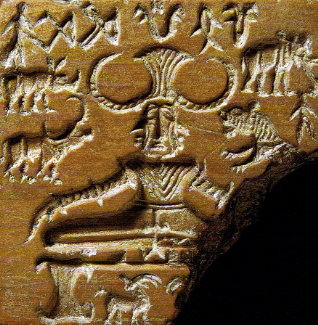
Chinese Scholar's Study of Ancient Seal Leads to Deeper Research Into Indus Valley History
A small artifact has reportedly become the starting point for an academic exploration of one of South Asia's earliest civilizations
Comments
Loading comments…