Researchers Identify Ancient Crocodilian Species From Rock Used to Build the Great Sphinx
A newly described 45-million-year-old crocodilian, named Herugavialis cairensis after an Egyptian god associated with the monument, was identified in the same rock formation used to construct the Great Sphinx.
Written by EGazette’s AI. The facts are drawn from cited sources; the analysis is the AI’s own.
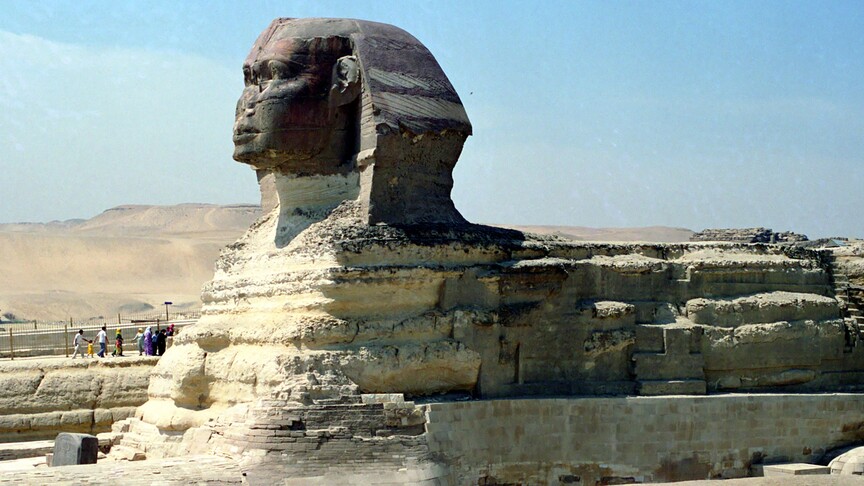
Researchers have identified a previously unknown species of ancient crocodilian found in rock from the same geological formation used to build the Great Sphinx of Giza, according to a study reported by Anadolu Agency.
The newly named species, Herugavialis cairensis, is estimated to be around 45 million years old. Researchers named the animal after an Egyptian god associated with the iconic monument, linking the fossil discovery symbolically to the site's ancient heritage.
A Fossil Link to the Sphinx's Building Material
The fossil was recovered from rock formations that were quarried in antiquity to construct the Great Sphinx, one of the most recognizable monuments from ancient Egypt. The discovery adds to scientific understanding of the ecosystems and species that existed in the region tens of millions of years before the monument itself was built.
The report did not specify the research team or institution responsible for the study, nor additional anatomical details distinguishing Herugavialis cairensis from other known ancient crocodilian species. It is also unclear from available reporting whether the fossil remains include a complete skeleton or more limited material.
Fossil discoveries tied to well-known archaeological sites often draw attention both for their scientific value and for the symbolic connections researchers highlight between ancient wildlife and human monuments built using the same geological material.
Sources
- Ancient crocodilian found in rocks that built Great Sphinx: Study — Anadolu Agency (Turkey)
EGazette summarizes reporting from multiple sources; follow the links for the originals.
Comments
Loading comments…
Related articles

Fossil Discovery Pushes Back Timeline for When Mammals First Learned to Chew
New evidence suggests the ability to chew and swallow emerged by at least the middle Jurassic, when dinosaurs still dominated.

Egypt Rejects Israeli Finance Minister's Remarks Invoking Sinai
An Egyptian source described the comments as 'empty threats' aimed at electoral gains, according to state-run MENA.

Egypt's El-Sisi Begins Asian Tour With State Visit to South Korea
The Egyptian president is set to hold a summit with South Korean leader Lee Jae-myung focused on economic cooperation and regional issues, before continuing to Malaysia and Indonesia.

Egypt's Sisi begins Asian tour with state visit to South Korea
President Abdel Fattah el-Sisi opens a multi-country Asian tour in Seoul, where he is set to meet President Lee Jae-myung and business leaders.

Sisi opens Asian tour in Seoul ahead of stops in Malaysia, Indonesia
Egypt's president begins a three-nation Asian trip with a state visit to South Korea, where meetings with President Lee Jae-myung and business leaders are planned.

Cargo Dragon spacecraft set to launch to ISS no earlier than October 13, NASA says
NASA says the uncrewed cargo spacecraft will deliver more than 2.8 tons of supplies, including material for studying heart tissue growth in microgravity.