Pierre Charbonnier: "The response to global warming has been so slow that the enemy will now always be there"
After the summer heatwaves, the philosopher explains in an interview with "Le Monde" why the idea of climate change as a horizon to be anticipated has become obsolete, forcing him to change his thinking.
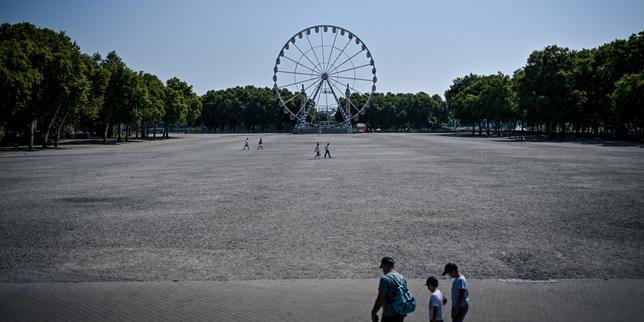
The philosopher Pierre Charbonnier, author of "The Climate Coalition", talks in an interview with "Le Monde" about the evolution of his thinking on climate change. According to him, after the heat waves that marked the summer, the idea that global warming is a distant horizon to be anticipated is now outdated.
This reality, the researcher explains, forces him to change his philosophical thinking on the climate issue. Climate change is no longer, according to him, a future phenomenon against which we must prepare, but an already established reality with which we must now constantly deal with it.
Philosophical thinking that adapts to the climate emergency
This evolution in Pierre Charbonnier's analysis reflects a broader questioning, shared by many researchers in the social sciences and philosophy, on how to think about public and individual action in the face of a climate crisis whose effects are already manifesting themselves concretely, rather than in a purely anticipated way.
The author of "The Climate Coalition" had already devoted part of his work to the articulation between climate issues and social and political power relations. This new stage of his reflection is a continuation of this work, while drawing the consequences of recent extreme climatic episodes.
The precise details of the proposals or avenues mentioned by the philosopher to adapt action to this new situation have not been specified beyond this general framework.
Sources
- Pierre Charbonnier, philosophe : « La réponse au réchauffement climatique a tellement tardé que l’ennemi sera désormais toujours là » — Le Monde — Une
EGazette summarizes reporting from multiple sources; follow the links for the originals.
Related articles
Protecting a third of land and oceans by 2030: a goal still far from being achieved
In the run-up to the biodiversity COP in Yerevan, NGOs believe that conservation is progressing but remains far below the target set at the end of 2022.

Antonio Guterres Holds Final Climate Summit at UN General Assembly
The UN Secretary-General is organizing a climate summit in New York on Wednesday, on the sidelines of a General Assembly where more than 130 heads of state and government are taking the floor.
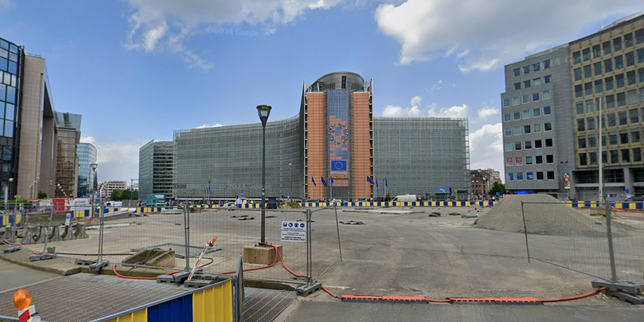
In Brussels, a failed greening project at the heart of European power
A green canopy project above the Schuman roundabout did not materialize, an awkward symbol as the Commission seeks to play a leading role in climate adaptation.

Update on: Climate, overfishing, pollution... In Lake Chad, the nets are being emptied
The France 24 – Français report summarises the main elements available, maintaining the statements attributed to their sources.
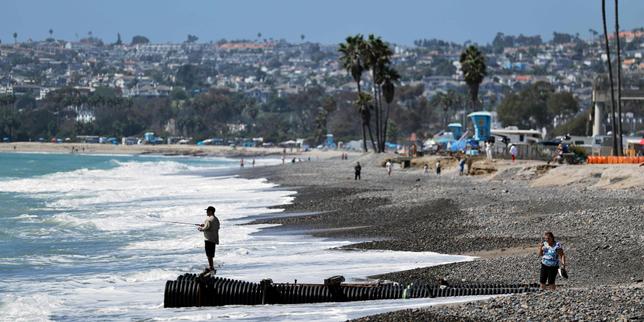
El Niño: California declares a state of emergency in the face of the risk of storms and floods
The climate phenomenon, which strengthened in August, now has a 75% chance of becoming the most powerful ever recorded, according to the US National Oceanic and Atmospheric Administration.
Study Finds Current El Nino Could Cause Over 450,000 Heat-Related Deaths
University of Chicago researchers estimate the current El Nino event could cause around 451,000 heat-related deaths, though targeted emergency measures could prevent tens of thousands of them.
Comments
Loading comments…