For the First Time, Scientists Detect a Radio Signal Emanating from an Exoplanet
Astronomers have detected radio waves emanating directly from a planet outside our solar system, with the discovery suggesting the possible presence of a strong magnetic field around the planet.
Written by EGazette’s AI. The facts are drawn from cited sources; the analysis is the AI’s own.

Astronomers have succeeded for the first time in detecting radio waves emanating directly from a planet located outside the solar system, in what researchers have described as an important step forward in the study of distant worlds.
According to the researchers, the discovery points to the likely existence of a powerful magnetic field surrounding the observed planet — a factor scientists consider crucial to understanding a planet's ability to retain an atmosphere and shield it from stellar winds.
Nevertheless, the researchers stressed that detecting the radio signal does not constitute evidence of life on the planet, clarifying that a magnetic field alone is not sufficient to establish the planet's habitability.
The researchers have not yet announced the name of the planet or its precise location in the details available so far, and the observational findings are expected to undergo further study and verification by other scientific teams.
This discovery comes within the context of ongoing scientific efforts to understand the characteristics of planets located outside our solar system using radio observation techniques.
Sources
- لأول مرة.. رصد إشارة راديو من كوكب خارج المجموعة الشمسية — Sky News Arabia — Technology
EGazette summarizes reporting from multiple sources; follow the links for the originals.
Comments
Loading comments…
Related articles

NASA opens applications for its next class of flight directors
NASA is seeking candidates for one of the most prestigious roles in human spaceflight: flight director at mission control at Johnson Space Center in Houston.

Mysterious high-energy neutrino may be linked to an exploding primordial black hole
An unexplained particle detected three years ago could point to a primordial black hole more unusual than previously thought, researchers say.
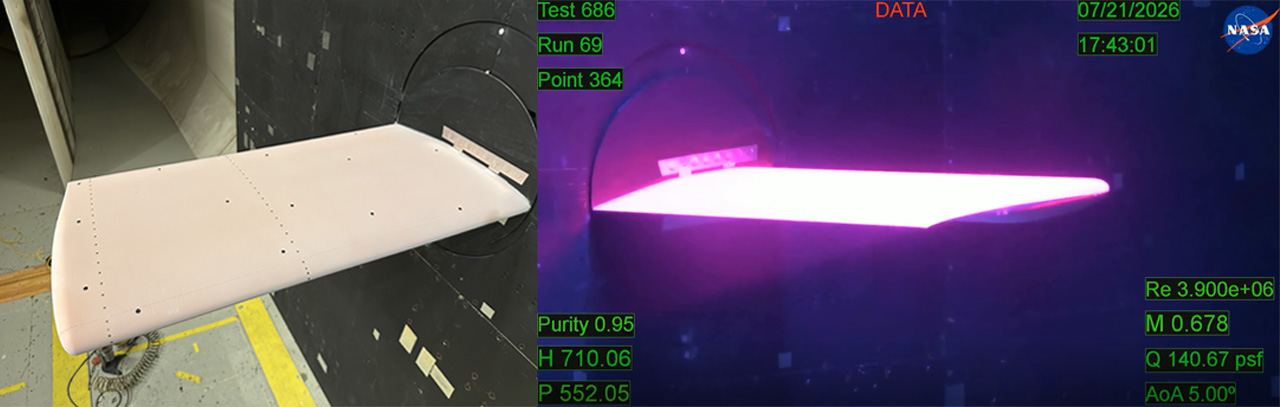
NASA Tests New Pressure Sensitive Paint Technique on Wind Tunnel Model Wing
Researchers at NASA's Langley Research Center used unsteady pressure sensitive paint for the first time to study airflow around a wind tunnel model, a step toward new aircraft design capabilities.
NASA opens applications for next class of flight directors
The agency is seeking candidates for flight director roles in mission control at Johnson Space Center as it works toward a sustained human presence on the Moon.

Can Bioengineered Bacteria Help Terraform Mars? Experts Are Divided
Nonprofit start-up Pioneer Labs says it has created the first 'microbe for Mars,' but other scientists question whether the claim holds up.
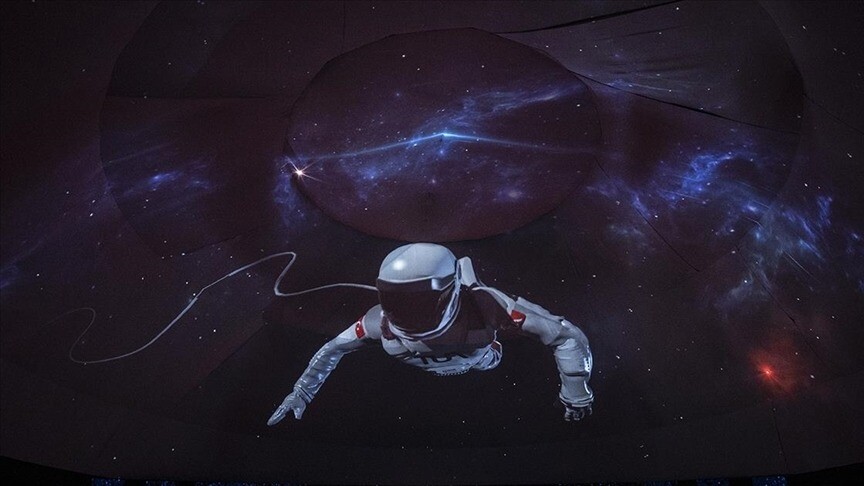
From Ottoman-era astronomy to the Moon: the story behind Türkiye's space journey
As Antalya hosts Türkiye's first International Astronautical Congress, officials and historians are tracing the country's path from early Ottoman astronomy to modern lunar ambitions.