Can Bioengineered Bacteria Help Terraform Mars? Experts Are Divided
Nonprofit start-up Pioneer Labs says it has created the first 'microbe for Mars,' but other scientists question whether the claim holds up.
Written by EGazette’s AI. The facts are drawn from cited sources; the analysis is the AI’s own.
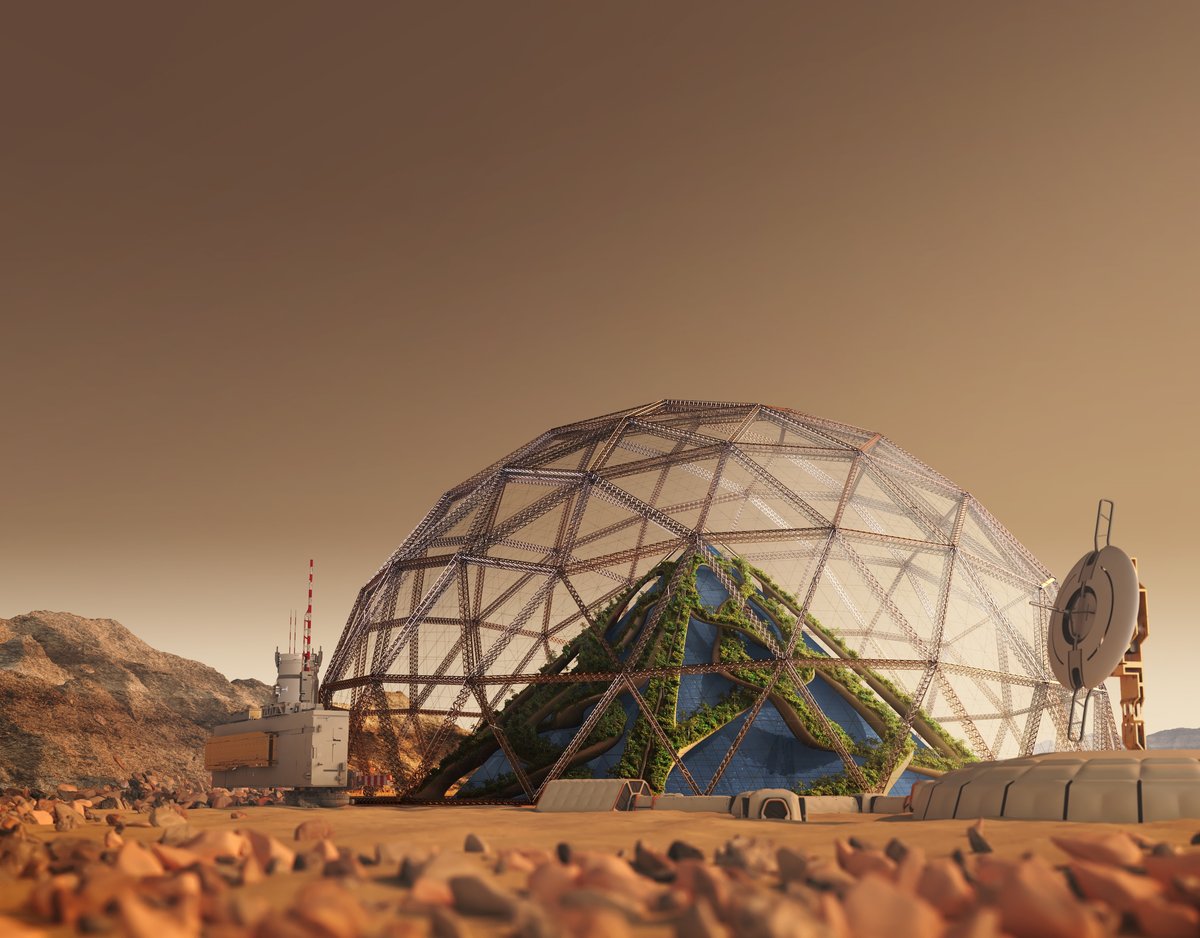
A nonprofit start-up called Pioneer Labs says it has developed what it describes as the first-ever ‘microbe for Mars,’ a bioengineered bacterium intended to withstand the Red Planet's harsh conditions as a potential step toward future terraforming efforts.
The claim has drawn attention within the scientific community, though not universal acceptance. Other experts in astrobiology and synthetic biology have expressed skepticism about the extent to which such engineered microbes could realistically survive, let alone meaningfully alter, the Martian environment.
The Challenge of Terraforming
Terraforming Mars, the long-theorized process of transforming the planet's atmosphere and surface to make it more hospitable to Earth-like life, remains a largely speculative endeavor given Mars's thin atmosphere, extreme cold, high radiation exposure and lack of a protective magnetic field.
Proponents of using engineered microbes argue that hardy, genetically modified bacteria could, in principle, begin altering soil or atmospheric chemistry over very long timescales, serving as an early step in a much larger and still largely theoretical process.
Skeptical experts counter that even if such organisms could survive Martian surface conditions, the scale of environmental change required to meaningfully terraform the planet would likely take centuries or longer, and involves far more variables than microbial activity alone, including atmospheric pressure and radiation shielding.
The debate over Pioneer Labs' claims reflects a broader tension in the emerging field of astrobiology between ambitious proposals for extending life beyond Earth and the rigorous scientific scrutiny such claims typically require before being accepted as viable.
No independent verification of Pioneer Labs' specific microbial engineering claims has been reported at this stage.
Sources
- Can bioengineered bacteria help terraform Mars? — Scientific American
EGazette summarizes reporting from multiple sources; follow the links for the originals.
Comments
Loading comments…
Related articles

NASA Searches Scottish Highlands for Clues to Life on Mars
The US space agency says ancient rock formations at Clachtoll share similarities with features found on the Red Planet.
Ars Technica roundup highlights six overlooked science stories
The science digest features items ranging from a quantum entanglement experiment at the Large Hadron Collider to psychoactive substance use in the Ice Age and yeast-based building materials for Mars habitats.

2026 on pace to be a record-hot year for the United States, scientists warn
If current trends hold, 2026 could set a new high-temperature record for the country, according to Scientific American.

For the First Time, Scientists Detect a Radio Signal Emanating from an Exoplanet
Astronomers have detected radio waves emanating directly from a planet outside our solar system, with the discovery suggesting the possible presence of a strong magnetic field around the planet.
NASA opens applications for its next class of flight directors
NASA is seeking candidates for one of the most prestigious roles in human spaceflight: flight director at mission control at Johnson Space Center in Houston.
NASA Campaign Explores Clouds Spawned by Wildfires
Scientists on the INSPYRE mission spent weeks chasing an elusive pyrocumulonimbus cloud triggered by Idaho's Wildhorse fire.