Venus's Mysterious Haze May Be Made of Cosmic Dust, Study Suggests
A new physical model shows iron dust combined with sulfuric acid could explain long-unresolved properties of Venus's atmospheric haze, according to Ars Technica.
Written by EGazette’s AI. The facts are drawn from cited sources; the analysis is the AI’s own.
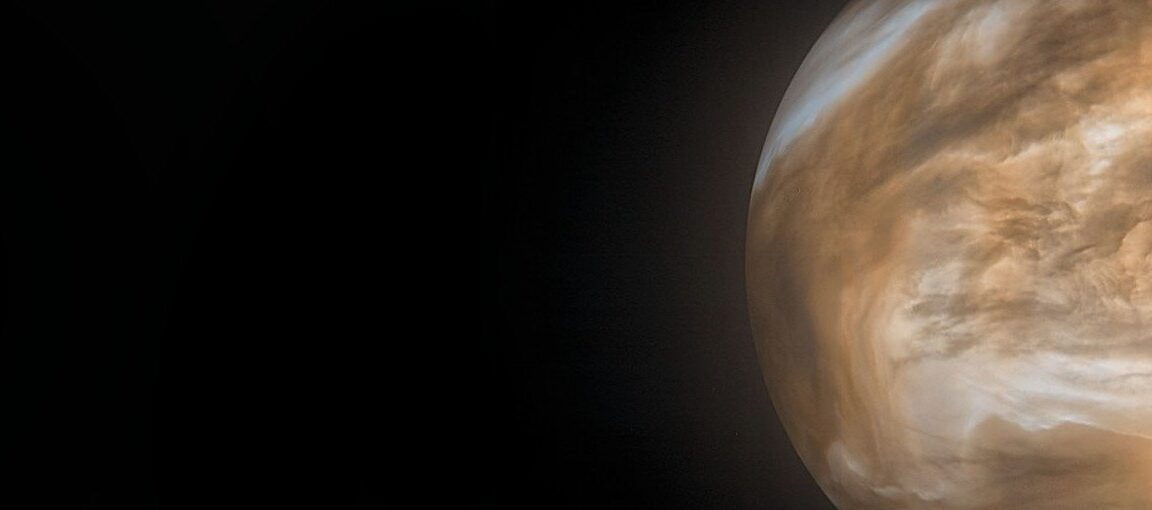
A study reported by Ars Technica suggests that part of the haze enveloping Venus may be made up of cosmic dust rather than consisting purely of sulfuric acid droplets, as scientists have long assumed.
According to the outlet, researchers built a physical model showing that a mixture of iron-rich dust and sulfuric acid can reproduce the optical and chemical properties observed in Venus's atmosphere. Planetary scientists have traditionally described Venus's thick, reflective haze as composed mainly of sulfuric acid droplets, but some of its characteristics have been difficult to fully explain with that model alone.
The new analysis points to dust particles originating from outside the planet as interacting with sulfuric acid in the Venusian atmosphere, producing haze with properties closer to what has actually been observed, Ars Technica reported.
Why it matters
If confirmed, the finding could refine scientists' understanding of the chemistry driving Venus's cloud layers, which have remained a subject of active research given the planet's extreme surface conditions and dense, acidic atmosphere.
Ars Technica's report did not specify which research team conducted the study or when it was published. Further confirmation would likely require additional atmospheric modeling or new observational data from future missions to Venus.
Sources
- Venus' mysterious haze is actually cosmic dust — Ars Technica
EGazette summarizes reporting from multiple sources; follow the links for the originals.
Comments
Loading comments…
Related articles

Orionid meteor shower begins Friday, peaking later in October
The annual shower, caused by debris left behind by Halley's Comet, starts this week and will reach its peak later in the month.
.jpg/jcr:content/renditions/cq5dam.web.1280.1280.jpeg)
NASA Image Compiles the Entire Sharpless Catalog of 313 Nebulas
A new composite image brings together all 313 hydrogen-rich nebulas cataloged in the Sharpless Catalog of H II regions.

Kyrgyzstan launches its first satellite into orbit
The satellite was sent into space aboard a SpaceX Falcon 9 rocket launched from Vandenberg Space Force Base in California.
Kyrgyzstan launches its first national satellite from US base in California
The satellite lifted off from Vandenberg Space Force Base as Kyrgyz President Sadyr Japarov was on an official visit to the United States.

Sophie Adenot begins return to Earth as her ISS replacement crew arrives
The new Crew-13 team reached the International Space Station after the fastest trip ever made by a US spacecraft, NASA says.
NASA invites public to virtual 'Movie Night' with its documentary library
NASA is encouraging audiences to stream its NASA+ documentaries for free as part of an ongoing 'Movie Night' initiative.