Scientific American: World's Largest Dark Matter Search Detects Unexplained Particle Signal
A report from Scientific American says the largest experiment searching for dark matter has recorded a particle signal that researchers cannot yet explain, prompting questions about whether dark matter has finally been detected.
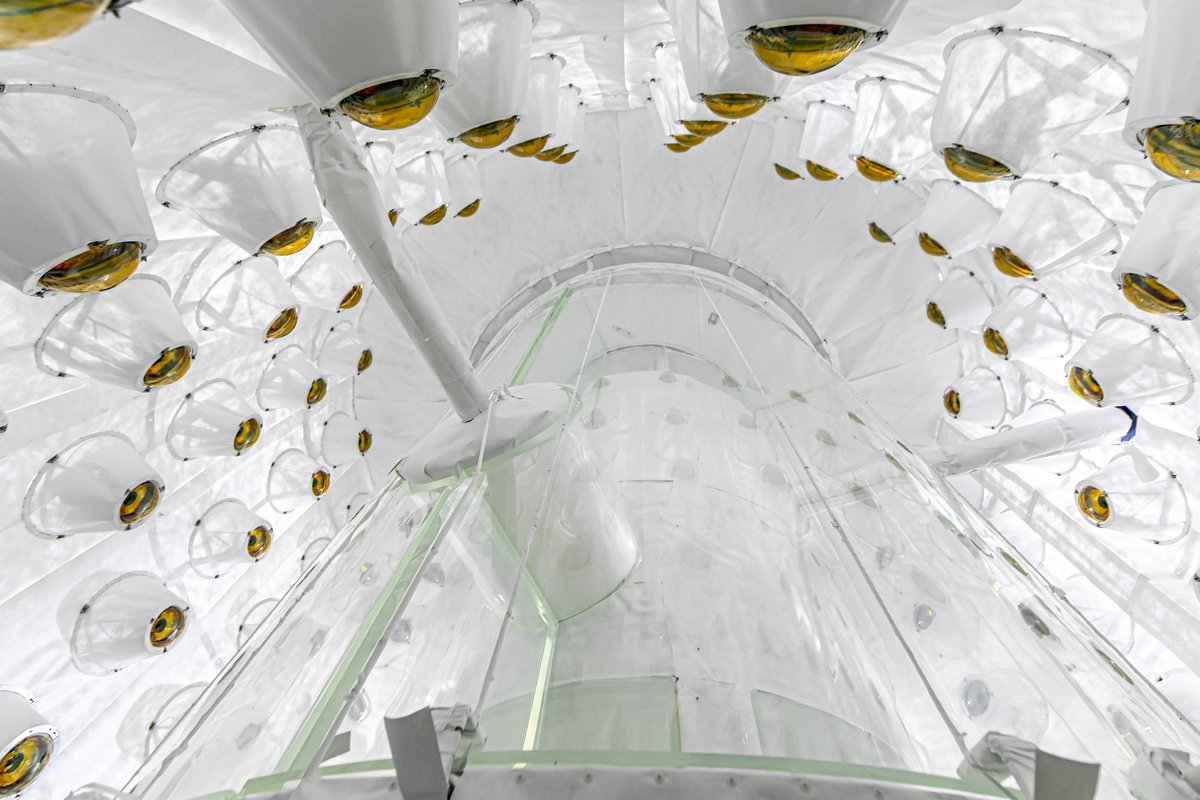
Scientific American reported that the world's biggest dark matter search has observed a particle signal that scientists involved in the project cannot currently explain using known physics.
According to the publication, the unexplained detection has raised the question of whether researchers may have finally found direct evidence of dark matter, a form of matter that is believed to make up a significant portion of the universe's mass but has never been directly observed.
Dark matter does not emit, absorb, or reflect light, making it undetectable through conventional telescopes. Its existence has been inferred primarily through its gravitational effects on visible matter, such as the rotation of galaxies and the behavior of galaxy clusters.
Scientific American did not specify further technical details of the finding in the excerpt reviewed, and the report frames the development as an open question rather than a confirmed discovery.
Further scientific verification, including independent review and replication of the results, would typically be required before any claim of a dark matter detection could be considered established within the physics community.
Sources
- Have we finally found dark matter? — Scientific American
EGazette summarizes reporting from multiple sources; follow the links for the originals.
Comments
Loading comments…
Related articles
Readers Share Photos of the Harvest Moon Over the UK
The full Harvest Moon lit up skies across the UK on Saturday night, prompting a wave of reader photography.
NASA's Astronomy Picture of the Day compares Andromeda before and after editing
The September 27 Astronomy Picture of the Day shows the Andromeda galaxy in a before-and-after comparison highlighting the role of image processing.

NASA's Astronomy Picture of the Day features a 'Mirrored Meteor and Milky Way'
NASA's Astronomy Picture of the Day for September 26, 2026, spotlights an image titled 'Mirrored Meteor and Milky Way.'
Scientific American Reports Discovery of Milky Way's 'First Microblazar'
The publication says scientists have identified an unusual cosmic object described as the galaxy's first microblazar.
Britain's First Astronaut Opens New Space Flight Museum
Helen Sharman officially opened the John Dulcamara Space Flight Museum at Grizedale Observatory.
Hubble reveals hidden structure within spiral galaxy NGC 4698
A new image released by NASA on 18 September 2026 shows the galaxy's spiral arms curling within a thin disk of stars, gas and dust.