Russia's GLONASS Satellite Navigation Accuracy to Improve to 2.8 Meters by 2027, Roscosmos Says
Roscosmos CEO Dmitry Bakanov said the next-generation GLONASS satellite constellation's technical design is taking shape, promising sharper positioning accuracy.

The accuracy of Russia's GLONASS satellite navigation system is expected to improve from roughly eight meters to about 2.8 meters by 2027, according to Dmitry Bakanov, head of the Russian space agency Roscosmos.
Bakanov said the technical architecture for the next-generation GLONASS satellite constellation is currently taking shape, as Russia works to modernize a system that serves as its counterpart to the United States' GPS and Europe's Galileo satellite navigation networks.
GLONASS provides positioning, navigation and timing services for both civilian and military applications, and improved accuracy would enhance its usefulness for applications ranging from transportation and mapping to precision-guided systems. The current generation of GLONASS satellites has historically lagged behind GPS and Galileo in positioning precision.
Bakanov did not provide a detailed technical breakdown of how the improved accuracy would be achieved, though upgrades to satellite navigation systems typically involve a combination of new satellite hardware, improved ground infrastructure and refined signal processing techniques. Roscosmos has periodically announced modernization plans for the GLONASS constellation as part of its broader space program.
Sources
EGazette summarizes reporting from multiple sources; follow the links for the originals.
Related articles

Zelenskyy Tells UN General Assembly 'Ukraine Did Not Choose This War'
The Ukrainian president addressed the UN as reports emerged of new attacks, warning that Putin would target other cities after Donetsk.
Lavrov Holds CSTO Foreign Ministers Meeting on Sidelines of UN General Assembly
Russian and allied foreign ministers stressed the importance of strengthening cooperation between the CSTO and the United Nations, according to TASS.
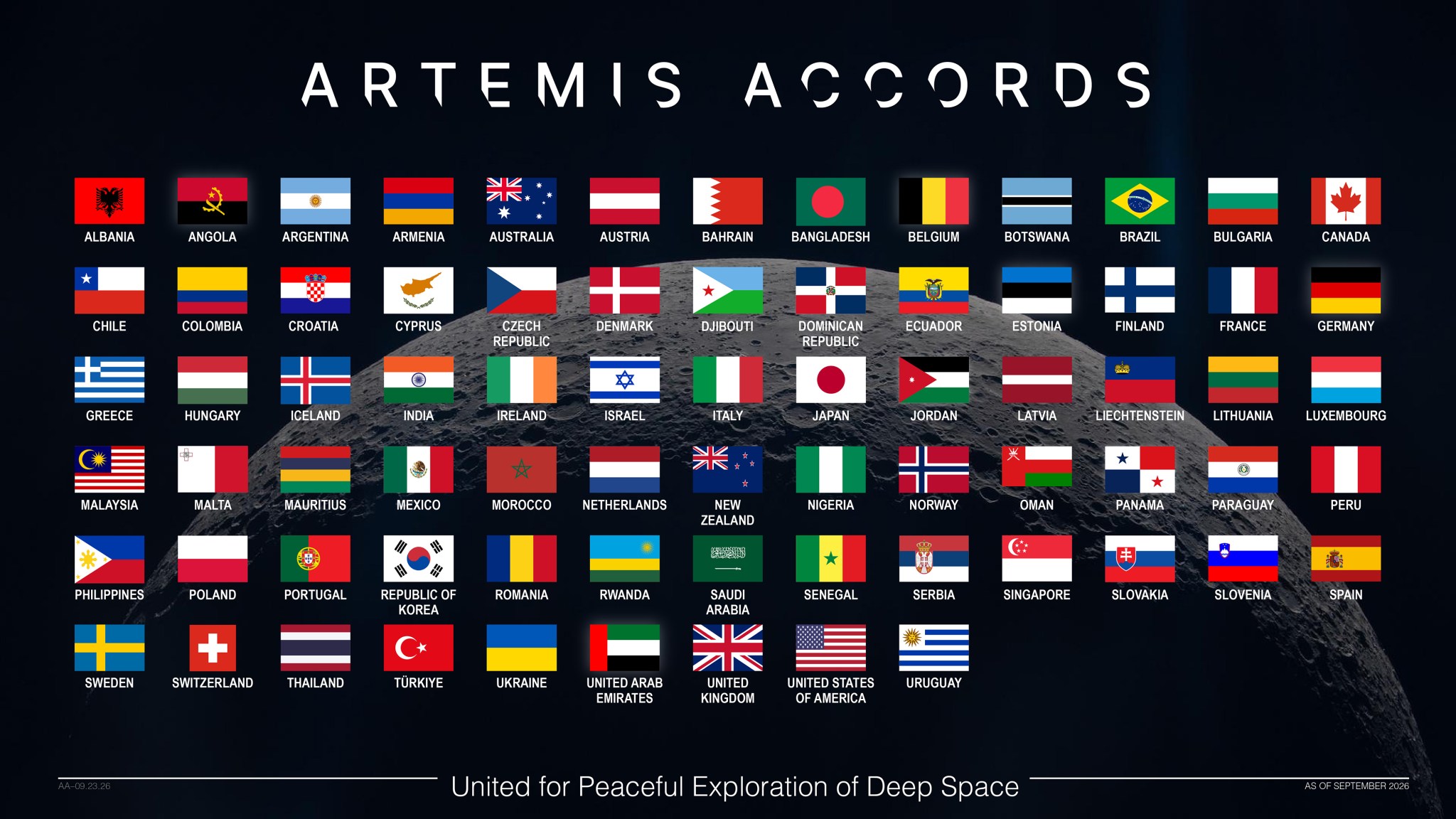
NASA Welcomes Croatia as 74th Signatory to Artemis Accords
Croatia signed the Artemis Accords during a ceremony in Zagreb attended by NASA and US State Department officials.

Trump Administration Favors Continued Dialogue With Russia, Says Putin Envoy
Kirill Dmitriev commented after Secretary of State Marco Rubio said the US had invited Vladimir Putin to the December G20 summit near Miami.
Lavrov begins talks with OSCE secretary-general
The meeting between Russia's foreign minister and the OSCE secretary-general is being held behind closed doors at UN Headquarters.
Lavrov, Egyptian foreign minister discuss Persian Gulf crisis
The two sides also discussed maintaining political dialogue and expanding trade and economic cooperation, according to Russia's Foreign Ministry.
Comments
Loading comments…