NASA bulletin flags hydrazine risks after freeze-thaw exposure
A technical bulletin from Langley Research Center outlines hazards from freeze-thaw cycles in hydrazine monopropellant systems and steps to mitigate them.
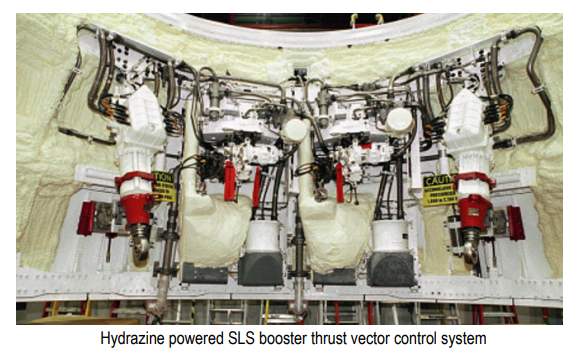
NASA has issued a technical bulletin addressing the risks associated with freeze-thaw cycles in hydrazine monopropellant systems, according to the agency.
The bulletin, attributed to Jonathan E. Jones of NASA's Langley Research Center, is intended to communicate hazards linked to hydrazine exposure to freezing and thawing conditions and to provide general recommendations for mitigating resulting damage and operational hazards.
Hydrazine is a toxic, highly reactive chemical compound widely used as a monopropellant and bipropellant component in spacecraft propulsion systems, satellite thrusters and some rocket engines, prized for its storability and reliability in space applications. Because it is corrosive and hazardous to handle, NASA and other space agencies maintain strict engineering and safety protocols around its use, storage and transport.
Freeze-thaw cycling can affect the physical and chemical stability of propellant systems, potentially compromising seals, valves or storage vessels if not properly accounted for in system design and handling procedures. Technical bulletins of this kind are typically distributed to engineers and technicians working with propulsion hardware to standardize safety practices across NASA centers and partner organizations.
NASA said additional information on the bulletin is available by contacting Langley Research Center directly.
Sources
- Risk of Hydrazine Use Following Freeze–Thaw Exposure — NASA Breaking News
EGazette summarizes reporting from multiple sources; follow the links for the originals.
Related articles
NASA tests dual-mode propulsion CubeSat ahead of launch
Engineers at NASA's Marshall Space Flight Center completed environmental and physical tests on a small satellite designed to simplify spacecraft propulsion.
NASA and Boeing to Brief Media on Starliner Development Monday
The agencies will discuss the spacecraft's progress and plans for regular crew flights to the International Space Station.
San Marino Becomes 76th Nation to Sign NASA's Artemis Accords
The European microstate joined the U.S.-led framework for peaceful space exploration during a signing ceremony in Rimini.
NASA opens 2026-2027 middle school design challenge on new aircraft energy systems
The Fueling Flight Design Challenge asks middle school students to explore new energy systems for aircraft as air traffic grows.
NASA launches 2026-2027 high school engineering challenge on aircraft energy systems
The high school-level Fueling Flight Design Challenge asks students to design new energy systems as aviation traffic increases.
Hubble reveals hidden structure within spiral galaxy NGC 4698
A new image released by NASA on 18 September 2026 shows the galaxy's spiral arms curling within a thin disk of stars, gas and dust.
Comments
Loading comments…