Guardian Reader Defends Mercator Projection Against Bias Criticism
A letter published by the Guardian argues the transverse Mercator projection was fit for its original purpose and should not be labeled biased.
Written by EGazette’s AI. The facts are drawn from cited sources; the analysis is the AI’s own.
A letter published in the Guardian has pushed back against the suggestion that the transverse Mercator map projection is biased, arguing instead that it was designed for a specific navigational purpose and served that purpose well.
The letter, from reader Paul Harwood, was written in response to an earlier Guardian feature about cartographers challenging what that article described as centuries of Western bias in mapmaking. Harwood wrote that the transverse Mercator projection was created for European sailors and functioned effectively for their navigational needs at the time.
A defense of the projection's intent
According to the letter, describing the projection itself as inherently biased is unfair both to the mathematics behind it and to the cartographers who developed it, given that map projections are, in the letter's own words, an incredibly complex subject. The letter credits the original Guardian article with navigating that complexity well, even while disputing its framing of Mercator-style projections as biased.
The letter does not dispute that historical mapmaking choices can carry cultural assumptions, but distinguishes between the mathematical design of a projection, created to solve a specific technical problem, and broader critiques of how maps have been used to represent the world.
The original feature referenced by the letter examined the work of cartographers revisiting map projections with an eye toward addressing historical biases in how the world has been visually represented.
Sources
- New map projections don’t make the Mercator wrong | Letter — The Guardian — Opinion
EGazette summarizes reporting from multiple sources; follow the links for the originals.
Related articles
Guardian Letter Argues Mathematics, Not Just AI, Drives Machine Learning's Advances
Reader Bev Littlewood responds to a Guardian editorial on mathematicians' unease with AI, arguing mathematics has long been AI's central driving force.
Report: I love a drink in the stands, but Burnham’s beer proposal feels out of step with modern football | Marva Kreel
A report from The Guardian — Politics sets out the main available details, with claims kept attributed to their sources.
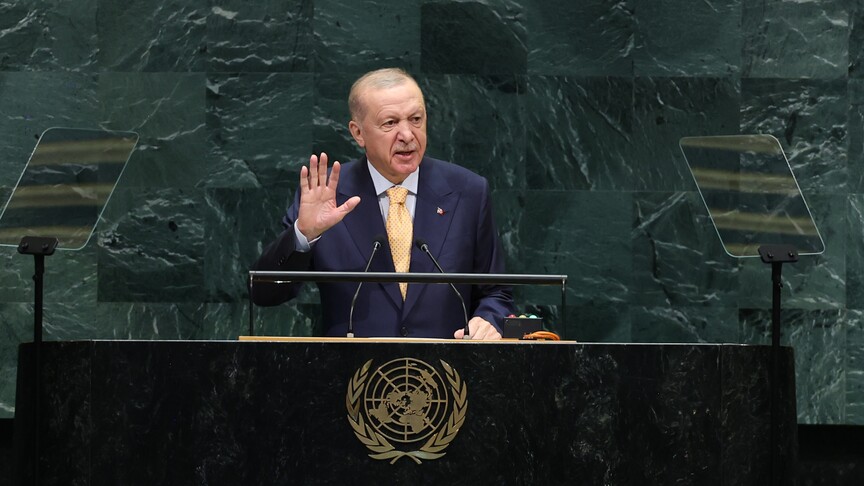
Opinion: Turkey's UN Diplomacy Offers a Model of Multidimensional Engagement
A commentary published by Anadolu Agency argues Turkey's conduct at the 81st UN General Assembly illustrates the kind of adaptable, wide-ranging diplomacy the institution needs.

Pierre de Gaulle: West Is Replacing Diplomacy With War and Using the Dollar as a Sanctions Weapon
In comments carried by Russian state news agency TASS, Pierre de Gaulle argued that Western countries are resisting a shift away from the world order they have long dominated.

Opinion: If a Lack of Exercise Harms Our Bodies, What Is Reliance on AI Doing to Our Brains?
Public health professor Devi Sridhar argues that we should not entrust technology companies with the long-term consequences of AI use on human cognition and society.
Hutton and Haldane: Andy Burnham's 'public control' push on utilities is a minefield worth navigating
Writing in the Guardian, Will Hutton and Andy Haldane argue that full nationalisation isn't the only answer for firms like Thames Water, but that they could be run for public benefit.
Comments
Loading comments…