Guardian Editorial Links UK Far-Right Unrest and AfD's German Gains to 'Politics of Powerlessness'
An opinion piece in The Guardian argues that both street agitation in southern England and record electoral gains for Germany's AfD reflect public perceptions that mainstream parties can no longer deliver security or change.
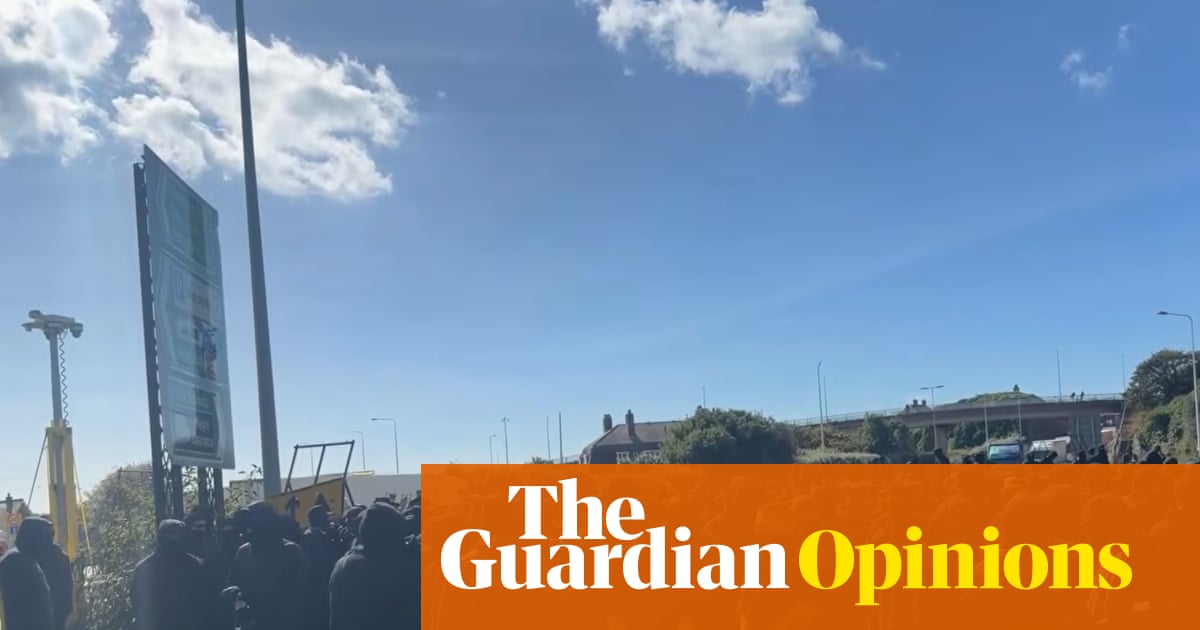
A Guardian editorial published on September 7 draws a connection between recent masked agitation on a road in southern England and the far-right Alternative für Deutschland's (AfD) strongest-ever result in a German state election, arguing both events reflect a belief that the political system has lost control.
According to the editorial, several hundred men wearing balaclavas blocked an A road in the Dover and Portsmouth area over the weekend. Separately, the AfD more than doubled its vote share in the German state of Saxony-Anhalt, rising from 21% five years ago, the piece states.
The Guardian writes that while the two events differ in scale and nature, they share an underlying narrative that established institutions can no longer provide security, prosperity or meaningful change. The editorial states that the street protest "dramatises" this claim, while the German election result "threatens to institutionalise it."
The piece notes that a prospective AfD-led state government in Saxony-Anhalt would mark the first far-right-led state government in Germany since World War II, and describes the party as hostile to migrants, Islam, LGBTQ+ rights and climate policy. The editorial also states that the AfD has senior figures linked to former neo-Nazi groups.
The Guardian cites figures indicating that approximately 170,000 foreign nationals live among a population of 2 million in Saxony-Anhalt, and that roughly a fifth of the state's doctors were born abroad.
The editorial further points out what it calls a paradox: an AfD-led government could oversee the same state intelligence service that has classified the party as "rightwing extremist."
The piece is part of The Guardian's editorial section and invites readers to submit responses of up to 300 words for potential publication in the newspaper's letters section.
Sources
- The Guardian view on the far right’s real weapon: it is the politics of powerlessness | Editorial — The Guardian — Politics
EGazette summarizes reporting from multiple sources; follow the links for the originals.
Related articles

Readers debate root causes of AfD's rise in eastern Germany
Letters to The Guardian respond to a commentary on why the far-right party has gained support in the former East Germany.
Migrants in Saxony-Anhalt Respond to AfD Rise: 'This Is Our Country Too'
Children of migrants are choosing to participate rather than withdraw as the AfD could become the region's largest party, according to Deutsche Welle Arabic.
Early Results Show AfD Leading in Mecklenburg-Western Pomerania, Left Party Ahead in Berlin
Preliminary estimates from Germany's regional elections show gains for the far-right Alternative for Germany and the Left Party.
Debate Renews Over Germany's 'Firewall' Against the AfD After State Election Gains
Deutsche Welle Arabic reported fresh discussion of the policy's viability following the far-right party's advance in Mecklenburg-Western Pomerania.
Migrants in Magdeburg Weigh Staying or Leaving After AfD's Election Gains
Some have decided to leave Saxony-Anhalt as the far-right party nears power, while others refuse to go, according to Deutsche Welle Arabic.
Migrants in Magdeburg weigh staying or leaving after AfD's election gains
Some migrants in Magdeburg, Germany have decided to leave Saxony-Anhalt after the far-right AfD's gains, while others are choosing to stay, according to Deutsche Welle.
Comments
Loading comments…