Guardian Analysis: UK Foreign Secretary Miliband Marks Shift in Approach to Israeli Settlements
A Guardian commentary piece says Foreign Secretary Ed Miliband has departed from decades of what it describes as ineffective British statements on West Bank settlements, citing new sanctions and stronger language from London.

A commentary published by the Guardian argues that UK Foreign Secretary Ed Miliband has broken with a longstanding pattern of British government responses to Israeli settlement expansion in the occupied West Bank, which the piece describes as largely symbolic over many decades.
According to the article, British Foreign Office ministers have historically issued what it calls "boilerplate statements of concern" about settlement expansion without accompanying action, a pattern the piece says drew criticism even from some former Conservative ministers who held the post.
The commentary cites former Foreign Office minister Alan Duncan as having described the UK's historical stance on settlements as "weak and naive," and quotes former minister Alistair Burt as having questioned the department's capacity to produce new forms of diplomatic condemnation that the piece says never translated into concrete measures.
The article also recalls that former Prime Minister Margaret Thatcher expressed frustration over settlement expansion during her time in office, while noting she was, according to the piece, torn between sympathy for Israel and concerns about Gulf states aligning with the Soviet Union during the Cold War.
The commentary states that Miliband has since introduced sanctions and used language describing Israeli government actions as constituting "ethnic cleansing," which it characterizes as a departure from what it terms the UK's previous pattern of "feigned helplessness" on the issue.
The Guardian piece presents this as a broader shift in UK foreign policy tone toward Israeli settlement activity, though it does not specify the scope or legal mechanisms of the sanctions referenced, nor detail the Israeli government's response to the characterization.
Sources
- Ed Miliband has overturned decades of Foreign Office inertia on illegal Israeli settlements — The Guardian — World
EGazette summarizes reporting from multiple sources; follow the links for the originals.
Related articles

Israel's President Clears Criminal Record of Soldier Who Killed Wounded Palestinian
Israeli President Isaac Herzog has granted a request to clear the criminal record of former soldier Elor Azaria.
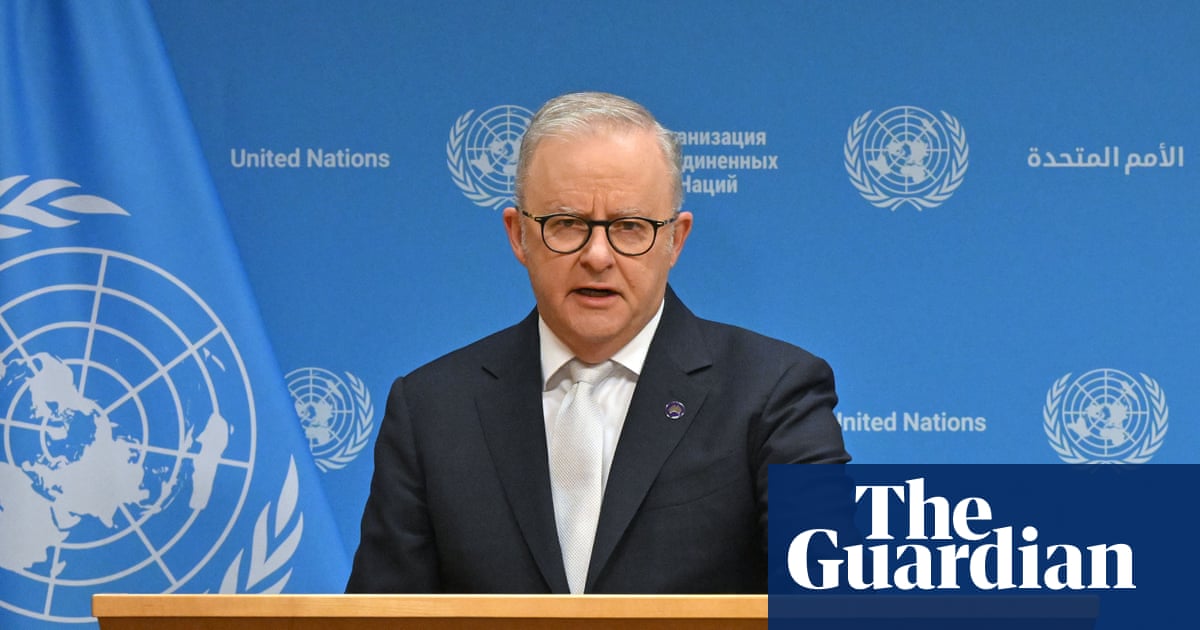
Albanese launches Australia's bid for UN Security Council seat, names former Murdoch aide as New York consul general
Prime Minister Anthony Albanese announced Australia's formal candidacy for a two-year term on the UN Security Council in 2029–2030, concurrent with appointing Siobhan McKenna, a former News Corp broadcasting executive, as consul general to New York.

In Germany, Friedrich Merz's CDU suffers historic defeat in Eastern state
For the first time since 1949, the Christian Democratic Union has fallen below the 5% threshold in a regional election, the minimum required to gain seats in the local parliament.

Australian Opposition Defends Fuel Excise Cut Plan Amid Cost-of-Living Debate
Shadow energy minister Dan Tehan says the Coalition's proposed 50% fuel excise reduction when oil exceeds US$100 per barrel is a sensible measure to address cost pressures.

CDU Wins Just 4.9% in Mecklenburg-Western Pomerania, Election Body Says
The state election commission reported a sharp drop in support for Chancellor Friedrich Merz's party in the northeastern German state

United Russia Leads Preliminary Vote Count With Half of Ballots Processed
Russia's Central Election Commission reports early results showing the ruling party ahead, with the Communist Party in second place, according to TASS.
Comments
Loading comments…