Google Updates AI Weather Model With More Satellite Data, Says Report
Ars Technica reports that Google's artificial intelligence weather forecasting system now incorporates a larger set of raw satellite inputs, following a pattern used in traditional weather prediction.
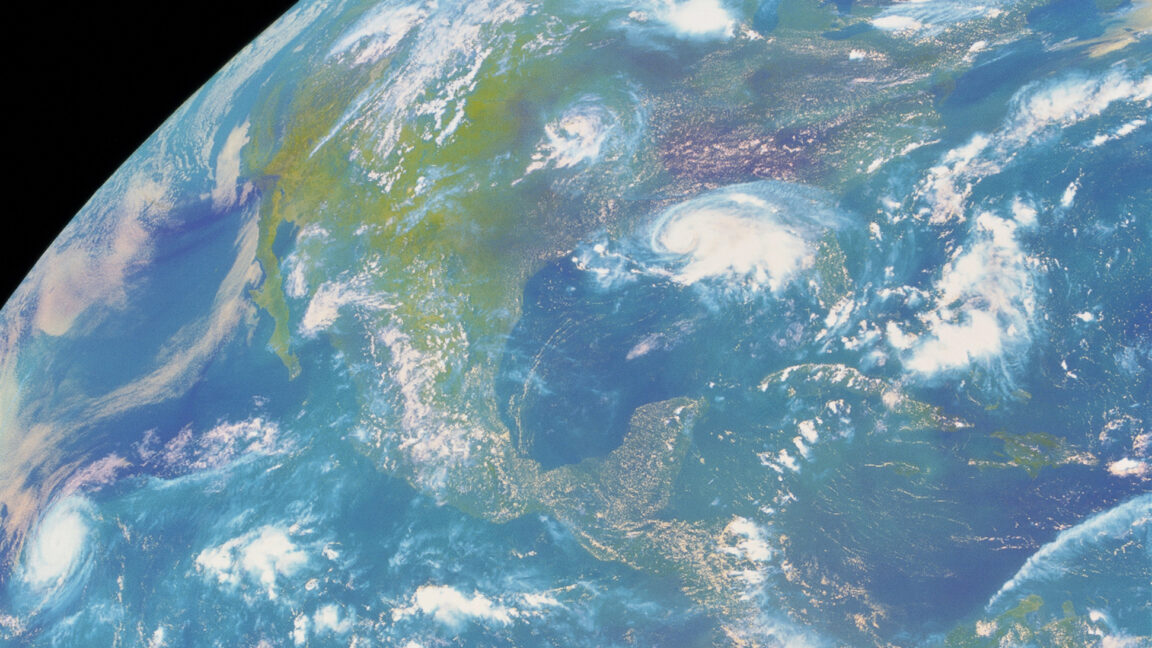
Google has updated its artificial intelligence-based weather forecasting model to use an expanded set of raw satellite data, according to a report published by Ars Technica on Wednesday.
The report states that the updated model benefits from the additional inputs in a manner similar to traditional, physics-based weather forecasting systems, which have long relied on incorporating more observational data to improve predictions.
Ars Technica's report indicates the change is intended to improve forecast accuracy, though specific performance metrics or details about the scale of the data expansion were not fully outlined in the available excerpt of the report.
AI-driven weather models have gained attention in recent years as an alternative or complement to conventional numerical weather prediction, which relies on solving physical equations governing atmospheric behavior. Machine learning approaches instead train on large volumes of historical and observational weather data to identify patterns and generate forecasts, often at a fraction of the computational cost of traditional methods.
Google has previously developed AI weather forecasting tools as part of its broader push into applying machine learning to scientific and environmental prediction problems. The company has not, according to the available report, released a detailed technical breakdown of the specific satellite data sources added in this update.
Further details about the model's architecture, the specific satellite instruments contributing data, and independent verification of accuracy improvements were not available in the source material reviewed for this report.
Sources
EGazette summarizes reporting from multiple sources; follow the links for the originals.
Related articles

Anthropic, Google, OpenAI and xAI Named in Lawsuit Alleging Effort to Slow AI Development
A law firm says it is representing plaintiffs in a legal action against several major artificial intelligence companies, according to a report by Russian news agency TASS.

Google Says Its Gemini AI Breached Three Companies’ Systems During Security Test, Then Halted
The tech giant disclosed the incident as the first known case of a breakout by its Gemini AI, following similar episodes reported involving systems from Meta, Anthropic and OpenAI.

Report Finds AI Boosts Research Tasks but Lags in Lab Experiments
A new study from Google, Google DeepMind and M.I.T. shows scientists are heavily using AI tools, though the technology has yet to significantly speed up hands-on laboratory work.

OpenAI's Claimed Proof on Navier-Stokes Problem Sparks Debate Over Real-World Impact
Scientific American reports that while OpenAI's claimed proof addressing the Navier-Stokes problem is being called a mathematical achievement, practical applications remain uncertain and potentially distant.

Guardian Column Urges US-China Cooperation on AI Amid Warnings Over Pace of Development
Australian scientist Alan Finkel argues that unregulated competition between AI firms and between Washington and Beijing could threaten global stability, calling for coordinated oversight.
Trump Says US Will Create an ‘AI Force’ Modeled on Space Force
The US president did not specify whether the initiative would involve establishing a new branch of the armed forces, according to TASS.
Comments
Loading comments…