Guardian Letter Argues Mathematics, Not Just AI, Drives Machine Learning's Advances
Reader Bev Littlewood responds to a Guardian editorial on mathematicians' unease with AI, arguing mathematics has long been AI's central driving force.
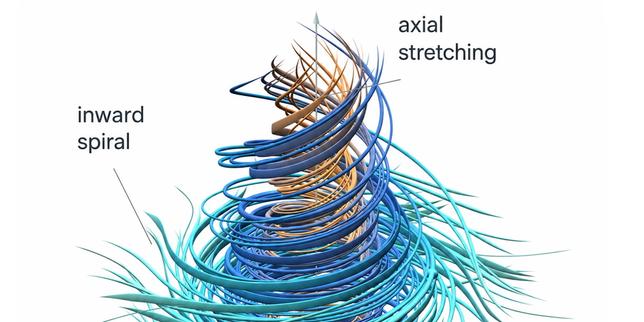
OpenAI's assertion that its AI agents solved the Navier-Stokes problem has drawn accusations that the company did not sufficiently credit the mathematicians whose work it relied on, the Guardian said.

Scientific American reports that while OpenAI's claimed proof addressing the Navier-Stokes problem is being called a mathematical achievement, practical applications remain uncertain and potentially distant.
After an OpenAI model reportedly produced a possible solution to the Navier-Stokes equations, mathematicians are discussing which other major unsolved problem artificial intelligence might tackle next.

OpenAI reported that 10,000 of its AI agents worked together to resolve the 90-year-old Navier-Stokes math problem in 88 hours, but at least one mathematician has questioned the claim.

The AI company says it solved parts of the Navier-Stokes equations in 88 hours, a claim that has quickly drawn scrutiny from the wider community.

The ChatGPT maker reported that 10,000 of its AI systems worked for 88 hours to crack one of the Clay Mathematics Institute's Millennium Prize Problems, though the claim has not yet been independently verified.

The company behind ChatGPT announced on Tuesday that one of its artificial intelligence models has solved the Navier-Stokes equation, a mathematical reference problem, causing a stir in the scientific community.