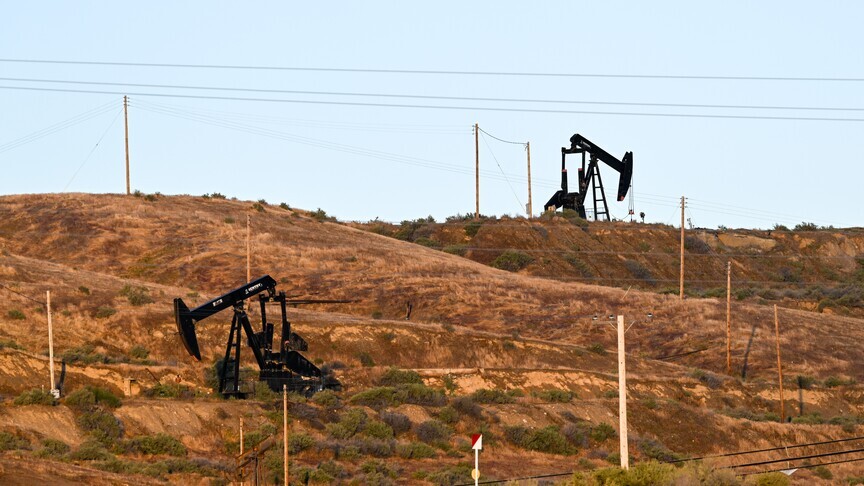
Oil Prices Surge After US Rejects Iran's Proposal to Reopen Strait of Hormuz
Brent crude rose more than 3 percent to top $107 a barrel after Washington dismissed a Tehran proposal aimed at ending the war, according to Al Jazeera.

Iran had offered to reopen the key shipping route and resume US talks within seven days if Washington agreed to its conditions, but the proposal was rejected, CNBC reports.

Brent crude rose 2.7% after the US turned down an Iranian offer to reopen the key shipping route in exchange for a pause in negotiations.

Economic Development Minister Maxim Reshetnikov said the forecast rests on conservative external assumptions about global oil markets.

Brent oil prices climbed toward the $106 mark on the ICE exchange, Russian state media reported, marking a fresh high since mid-September.
Brent crude slipped below $105 a barrel after Washington said a damaged Saudi pipeline could resume operations within days, according to Anadolu Agency.
Brent crude slipped to around $102 a barrel and US benchmark WTI fell below $100, according to Anadolu Agency, as immediate concerns over Middle East supply disruptions eased.

The global oil benchmark dropped 3.7% on London's ICE exchange, marking its first dip under $102 in weeks, according to TASS.

Oil prices declined on London's ICE exchange, with WTI futures also dropping sharply, according to TASS.

Benchmark oil price jumped more than 3% during Tuesday trading, according to data reported by Russian news agency TASS.
Rising US-Iran tensions fueled concerns over disruptions to Middle East energy supplies, according to CNBC.
Oil prices rose above $100 a barrel for the first time since July as escalating tensions between the US and Iran raised concerns about disruptions to Middle East energy supplies, according to CNBC.

Oil prices climbed Tuesday as the U.S. and Iran traded strikes over the weekend, fueling concerns over escalating tensions in the Middle East, according to CNBC.