West Africa's shea butter season opens under continued export restrictions
Producers across the region have launched the 2026-2027 shea marketing campaign, though export limits imposed in recent years remain in place.
Written by EGazette’s AI. The facts are drawn from cited sources; the analysis is the AI’s own.
The 2026-2027 shea nut marketing season has officially begun across several West African producing countries, launching another year for a crop used widely in cosmetics and, notably, as a substitute for cocoa butter in food preparation. Shea butter has long been a significant commodity for rural economies across the region.
This year's campaign opens under conditions similar to the past two seasons, with export restrictions continuing to constrain how much raw shea can leave producing countries. Those limits have shaped trading patterns in recent years, affecting both smallholder producers and the international buyers who rely on West African shea for cosmetic and food manufacturing.
A dual-purpose commodity
Shea butter's value comes in part from its versatility: it is a staple ingredient in skincare and cosmetic products worldwide, while also serving as a cocoa butter alternative in some food applications. That dual demand has made shea an important export product for several African economies, even as its raw form has increasingly come under export controls aimed at encouraging local processing.
The restrictions, now in their third consecutive year, reflect a broader push by some producing countries to capture more value domestically rather than exporting unprocessed shea nuts for processing abroad. Producers and traders have had to adapt to this shifting regulatory landscape as each new season begins.
Season underway
With the campaign now launched, attention turns to how this year's harvest and trading volumes compare with previous seasons, and whether the export limits will be adjusted as the market develops. For now, producers across the region are moving forward with commercialization under the same constraints that have defined the past two years.
Sources
- Karité: une année encore très spéciale débute en Afrique de l'ouest — RFI — Français
EGazette summarizes reporting from multiple sources; follow the links for the originals.
Comments
Loading comments…
Related articles
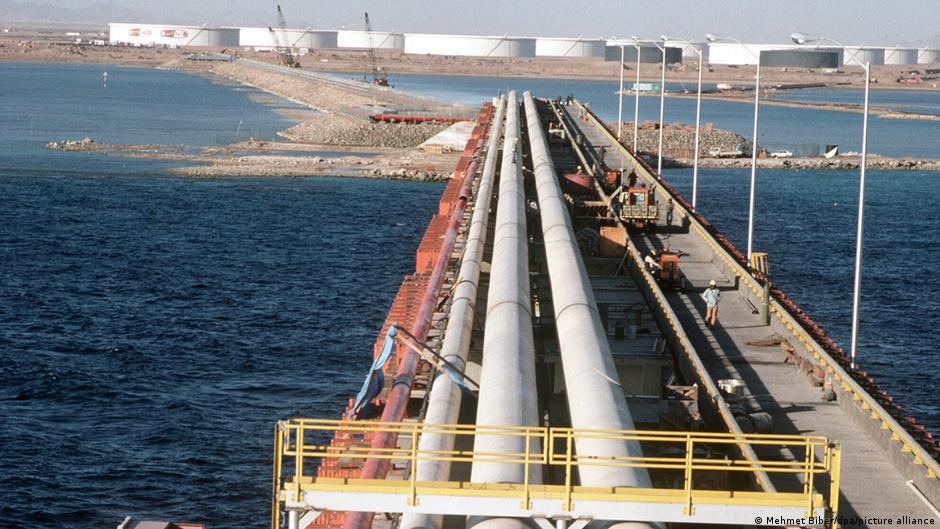
Saudi Arabia Resumes Oil Loading at Yanbu Port After East-West Pipeline Restart
Shipping data and satellite imagery reveal resumption of loading operations following pipeline shutdown caused by earlier attacks.
Ford CEO Jim Farley: Europe Is Too Late to Counter Chinese Automakers, but the U.S. Still Has Time
Farley said Chinese electric-vehicle makers have already outpaced European rivals, but argued the United States can still respond before losing the same ground.

Ukraine seeks to expand 'Solidarity Lanes' trade routes via Germany and other EU states
Ukraine's agriculture minister met German counterparts in Brussels to discuss broadening the EU's Solidarity Lanes initiative supporting Ukrainian exports.

Report: Giants trade for Vikings QB McCarthy, but say Winston remains QB1
A report from ESPN sets out the main available details, with claims kept attributed to their sources.
BMW fills in details on revamped electric i3, citing up to 468 miles of range
After initially withholding key specifications, BMW has released pricing, battery and range details for its all-electric four-door i3 sedan.

Traders eye Micron earnings, but Nike also in focus this week
Micron reports quarterly results Wednesday after the close, with Nike's earnings following Thursday as investors weigh both companies' outlooks.