US Supreme Court allows resumption of third-country deportations
Justices will hear full arguments in December on whether the policy violates due process or international protections against torture.
Written by EGazette’s AI. The facts are drawn from cited sources; the analysis is the AI’s own.
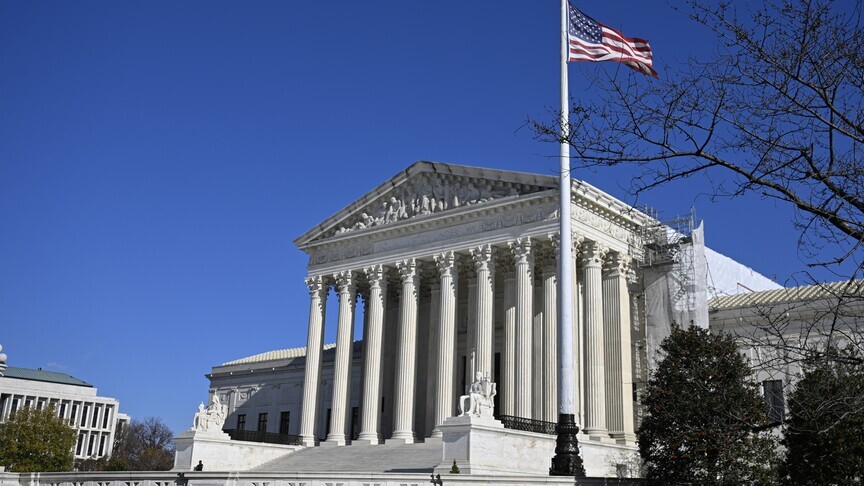
The US Supreme Court has allowed the Trump administration to resume deportations of migrants to third countries, a policy that sends individuals to nations other than their country of origin, according to Anadolu Agency.
The justices are set to hear full arguments on the policy in December, when they will consider whether it violates due process protections or international safeguards against torture.
The ruling allows the administration to continue the practice in the interim, even as the underlying legal questions about its constitutionality and compliance with international law remain unresolved pending the December arguments.
Third-country deportations have drawn legal challenges from advocacy groups and immigration attorneys, who argue that sending migrants to countries where they have no prior connection can expose them to serious harm, including risks covered under international protections against torture and inhumane treatment.
The Trump administration has defended the policy as a necessary tool for enforcing immigration law, particularly in cases where a migrant's country of origin refuses to accept their return or where diplomatic relations complicate direct repatriation.
The Supreme Court's decision to allow the policy to continue while it considers the case reflects the court's approach of permitting government action to proceed during litigation unless challengers can show a strong likelihood of success on the merits.
The December arguments will give the justices an opportunity to weigh the due process rights of migrants against the government's stated interests in enforcing immigration law, with a ruling expected to have significant implications for how the US handles deportations when direct repatriation is not possible.
Sources
- US Supreme Court allows Trump administration to resume 3rd-country deportations — Anadolu Agency (Turkey)
EGazette summarizes reporting from multiple sources; follow the links for the originals.
Comments
Loading comments…
Related articles
US Supreme Court Allows Trump Administration to Resume Third-Country Deportations
The court cleared the way for an emergency deportation process that does not give migrants a chance to contest removal to a third country.
US Supreme Court Allows Resumption of Third-Country Deportations
The court's conservative majority temporarily lifted safeguards for migrants deported to countries other than their own, while it weighs the practice's legality.
US Supreme Court allows Trump administration to continue third-country deportations
The high court granted an emergency request ahead of full arguments in the case, which are expected in December.
Supreme Court Allows Trump Administration to Resume Third-Country Deportations
The US Supreme Court has permitted the Trump administration to resume deporting migrants to third countries, at least temporarily, while related legal challenges continue.
US Supreme Court Denies Christa Pike's Final Bid to Halt Execution
The Tennessee death row inmate, sentenced in 1996 for murdering a teenage classmate, had sought a last-minute stay from the nation's highest court.
Venezuelan Delivery Driver Shot by ICE Officer in Texas Now Faces Assault Charge
Wilber Rafael Garces Perez disputes the government's version of events surrounding the shooting, which occurred while he was making a DoorDash delivery.