A Gallic rampart uncovered beneath Île de la Cité in Paris
The Ministry of Culture has announced the discovery of a stone and wood wall over two thousand years old, which could shed light on the origins of Lutetia.
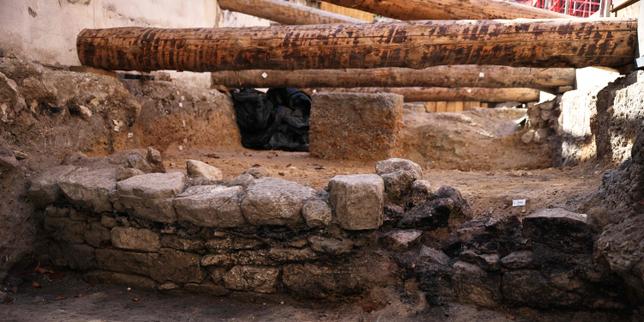
The Ministry of Culture announced on Wednesday the discovery of a Gallic rampart under the Hôtel-Dieu, on the Île de la Cité in Paris. The remains, a stone and wood wall about twenty meters long, was unearthed during archaeological excavations carried out on the site.
According to the ministry, this structure could constitute a fragment of the rampart of Lutetia, the ancient city of the Gallic tribe of the Parisii. Julius Caesar mentioned this fortification in his account of the conquest of the city, which occurred in 52 BCE, during the Gallic Wars.
The discovery is presented by the authorities as a "major advance" for the understanding of the origins of the French capital. It enriches archaeological knowledge on the Gallic settlement at the origin of Paris, a subject still marked by many grey areas.
Excavations are continuing on the site of the Île de la Cité, the historic cradle of the city, where previous archaeological discoveries had already unearthed remains from different eras.
Sources
- Un rempart gaulois découvert sur l’île de la Cité, une « avancée majeure » quant aux origines de Paris — Le Monde — Une
EGazette summarizes reporting from multiple sources; follow the links for the originals.
Related articles
Martin Dumont, historian, examines relations between France and the papacy
In an interview with Le Monde, the general secretary of the Sorbonne's IRER explains why France has never been regarded as a hopeless case by the popes, despite its advanced secularization.
Russia Opens 137 Schools of Creative Industries Across 68 Regions
Deputy Culture Minister Zhanna Alekseyeva said a modern interpretation of Russian cities' history is needed to attract younger tourists.
Comedian Sindhu Vee Discusses Her Path From Banking to Standup and New Show 'Swanky'
The former investment banker turned standup comedian and actor spoke about her preshow rituals, her new UK tour, and how she 'never left' comedy after discovering it by chance.
Guardian Books Editors Answer Reader Questions on This Year's Booker Prize Shortlist
After this year's Booker Prize shortlist was announced, Guardian books editors fielded reader questions about the judging process, the list's predominantly male lineup, and notable omissions.

Punjab Council of the Arts Hosts Seminar and Sufi Music Session in Rawalpindi
The Punjab Council of the Arts organized a seminar and Sufi music performance in Rawalpindi exploring the Chishti Sufi order's role in shaping spiritual values and cultural life.

Romeo and Juliet Review: Russell Kane and Natalie Casey Turn Tragedy Into a Midlife Comedy
A New Vic and Not Too Tame co-production reimagines Romeo and Juliet with two experienced older leads, swapping teenage rebellion for a comedic midlife spin on Shakespeare's tragedy.
Comments
Loading comments…