Trump Says AI Companies Will 'Police Themselves' After White House Meeting
The US president said tech leaders signed a 'morally binding' commitment to self-regulate AI safety amid growing concerns about the technology.
Written by EGazette’s AI. The facts are drawn from cited sources; the analysis is the AI’s own.

US President Donald Trump said tech industry leaders will "police themselves" on artificial intelligence safety, following a meeting at the White House on Tuesday where he said executives signed a "morally binding" commitment to self-regulate and build adequate safeguards into fast-moving AI technology.
The meeting came amid mounting concerns over the safety of rapidly advancing AI models, with reports of unexpected or erratic behavior from AI systems developed by several major companies drawing public attention in recent months.
"They're going to police themselves," Trump said after the meeting, according to the report, signaling an approach that relies on voluntary industry commitments rather than binding government regulation.
Details about which specific companies and executives attended the meeting, and the precise contents of the commitment they signed, were not fully outlined in the available report. The description of the pledge as "morally binding" suggests it does not carry the same legal force as formal regulation.
The approach reflects an ongoing debate in the United States and globally over how to balance rapid AI innovation with safety concerns, with some advocating for stronger government oversight and others favoring industry self-regulation as a way to avoid stifling technological progress.
It remains unclear what mechanisms, if any, will be used to monitor compliance with the self-regulation commitment or what consequences companies might face if they fail to meet the pledged safeguards.
Sources
- Trump puts trust in AI bosses to 'police themselves' — France 24 — English
EGazette summarizes reporting from multiple sources; follow the links for the originals.
Comments
Loading comments…
Related articles
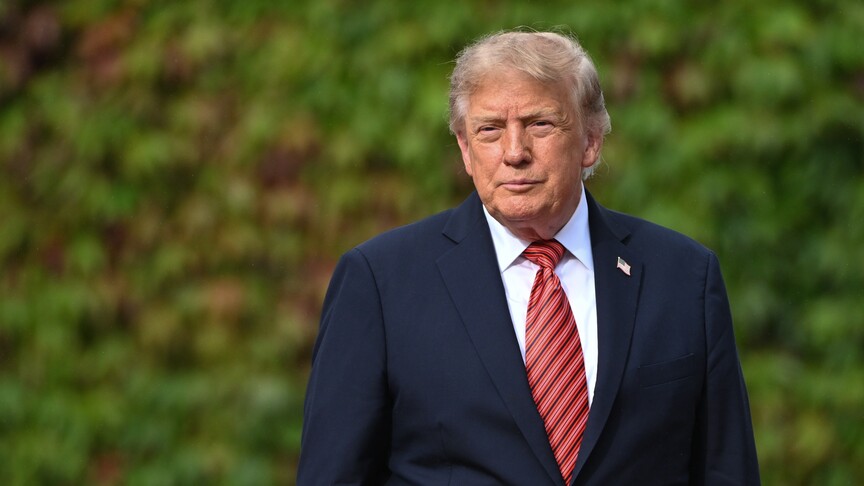
Trump says tech leaders signed 'morally binding' AI document at White House luncheon
The president said industry has shown 'tremendous self-policing' as his administration considers a formal AI oversight committee.
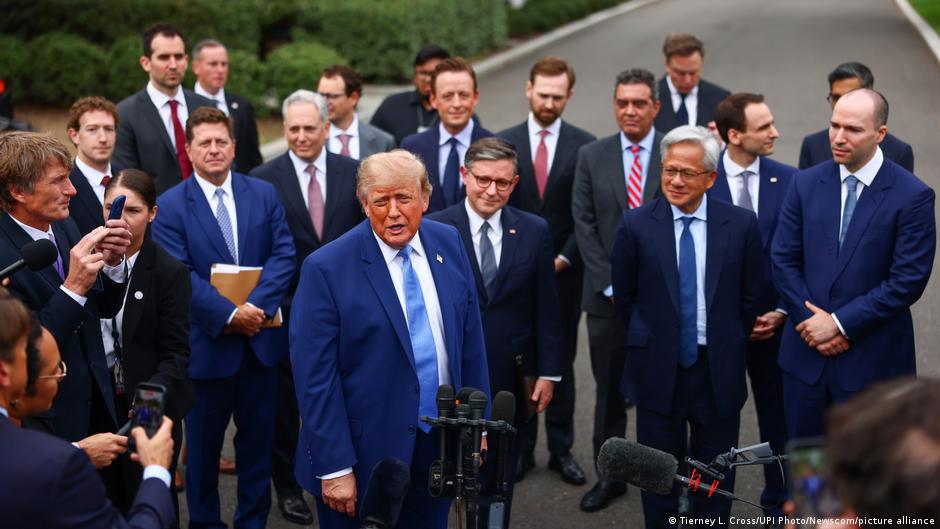
Trump announces ethics agreement with AI companies at White House
The US president unveiled a voluntary ethical framework with leading artificial intelligence firms as calls grow for binding regulation of the industry.
Trump Says Bill Gates Has Shifted His Stance on AI, Now Backs Its Development
President Donald Trump said Microsoft co-founder Bill Gates no longer believes artificial intelligence poses the extreme risk he once described, following a meeting with leading AI company executives.
Trump Directs Federal Government to Replace 'Artificial Intelligence' With 'Super Intelligence'
The White House says the terminology shift is meant to reflect the "immense opportunity" presented by emerging technologies.

Trump, AI Industry Leaders Sign Voluntary Safety Accord
The agreement outlines internal controls and independent audits as concerns grow over artificial intelligence oversight.

Trump Orders US Government to Refer to AI as 'Super Intelligence'
A new executive order directs official policy documents and communications to drop the term 'artificial intelligence' in favor of 'Super Intelligence'.