Sweden's Far-Right Support Slips as Social Democrats Poised to Return to Power Despite Election Loss
Analysis piece notes Sweden Democrats lost ground while Social Democrats suffered their worst result since 1908, yet a left-leaning coalition appears set to govern
Sweden's political landscape has shifted following Sunday's general election, with the far-right Sweden Democrats party losing support even as the Social Democrats appear poised to return to government despite recording their worst electoral result since 1908, according to an analysis by Cas Mudde, a professor of international affairs at the University of Georgia, published in The Guardian.
According to Mudde's account, the outcome traces back to strategic decisions made after the 2022 election. At that time, Sweden Democrats leader Jimmie Åkesson chose to support the rightwing minority government led by Moderate party prime minister Ulf Kristersson, while Social Democrats leader Magdalena Andersson attempted to emulate what Mudde describes as the "Danish model" in a bid to regain power. Mudde writes that both approaches resulted in electoral losses but ultimately achieved political success for their respective parties.
Following Sunday's vote, the Social Democrats are expected to lead a new government, according to the analysis, despite the party losing roughly 2% of its support — its weakest showing in more than a century. Mudde attributes this apparent contradiction to Sweden's bloc politics system and gains made by the party's likely coalition partners.
The Left party, the Green party and the Center party each increased their support, by 1.5%, 1.7% and 0.4% respectively, according to the piece. Together, these parties and the Social Democrats would form a left-leaning bloc holding a majority of just three seats in the new parliament, Mudde notes.
Mudde characterizes this narrow margin as leaving Andersson in "a very vulnerable position" even as she prepares to return to power. The analysis frames the Sweden Democrats' reduced support as significant but cautions that the far-right party remains a substantial political force in the country.
The piece was published as an opinion analysis in The Guardian's Comment is Free section, reflecting the author's assessment of the electoral dynamics and their implications for Sweden's political future.
Sources
- Sweden’s far right is down, but not yet out. Left and centre leaders must seize this opportunity | Cas Mudde — The Guardian — Opinion
EGazette summarizes reporting from multiple sources; follow the links for the originals.
Related articles

Germans Vote in State Elections Seen as Test for Chancellor Merz
Voters in two German states cast ballots Sunday in polls that could boost far-right and far-left parties and add to pressure on the chancellor's coalition.

Two German States Vote as Berlin, Mecklenburg-Western Pomerania Head to Polls
About 3.8 million voters were eligible to cast ballots Sunday in state elections held against a backdrop of reported gains for Germany’s far right, according to Al Jazeera.
Swedish Social Democratic Leader Tasked With Forming Post-Election Government
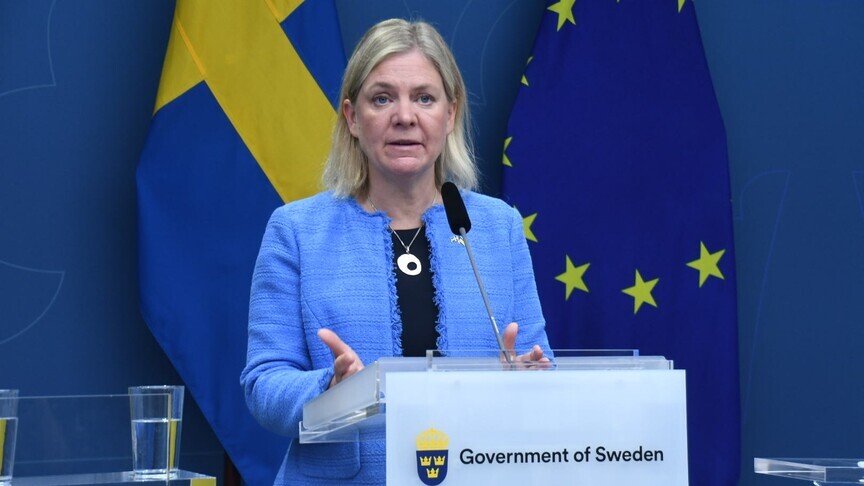
Magdalena Andersson has been given the mandate to try to form Sweden's next government, according to Anadolu Agency.

CDU Wins Just 4.9% in Mecklenburg-Western Pomerania, Election Body Says
The state election commission reported a sharp drop in support for Chancellor Friedrich Merz's party in the northeastern German state

United Russia Leads Preliminary Vote Count With Half of Ballots Processed
Russia's Central Election Commission reports early results showing the ruling party ahead, with the Communist Party in second place, according to TASS.
Japan Pledges Support to Help Solomon Islands Hold Fair Elections
Tokyo's assistance is being viewed as part of broader efforts to deepen ties with Pacific island nations amid growing Chinese influence in the region, according to Anadolu Agency.
Comments
Loading comments…