Sweden's Far-Right Support Slips as Social Democrats Poised to Return to Power Despite Election Loss
Analysis piece notes Sweden Democrats lost ground while Social Democrats suffered their worst result since 1908, yet a left-leaning coalition appears set to govern
Sweden's political landscape has shifted following Sunday's general election, with the far-right Sweden Democrats party losing support even as the Social Democrats appear poised to return to government despite recording their worst electoral result since 1908, according to an analysis by Cas Mudde, a professor of international affairs at the University of Georgia, published in The Guardian.
According to Mudde's account, the outcome traces back to strategic decisions made after the 2022 election. At that time, Sweden Democrats leader Jimmie Åkesson chose to support the rightwing minority government led by Moderate party prime minister Ulf Kristersson, while Social Democrats leader Magdalena Andersson attempted to emulate what Mudde describes as the "Danish model" in a bid to regain power. Mudde writes that both approaches resulted in electoral losses but ultimately achieved political success for their respective parties.
Following Sunday's vote, the Social Democrats are expected to lead a new government, according to the analysis, despite the party losing roughly 2% of its support — its weakest showing in more than a century. Mudde attributes this apparent contradiction to Sweden's bloc politics system and gains made by the party's likely coalition partners.
The Left party, the Green party and the Center party each increased their support, by 1.5%, 1.7% and 0.4% respectively, according to the piece. Together, these parties and the Social Democrats would form a left-leaning bloc holding a majority of just three seats in the new parliament, Mudde notes.
Mudde characterizes this narrow margin as leaving Andersson in "a very vulnerable position" even as she prepares to return to power. The analysis frames the Sweden Democrats' reduced support as significant but cautions that the far-right party remains a substantial political force in the country.
The piece was published as an opinion analysis in The Guardian's Comment is Free section, reflecting the author's assessment of the electoral dynamics and their implications for Sweden's political future.
Sources
- Sweden’s far right is down, but not yet out. Left and centre leaders must seize this opportunity | Cas Mudde — The Guardian — Opinion
EGazette résume des articles de plusieurs sources ; suivez les liens pour les originaux.
Articles liés

Le Premier ministre suédois Kristersson démissionne après sa défaite électorale
Le Premier ministre Ulf Kristersson a annoncé sa démission suite à une défaite électorale, les partis de l'opposition de gauche étant attendus pour former le prochain gouvernement.
Le Premier ministre suédois Kristersson démissionne après la victoire de la coalition de centre-gauche
Le Premier ministre Ulf Kristersson a démissionné, permettant à Magdalena Andersson, chef des Sociaux-démocrates, de tenter de former un gouvernement.
Le Premier ministre suédois Kristersson démissionne après sa défaite électorale
Les résultats officiels confirment que le bloc de droite de Kristersson a perdu les élections législatives de dimanche.

Le Premier ministre suédois de centre-droit Kristersson annonce sa démission après sa défaite électorale
Le Premier ministre Ulf Kristersson a annoncé sa démission suite à la victoire électorale de justesse du bloc de gauche au parlement.

L'Allemagne se prépare aux élections régionales à Berlin et Mecklembourg-Poméranie-Occidentale alors que l'AfD cherche à progresser
Le parti d'extrême droite Alternative pour l'Allemagne cherche à capitaliser sur un résultat record en Saxe-Anhalt alors que les électeurs de deux autres régions se rendent aux urnes, dans un scrutin qui met à l'épreuve le chancelier Friedrich Merz.
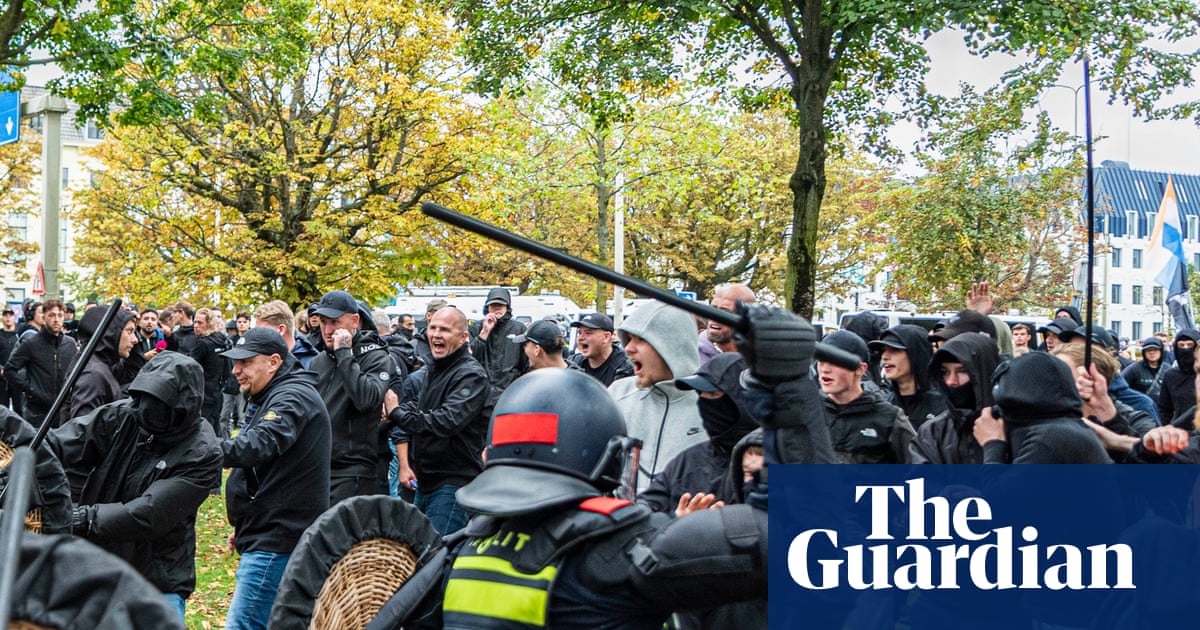
La police antiémeute néerlandaise disperse des manifestants d'extrême droite à La Haye après des débordements
Les autorités ont interdit une marche prévue contre l'immigration après que des manifestants aient lancé des feux d'artifice et des projectiles sur les policiers.
Comments
Loading comments…