Scientists Propose Explanation for Puzzling Cosmic Photon That Should Not Have Reached Earth
An unusually energetic photon detected in 2022 from a distant gamma-ray burst defied theoretical expectations that it would be destroyed en route to Earth, and researchers now say they may have found why it survived.
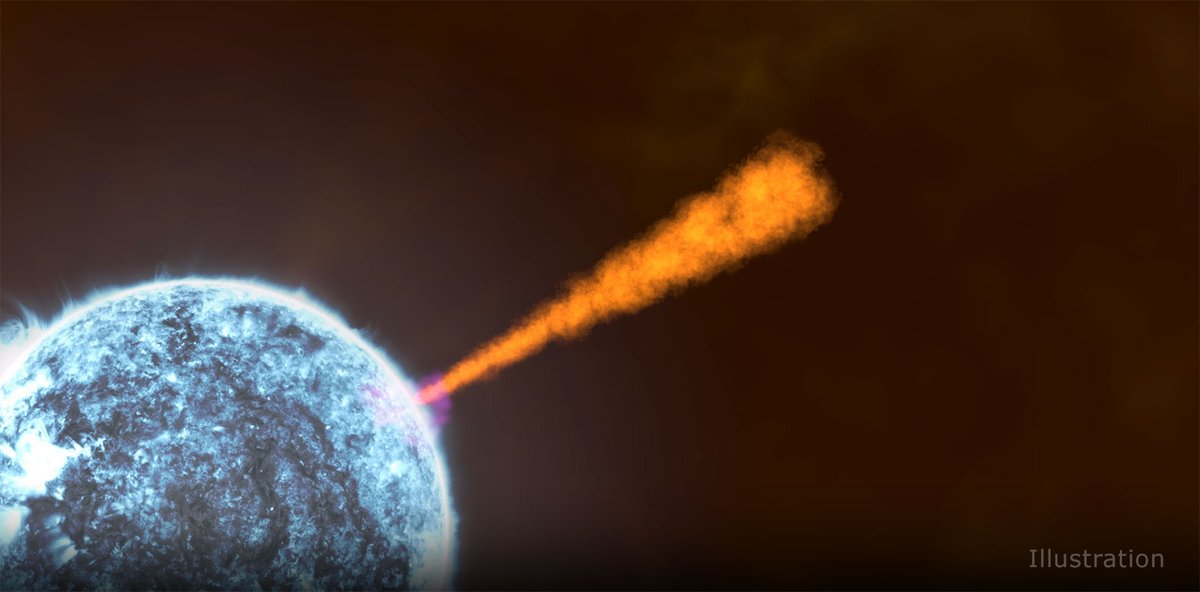
In 2022, researchers detected an unusually energetic photon originating from an enormous gamma-ray burst, according to a report by Scientific American. The particle's properties puzzled scientists because, according to established physics, it should have been destroyed long before reaching Earth.
Gamma-ray bursts are among the most powerful explosions known in the universe, releasing intense bursts of high-energy radiation. Photons traveling across vast cosmic distances are expected to interact with background light present throughout intergalactic space, a phenomenon that typically causes very high-energy photons to be absorbed or annihilated before they can complete such a long journey.
The photon in question, however, arrived intact, raising questions among astrophysicists about how it managed to survive its passage across space, Scientific American reported.
Researchers have now proposed possible explanations for the anomaly, according to the report, though the publication indicates that the case has prompted renewed scientific interest in refining models of how high-energy particles interact with cosmic background radiation over vast distances.
The finding underscores ongoing efforts by astrophysicists to reconcile observations of extreme cosmic events with theoretical predictions, as instruments capable of detecting very high-energy particles continue to record unexpected phenomena from distant sources.
Sources
- This cosmic particle was never meant to reach Earth. Now scientists think they finally know why it did — Scientific American
EGazette summarizes reporting from multiple sources; follow the links for the originals.
Related articles
Physicist Says Tech Billionaires' Quest for Immortality Is 'Wasting Their Time'
Prof Jim Al-Khalili will use Royal Institution lectures to argue efforts to defy ageing misunderstand the physics of time itself

Poison suspected in deaths of ten lions at Tanzania game reserve
The lions were discovered dead in the Ngorongoro Conservation Area, prompting wildlife officials to investigate.
European Space Agency Launches Two Satellites to Monitor Climate Change
The new satellites will help scientists study the effects of climate change, with one instrument dedicated to observing plant life

Exceptional Discovery of Denisovan Fossils in a Southwestern Chinese Cave
Extremely rare remains of these Asian "cousins" of Neanderthals have been unearthed alongside stone tools, shedding new light on their way of life.
Scientific American's October Retrospective Looks Back at Smallpox, Skyscrapers and Racetrack Research
A historical column published by Scientific American revisits science and technology milestones from 50, 100 and 150 years ago, touching on smallpox eradication efforts, skyscraper excavation work and research conducted at racetracks.

NASA's Astronomy Picture of the Day Features Analemma Over Scotland's Callanish Stones
The September 20, 2026 edition of NASA's long-running APOD series highlights a composite image showing the sun's yearly path above the ancient Callanish Stones.
Comments
Loading comments…