Scientists Find Earth's Crust Has Repeatedly 'Rolled Over' Throughout History
An analysis of ancient sea-level changes shows that the solid Earth has shifted position relative to its rotation axis multiple times in the past, and researchers say the process is still occurring today, according to Scientific American.
Written by EGazette’s AI. The facts are drawn from cited sources; the analysis is the AI’s own.
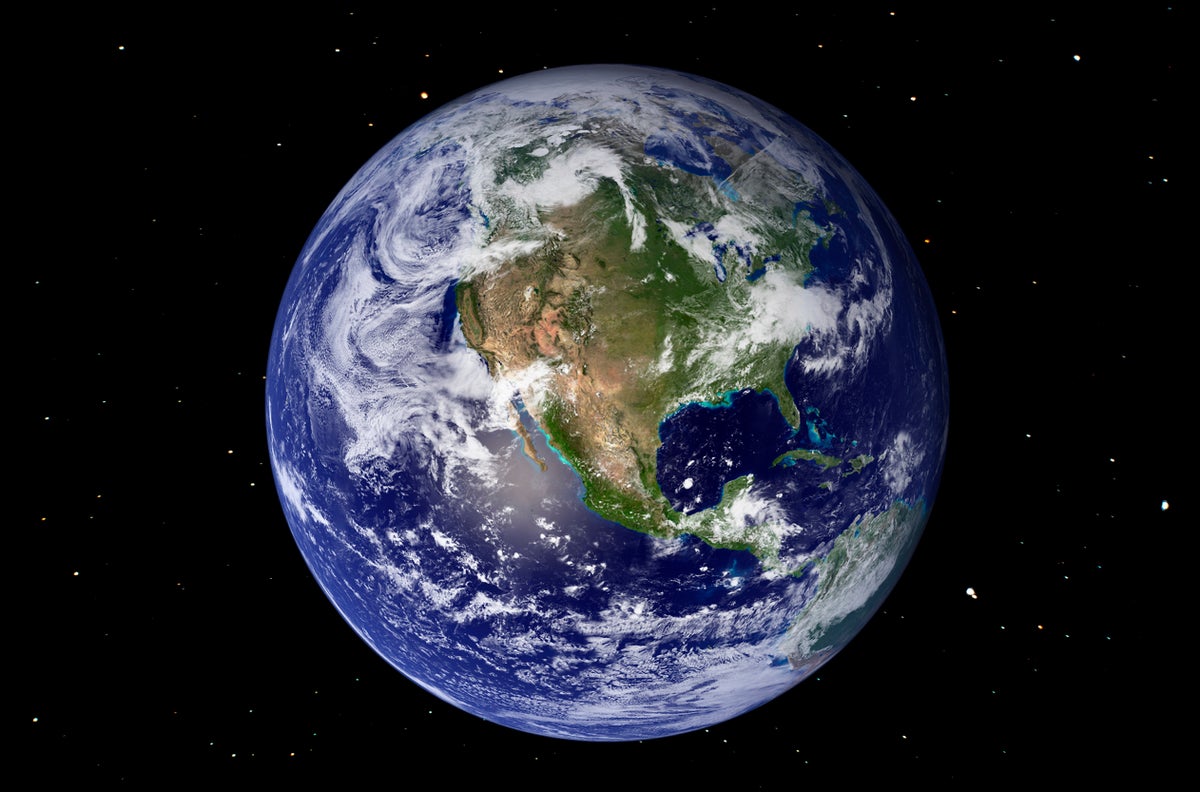
Researchers have found evidence that the entire solid Earth has shifted or "rolled over" relative to its rotational axis multiple times throughout its history, a process that appears to be ongoing, according to Scientific American.
The findings come from an analysis of ancient sea-level changes, which scientists used to reconstruct how the planet's crust and mantle have moved relative to the poles over long geological timescales, a phenomenon known as true polar wander.
True polar wander differs from the more commonly discussed plate tectonics, as it involves the repositioning of the solid Earth as a whole relative to its spin axis, rather than the movement of individual tectonic plates relative to each other.
The research suggests that such large-scale shifts have happened repeatedly over Earth's history and continue to occur at a slow pace in the present day, offering new insight into the long-term dynamics of the planet's interior and surface.
Scientists say understanding true polar wander can help explain patterns in ancient climate and sea-level records that are otherwise difficult to account for using plate tectonics alone.
The study adds to a growing body of research examining how the deep structure of the Earth, including its mantle and core, influences large-scale geological and climatic processes over millions of years.
Sources
- Scientists discover that Earth’s crust has repeatedly rolled over—and it’s still happening — Scientific American
EGazette summarizes reporting from multiple sources; follow the links for the originals.
Comments
Loading comments…
Related articles

How Cats' Eyes Are Inspiring Researchers Developing New Imaging Technology
Scientists are studying the light-reflecting eyes of cats and other animals in hopes of advancing modern imaging and sensor technology.
Speakers Call for Stronger Mentorship of Young Scientists at Islamabad-Area Seminar
Experts at a seminar held at Shifa Tameer-e-Millat University urged closer collaboration among academies and universities to support emerging researchers.

AI System Beats Elite Human Player at Stratego, a Game of Hidden Information
Adding a second neural network that predicts the identity of an opponent's hidden pieces proved key to the breakthrough, according to Ars Technica.
Can art help you live longer? Researcher Daisy Fancourt makes the case
In an episode of France 24's Entre Nous, UCL professor Daisy Fancourt discusses how engaging with the arts can affect physical and mental health.

World's First Enhanced Geothermal Power Plant Completed in Just 23 Months
Fervo Energy says its new facility was built in under two years, with future phases expected to connect to the power grid even faster, TechCrunch reports.
SpaceX Launches NASA's Crew-13 Mission to the International Space Station
A Falcon 9 rocket and Dragon spacecraft carried four crew members, including astronauts from NASA, Canada, and Russia, toward the ISS, according to NASA.