Russia calls for early entry into force of nuclear test ban treaty, Lavrov says
Foreign Minister Sergei Lavrov said the Comprehensive Nuclear-Test-Ban Treaty reflects states' collective responsibility to preserve global stability.

Russian Foreign Minister Sergei Lavrov said Moscow supports the early entry into force of the Comprehensive Nuclear-Test-Ban Treaty (CTBT), describing it as a visible expression of the collective responsibility of states to preserve global stability and security for future generations, according to Russian state news agency TASS.
The CTBT, opened for signature in 1996, bans all nuclear explosions for both civilian and military purposes. Despite wide international support, the treaty has never formally entered into force because a number of specified states, including the United States, have not ratified it.
Lavrov's remarks reflect Russia's longstanding position favoring the treaty's implementation, even as global arms control frameworks have come under strain in recent years amid deteriorating relations between major powers. Moscow itself withdrew its ratification of the treaty in 2023, a move it said was intended to restore parity with Washington, which has signed but not ratified the pact.
Arms control advocates have repeatedly warned that the stalled status of the CTBT, alongside the erosion of other nuclear arms agreements, raises the risk of renewed testing and a broader breakdown in nuclear restraint. Lavrov's comments come amid continued international discussion over the future of global disarmament architecture.
It was not immediately clear whether Lavrov's statement was accompanied by any new concrete proposal to advance the treaty's ratification process among the remaining holdout states.
Sources
- Russia stands for early entry into force of CTBT — Lavrov — TASS (Russia)
EGazette summarizes reporting from multiple sources; follow the links for the originals.
Related articles
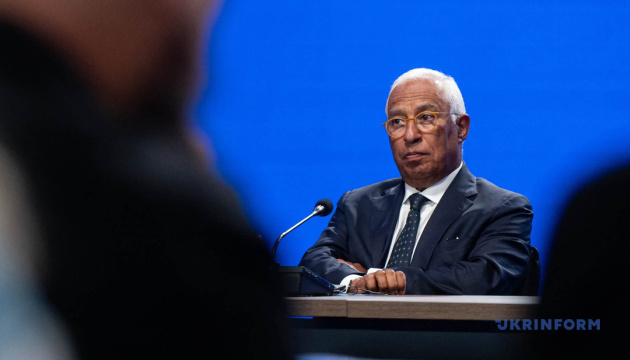
Costa Urges World to Use All Leverage on Russia to End War in Ukraine
Costa said Russia's war against Ukraine already carries global consequences and called on the international community to use every available lever of influence on Moscow.
Report: Lavrov, UN nuclear watchdog chief discuss Zaporizhzhia plant, Iran nuclear program
A report from Anadolu Agency (Turkey) sets out the main available details, with claims kept attributed to their sources.
Report: Russia’s Prozorova advances to Round 3 of 2026 WTA Singapore Open
A report from TASS (Russia) sets out the main available details, with claims kept attributed to their sources.
Report: Lavrov, Grossi discuss Israel’s, US’ strikes on Iran’s peaceful nukes — Foreign Ministry
A report from TASS (Russia) sets out the main available details, with claims kept attributed to their sources.
Trump Says Talks With Xi Jinping Went "Very Well"
US President Donald Trump described his meeting with Chinese President Xi Jinping as going very well as the two leaders emerged onto the White House South Lawn.
Russian Air Defenses Intercept 34 Ukrainian Drones Over Three Regions
Russia's on-duty air defense forces intercepted 34 Ukrainian drones over three Russian regions, according to TASS.
Comments
Loading comments…