Photographer Jean-Pierre Laffont Recalls Documenting the Bronx's Savage Skulls Gang
The French-born photojournalist described photographing one of 1970s New York's most notorious street gangs in a Guardian retrospective.
Written by EGazette’s AI. The facts are drawn from cited sources; the analysis is the AI’s own.
Photographer Jean-Pierre Laffont has described the experience of photographing the Savage Skulls, a street gang he called one of the most dangerous in the Bronx during the late 1960s and 1970s, in a feature published by The Guardian.
Laffont, who moved to New York from France in 1965, recalled the era as a difficult and often dangerous time for the city, particularly at night. He became the first foreign correspondent for the Paris-based Gamma Agency in 1969 but said he preferred pursuing personal photography projects over assignment work.
According to the feature, Laffont became interested in the Bronx gang scene after reading news coverage of violence linked to gangs including the Savage Nomads and the Dirty Dozen, alongside the Savage Skulls, which he described as the most dangerous of the group.
The full account, including the photograph and Laffont's recollections of the period, appears in The Guardian's ongoing series profiling photographers' most memorable images.
Sources
- ‘The Savage Skulls were the most dangerous gang in the Bronx’: Jean-Pierre Laffont’s best photograph — The Guardian — Culture
EGazette summarizes reporting from multiple sources; follow the links for the originals.
Comments
Loading comments…
Related articles
New York mayor Mamdani pledges 70,000 free Metropolitan Opera tickets a season
Mayor Mamdani announced an 'Opera for All' initiative offering free tickets as the Met's general manager separately seeks $1.5 billion to secure the opera house's future.
Radioactive trees to fighting fish: Photoworks festival 2026 captures a world of instability
This year's Photoworks festival gathers photography exploring the theme 'Un/Stable: Lands, Anxieties, Dreams', from origami cats to searing images from the war in Ukraine.

Russian Couple Who Climbed Empire State Building Urge Others Not to Repeat the Feat
Angelina Nikolau said the pair scaled the skyscraper's spire in the name of 'the power of love and peace.'
New York prosecutor reopens investigation into Cornell fraternity gang rape allegations
Tompkins County's district attorney said his office will present evidence to a grand jury following a lawsuit alleging a 2024 assault at a Cornell University fraternity.
Texts released in reopened Cornell gang-rape investigation
New York prosecutors reopened a criminal investigation into an alleged 2024 assault at Cornell University after text messages between a defendant and the accuser were made public.
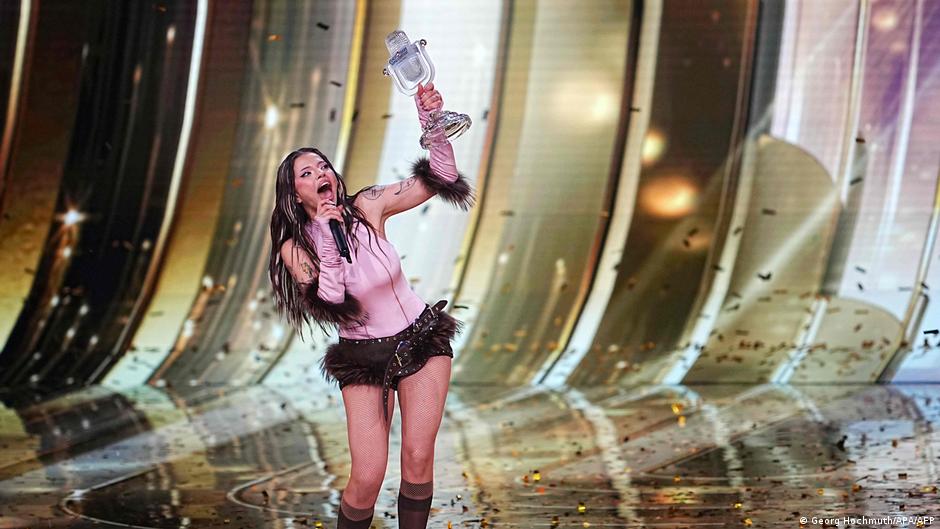
Eurovision faces renewed boycott calls over Israel's participation as contest continues to expand
Ireland says it will again skip the Eurovision Song Contest over Israel's inclusion, even as organizers pursue growth plans for the event.