Opinion Piece Argues EU's 'Associate Membership' Offer to Canada Is Symbolic, Won't Solve Security Challenges
Writing in the Guardian, analyst Paul Taylor says European Commission President Ursula von der Leyen's gesture toward Canadian Prime Minister Mark Carney carries symbolic weight but little substantive change to Europe's defence posture.
European Commission President Ursula von der Leyen invited Canadian Prime Minister Mark Carney to her annual State of the Union address to the European Parliament, according to an opinion piece published by the Guardian and written by Paul Taylor, a senior visiting fellow at the European Policy Centre.
According to Taylor, Carney was presented as "the leader of a plucky, like-minded liberal democracy" that is "locked in an unsought trade war with its much bigger bully of a neighbour" — a reference to Canada's trade tensions with the United States. Taylor writes that Carney travelled across the Atlantic to attend the event "to demonstrate his country's shared values and desire to get closer to the EU."
Taylor reports that Carney received a standing ovation at the address and was offered what the piece describes as a newly invented status of "associate member" of the European Union — the first time such a designation has reportedly been extended.
In his commentary, Taylor argues that beyond providing a "morale boost" and benefiting from what he calls Carney's "stardust," the practical implications of the associate membership offer are limited. He contends that the gesture, while largely without cost or risk to Brussels, does not address what he characterizes as Europe's broader security crisis.
The opinion piece frames the invitation and symbolic offer within the context of ongoing debates in Europe over how to strengthen security partnerships with like-minded democracies amid geopolitical pressures, though Taylor's central argument is that such gestures fall short of substantive policy solutions.
The full commentary was published by the Guardian's Comment is Free section on 17 September 2026.
Sources
- Opening the door for Canada is a harmless gesture. But it won’t fix Europe’s security crisis | Paul Taylor — The Guardian — Opinion
EGazette résume des articles de plusieurs sources ; suivez les liens pour les originaux.
Articles liés

Les Canadiens réagissent positivement à la perspective de liens plus étroits avec l'UE
Suite à la suggestion du premier ministre Mark Carney cette semaine, plusieurs Canadiens ont déclaré à la BBC qu'ils sont enthousiasmés par la possibilité de travailler et d'étudier dans l'Union européenne.

Carney appelle le Parlement européen à approfondir les liens entre le Canada et l'UE au-delà du commerce
Le Premier ministre canadien Mark Carney a appelé à une coopération accrue avec l'Union européenne dans les domaines de l'énergie, de l'IA, de l'espace et des systèmes de paiement, tout en proposant que le Canada adhère au programme d'échanges étudiants Erasmus.

Carney accueille favorablement la proposition de l'UE pour un statut de membre associé du Canada
Le Premier ministre canadien Mark Carney s'est adressé au Parlement européen, définissant les domaines d'une coopération plus approfondie avec l'Union européenne après que Bruxelles ait proposé un statut de membre associé pour le Canada.
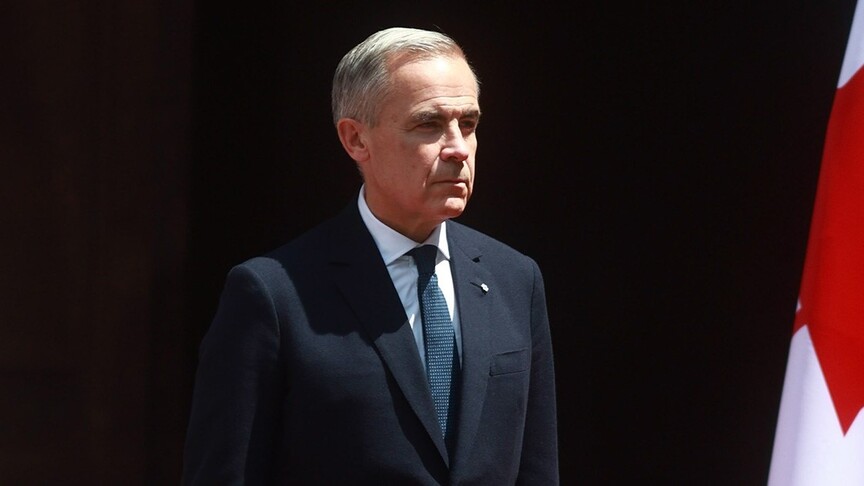
Le premier ministre canadien Carney appelle à un renforcement de l'alliance avec l'UE face aux tensions géopolitiques
Le premier ministre Mark Carney a accueilli favorablement une proposition de la présidente de la Commission européenne Ursula von der Leyen visant à faire du Canada le premier « membre associé » de l'UE, selon l'agence Anadolu.

Mark Carney à Strasbourg pour un rapprochement institutionnel avec l'Union européenne
Le Premier ministre canadien a assisté au discours sur l'état de l'Union prononcé par Ursula von der Leyen, qui a proposé à Ottawa un statut de membre associé.
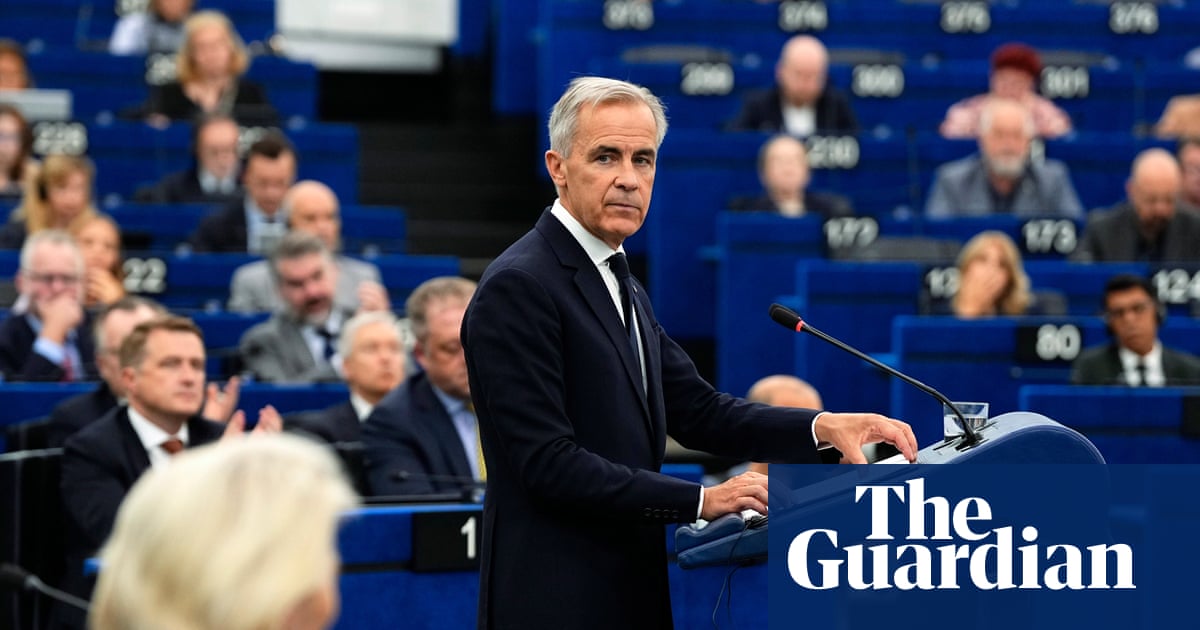
Carney appelle à une « coopération approfondie » entre le Canada et l'UE lors d'un discours à Strasbourg
Le premier ministre canadien se réjouit de la perspective que le Canada devienne le premier membre associé de l'UE, quelques jours après que Trump ait qualifié l'idée de « ridicule »
Comments
Loading comments…