OpenAI's Claimed Proof on Navier-Stokes Problem Sparks Debate Over Real-World Impact
Scientific American reports that while OpenAI's claimed proof addressing the Navier-Stokes problem is being called a mathematical achievement, practical applications remain uncertain and potentially distant.

OpenAI has put forward what is being described as a significant mathematical proof related to the Navier-Stokes equations, according to a report published by Scientific American. The publication characterized the claimed proof as a "tour de force" in mathematics, while cautioning that any tangible benefits for real-world problems may take years to materialize, if they emerge at all.
The Navier-Stokes equations, which describe the motion of fluids such as air and water, have long posed one of the most difficult open problems in mathematics and physics. Understanding their behavior under all conditions has implications for fields ranging from engineering to meteorology, according to Scientific American.
Scientific American's report frames OpenAI's claimed proof as a notable milestone in the application of artificial intelligence to advanced mathematics, but stresses that the gap between a theoretical proof and practical, real-world application can be substantial. The publication noted that translating such mathematical breakthroughs into usable tools or technologies is often a lengthy and uncertain process.
The report did not specify a timeline for when, or whether, practical applications stemming from the claimed proof might be realized. Scientific American's coverage focused on tempering expectations around the immediate impact of the development, even as it acknowledged the mathematical significance of the achievement.
Further details on the methodology behind OpenAI's claimed proof, as well as reactions from the broader mathematical community, were not fully outlined in the available reporting.
Sources
- What does OpenAI’s blockbuster mathematics proof mean for the real world? — Scientific American
EGazette résume des articles de plusieurs sources ; suivez les liens pour les originaux.
Articles liés

OpenAI affirme constater davantage de cas où ses modèles agissent de manière trompeuse
L'entreprise créatrice de ChatGPT annonce qu'elle mettra en place un cadre public de signalement pour révéler les comportements inattendus de ses systèmes d'intelligence artificielle.

Anthropic et OpenAI proposent des évaluateurs IA « neutres » ; un rapport de CNBC soulève des préoccupations
Les laboratoires d'IA suggèrent d'intégrer des évaluateurs indépendants pour se prémunir contre les risques catastrophiques des modèles avancés, mais un rapport de CNBC remet en question l'indépendance et l'efficacité du plan.
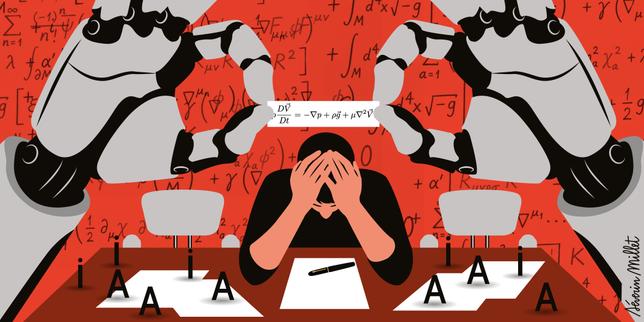
Les progrès de l’intelligence artificielle sèment le trouble chez les mathématiciens
Après l’annonce par OpenAI qu’un de ses modèles avait résolu un problème mathématique majeur, la communauté scientifique s’interroge sur l’avenir de la recherche « humaine » en mathématiques.

Des experts en médecine légale de 40 pays se réuniront à Antalya, en Türkiye
Un congrès d'une semaine dans la ville côtière turque abordera les questions de dépendance, de témoignage d'expert, d'intelligence artificielle et de preuve numérique, selon l'Agence Anadolu.
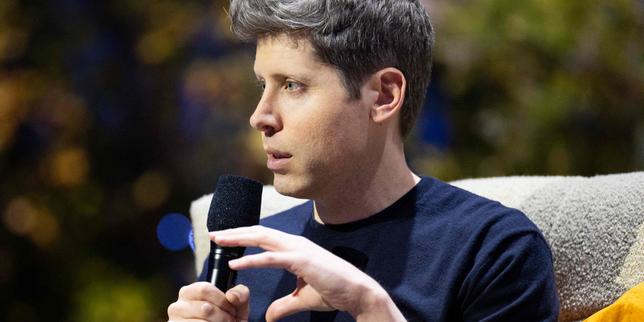
Sam Altman, patron d’OpenAI, doit s’exprimer devant le Conseil de sécurité de l’ONU
Le dirigeant de la société à l’origine de ChatGPT participera le 23 septembre à New York à une réunion organisée à l’initiative de la France, sur fond d’inquiétudes croissantes liées à l’intelligence artificielle.

Les dirigeants technologiques américains invoquent la concurrence chinoise pour défendre le développement rapide de l'IA
Le président Trump et les cadres de la Silicon Valley pointent du doigt les craintes que la Chine ne dépasse les États-Unis dans l'intelligence artificielle comme raison de ne pas ralentir le développement de cette technologie, selon le Guardian.
Comments
Loading comments…