Mathematicians Explain Why Only Five 'Perfect' Shapes Exist in Geometry
Scientific American traces the topological reasoning behind the five Platonic solids, the only regular convex polyhedra possible.
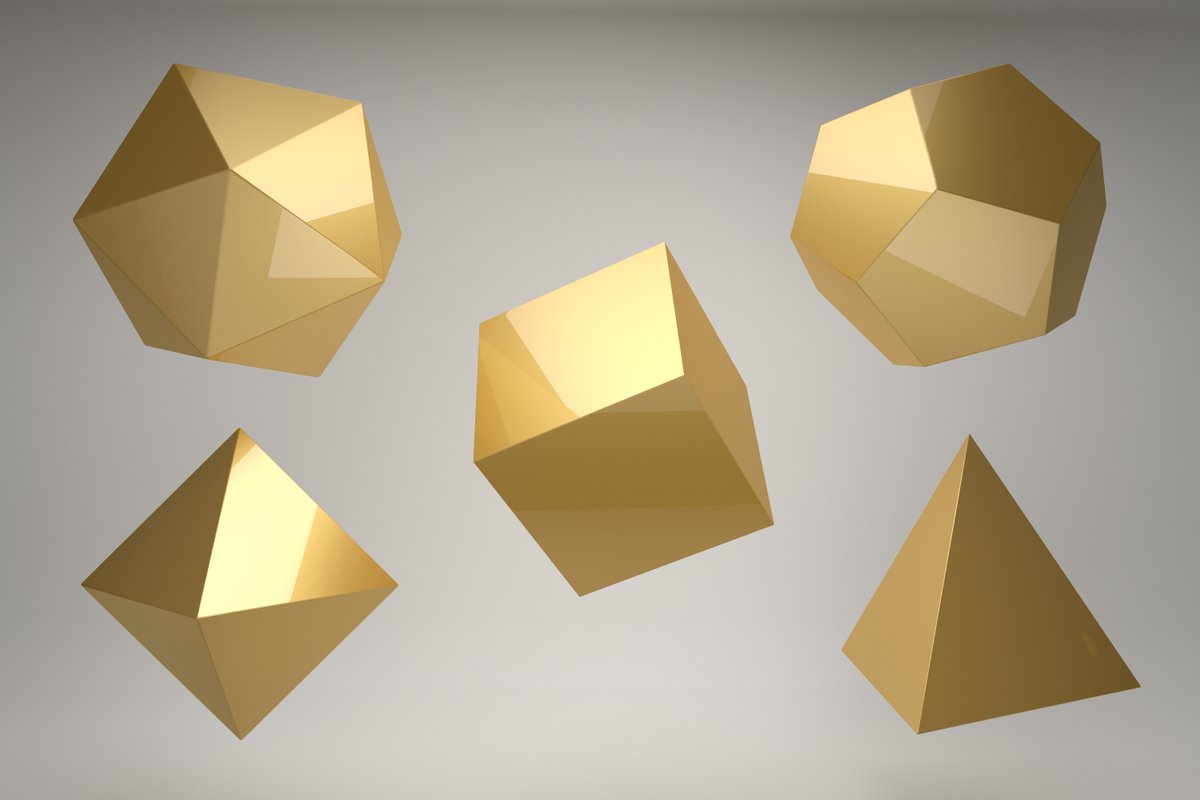
According to an article published by Scientific American, mathematics recognizes exactly five so-called Platonic solids: the tetrahedron, cube, octahedron, dodecahedron and icosahedron. The publication describes these shapes as the epitome of geometric perfection, noting that no others like them can exist.
Platonic solids are defined as three-dimensional convex shapes made up of identical regular polygon faces, with the same number of faces meeting at every vertex. The tetrahedron has four triangular faces, the cube has six square faces, the octahedron has eight triangular faces, the dodecahedron has twelve pentagonal faces, and the icosahedron has twenty triangular faces, the article notes.
Scientific American reports that the limit to exactly five such solids can be explained through principles of topology and geometry rather than mere observation. The reasoning centers on the constraints placed on how regular polygons can meet at a single vertex while still folding into a closed, convex three-dimensional shape. For a shape to close up properly, the angles of the polygons meeting at each corner must sum to less than 360 degrees, the article explains, and only a limited number of combinations of polygon types and counts satisfy this requirement.
The article traces the study of these shapes back to ancient Greek mathematicians, noting that they are named after the philosopher Plato, who associated them with classical elements in his writings. Scientific American states that mathematicians have long been fascinated by the symmetry and uniformity of the five solids, and that their limited number has made them a recurring subject of mathematical inquiry for centuries.
The publication frames the explanation as a demonstration of how abstract mathematical reasoning, rather than trial-and-error construction, can definitively establish the boundaries of what shapes are possible.
Sources
- There are just five perfect shapes in math—here's why — Scientific American
EGazette résume des articles de plusieurs sources ; suivez les liens pour les originaux.
Articles liés

La preuve revendiquée par OpenAI sur le problème de Navier-Stokes suscite un débat sur son impact réel
Scientific American rapporte que la preuve revendiquée par OpenAI concernant le problème de Navier-Stokes est présentée comme une réussite mathématique, mais les applications pratiques restent incertaines et potentiellement lointaines.

L'Agence spatiale européenne lance deux satellites pour surveiller le changement climatique
Les nouveaux satellites aideront les scientifiques à étudier les effets du changement climatique, l'un des instruments étant dédié à l'observation de la vie végétale

Découverte exceptionnelle de fossiles dénisoviens dans une grotte du sud-ouest de la Chine
Des restes rarissimes de ces « cousins » asiatiques de l’homme de Néandertal ont été mis au jour aux côtés d’outils en pierre, offrant un éclairage inédit sur leur mode de vie.
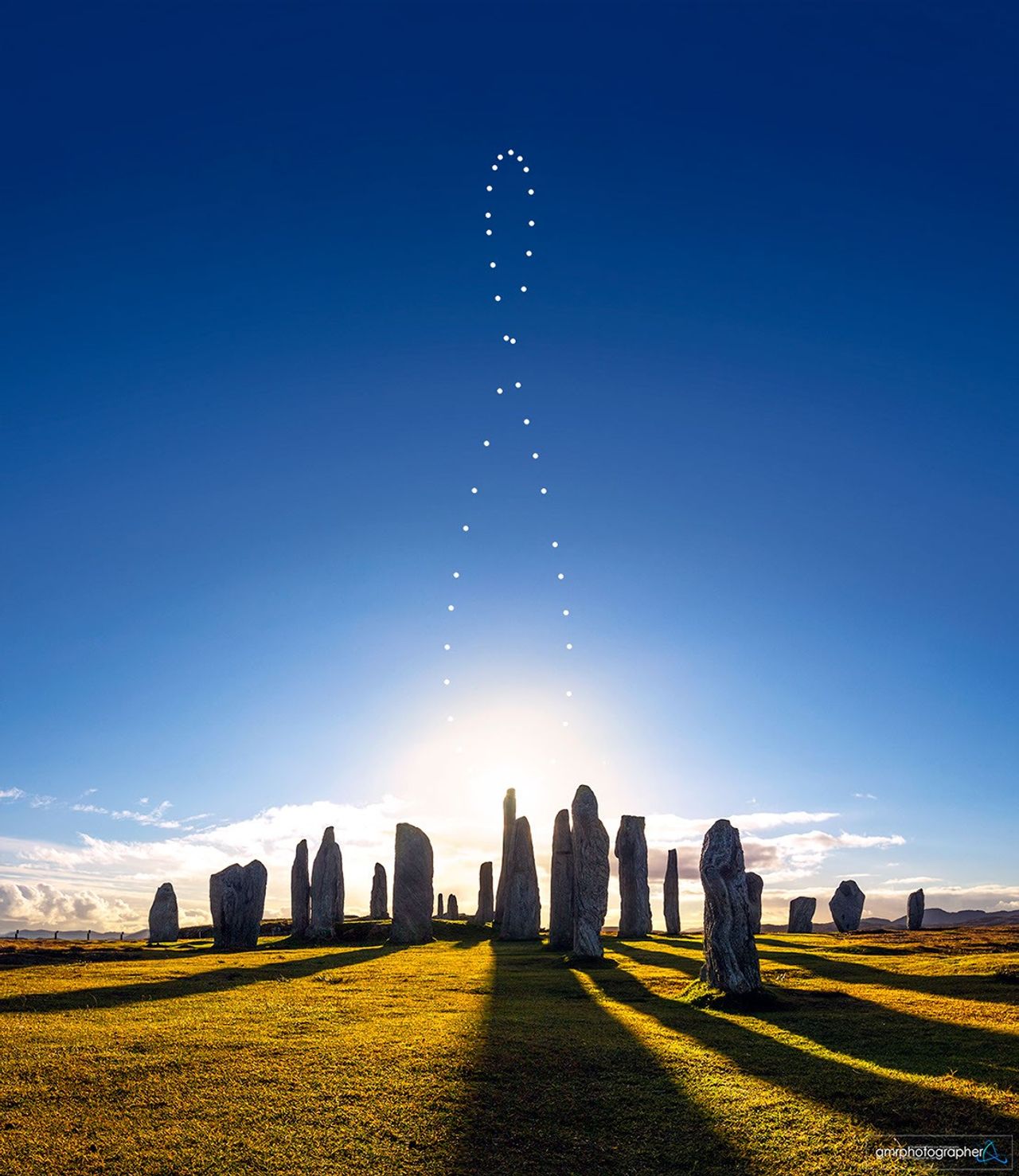
L'image astronomique du jour de la NASA met en avant une analemme au-dessus des pierres de Callanish en Écosse
L'édition du 20 septembre 2026 de la célèbre série APOD de la NASA présente une image composite montrant le trajet annuel du soleil au-dessus des anciennes pierres de Callanish.

De nouvelles preuves archéologiques révèlent des passages secrets derrière le tombeau de Toutânkhamon
Une étude archéologique rouvre le dossier du tombeau perdu de la reine Néfertiti après la détection d'indices pointant vers l'existence de chambres et de passages non découverts derrière les murs du tombeau du jeune pharaon dans la Vallée des Rois

Une nouvelle espèce de félin sauvage découverte en Bolivie
Des scientifiques boliviens annoncent l'identification du "tilcayo", un chat sauvage au pelage tacheté observé dans la région montagneuse de Los Yungas.
Comments
Loading comments…