How Rising Global Interest Rates Are Pushing Up France's Public Debt
Global borrowing costs are at their highest level in two decades, fueling concern about France's ability to manage its debt burden.
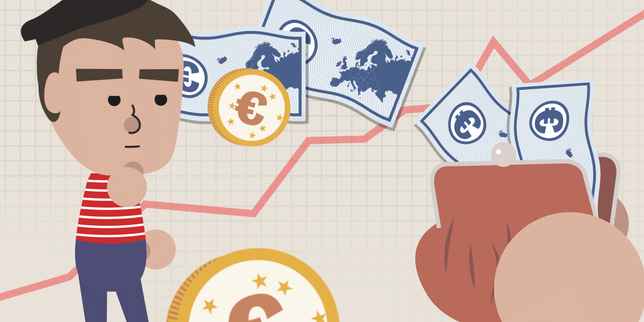
Global interest rates have climbed to their highest levels in roughly twenty years, a trend that is increasingly weighing on France's public finances and fueling concern in some quarters about the risk of a broader debt crisis.
Interest rates set by central banks and reflected in government bond markets influence how much it costs governments to borrow money. When rates rise, the cost of issuing new government debt, and of refinancing existing debt as it comes due, rises as well. For countries carrying significant levels of public debt, higher rates can translate directly into a growing share of the national budget being consumed by interest payments rather than public services or investment.
France's debt position
France has carried a substantial public debt load relative to the size of its economy for a number of years, a position that has drawn scrutiny from credit rating agencies, European Union budget overseers, and domestic political debate. As global rates have risen to levels not seen in two decades, the cost of servicing that debt has become a more pressing concern for French policymakers, since even a modest increase in average borrowing costs can add meaningfully to annual interest expenses given the scale of outstanding debt.
The dynamic has prompted some economists and officials to warn of the risk of a debt spiral, in which rising interest costs force a government to borrow more simply to cover interest payments, further increasing the debt load and, potentially, the rates investors demand to continue lending. Others caution that while the trend bears watching, France retains significant capacity to manage its debt given the size and diversification of its economy, and that comparisons to more acute debt crises elsewhere may overstate the immediate risk.
The rise in global rates reflects a broader shift after a long period of historically low borrowing costs that had prevailed across much of the developed world in the years following the 2008 financial crisis. As that low-rate environment has receded, governments with high debt levels, France among them, are having to reassess how they manage fiscal policy in a higher-cost borrowing environment, a challenge that is expected to remain a central theme in French economic policy debates in the period ahead.
Sources
- Comment la hausse des taux d’intérêt mondiaux fait grimper la dette publique française ? Comprendre en trois minutes — Le Monde — Une
EGazette résume des articles de plusieurs sources ; suivez les liens pour les originaux.
Articles liés

Ce que la flambée des rendements des bons du Trésor signifie pour l'économie
Les coûts d'emprunt du gouvernement ont fortement augmenté cette semaine, un mouvement aux effets en cascade sur les prêts à la consommation, les prêts immobiliers et le financement des entreprises.

La BERD ramène à 0,5 % ses prévisions de croissance pour l'économie russe en 2026
La Banque européenne pour la reconstruction et le développement a abaissé de 0,3 point de pourcentage ses prévisions de croissance pour la Russie en 2026 par rapport à son estimation de juin, selon l'agence TASS.

Le pétrole recule tandis que l'Iran ouvre une fenêtre de négociation.. Quelle suite ?
Un rapport de Deutsche Welle — Arabic présente les points clés du développement disponible, avec des déclarations attribuées à leurs sources.

Rapport : La Suisse maintient ses taux à 0 % — pour l'instant
Un rapport de CNBC — Top News présente les principaux détails disponibles, avec des déclarations attribuées à leurs sources.

Rapport : Les prix du pétrole augmentent alors que les investisseurs cherchent des avancées dans les négociations américano-iraniennes
Un rapport de CNBC — Top News expose les principaux détails disponibles, les déclarations étant attribuées à leurs sources.
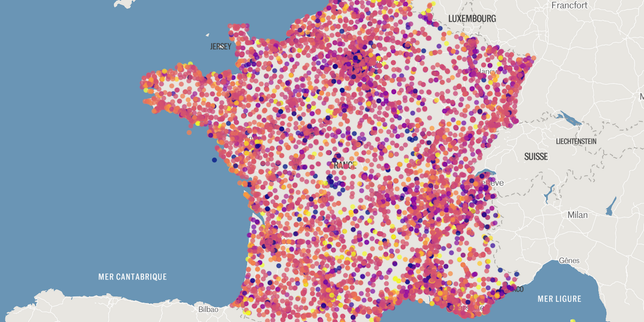
Carburants : la carte des prix de l'essence et du gazole pres de chez vous
Les consequences de la guerre au Moyen-Orient se font de plus en plus sentir sur les prix pratiques dans les stations-service francaises.
Comments
Loading comments…