How is money shaping the 2026 US midterms? Guardian journalists answer reader questions
Reporters Joseph Gedeon, Dara Kerr and Chris Stein fielded reader questions on campaign fundraising, PAC spending and the role of AI in the midterm elections.
Written by EGazette’s AI. The facts are drawn from cited sources; the analysis is the AI’s own.
As the 2026 US midterm campaign intensifies, questions about who is funding candidates and how that money moves through the political system have taken on new urgency. Guardian reporters Joseph Gedeon, Dara Kerr and Chris Stein addressed a range of reader questions on the subject, offering insight into the financial mechanics behind several high-profile races.
One reader asked about Alex Vindman, who raised roughly $16 million during his unsuccessful campaign to become the Democratic Senate nominee in Florida, losing to Angie Nixon. According to Gedeon, Vindman is directing his substantial remaining war chest toward boosting Democrats nationally rather than supporting Nixon directly. In August, he announced $250,000 in contributions to the Democratic Senatorial Campaign Committee and to candidates including Abdul El Sayed in Michigan, Troy Jackson in Maine, Roy Cooper in North Carolina, Sherrod Brown in Ohio and Charles Booker in Kentucky. In Florida specifically, Vindman said he invested $400,000 in the state Democratic party, though not in Nixon's campaign itself.
A cautious Senate Majority PAC
Gedeon also noted that the Senate Majority PAC, led by Chuck Schumer and dedicated to boosting Democratic Senate candidates, appears to be steering clear of Nixon's campaign — a sign, he suggested, that the group does not view the Florida race as winnable and is reluctant to commit further resources to it.
Another question focused on the potential role of artificial intelligence in campaign finance oversight, including debt recovery for investors tied to government contracts. Kerr responded that while AI could theoretically assist with such recovery work, the technology's known limitations — including bias and error rates — mean it would likely require significant human oversight. She said AI is more realistically suited to identifying trends and organizing financial data, with people still needed to direct the work and ensure compliance with relevant rules.
The exchange highlights the complex, often indirect ways that campaign money flows between candidates, party committees and outside groups during a competitive midterm cycle.
Sources
- ‘These efforts have not gone too well’: your questions on how money will influence midterm elections answered — The Guardian — World
EGazette summarizes reporting from multiple sources; follow the links for the originals.
Related articles
US Supreme Court Allows Trump Administration to Deploy Disputed Voter Verification System
The court's ruling clears the way for a voter ID verification program that voting rights groups warn could wrongly flag eligible citizens as non-citizens and risk disenfranchisement.
Supreme Court Allows Trump Administration to Use Contested Citizenship Database for Voter Checks
Critics have questioned the reliability of the database, warning it could lead to US citizens being wrongly removed from electoral rolls.
US Supreme Court Allows Trump Administration to Use Disputed Voter Verification System
The court's ruling permits use of a new federal database intended to verify voter citizenship ahead of November's elections, a move critics say could disenfranchise voters.
Russia Accuses Ukraine of Trying to Disrupt Elections With Western Financial, Intelligence Support
Russia's Foreign Ministry says 41 people were killed and 338 injured in the past week, accusing Kyiv of attacks on civilian infrastructure, according to Anadolu Agency.
Netanyahu's defiant UN speech wins praise at home as world delegates walk out
The Israeli prime minister's address alienated critics abroad but resonated with his political base as elections approach.
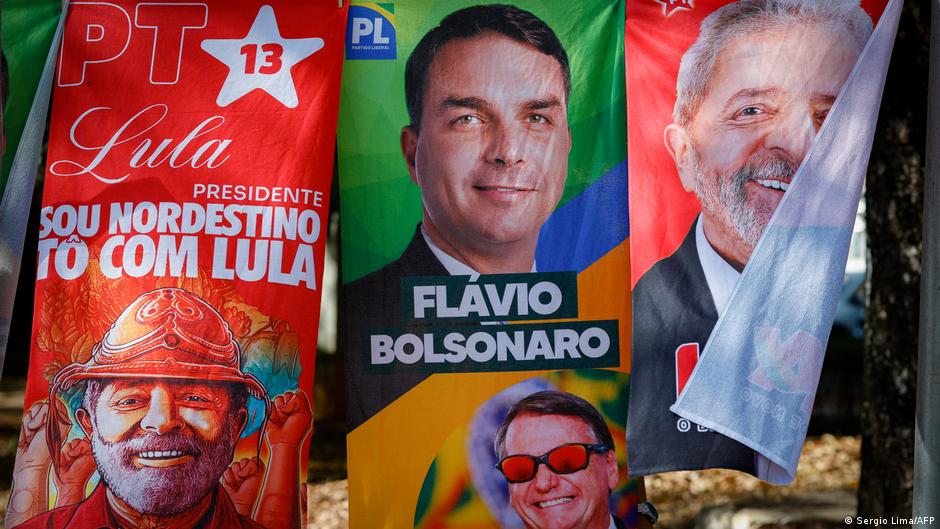
Lula or Bolsonaro? Brazil gears up for October 4 presidential vote
Brazilians head to the polls on October 4 in a race pitting multilateralist incumbent Lula da Silva against Flavio Bolsonaro, son of the former president, who favors closer ties with the US and distance from China.
Comments
Loading comments…