How Chinese intelligence allegedly used a personal relationship to target the Federal Reserve
A CNBC investigation examines how a former Fed advisor became entangled with a man US officials identify as a Chinese intelligence operative.
Written by EGazette’s AI. The facts are drawn from cited sources; the analysis is the AI’s own.

A CNBC investigation has detailed how a former Federal Reserve advisor, John Rogers, became entangled in a relationship that US officials say was engineered by a man they identify as a Chinese intelligence operative.
According to the investigation, the case illustrates a pattern in which personal relationships are cultivated over time to gain access to individuals with insight into sensitive economic and financial policy discussions.
US officials cited in the report describe the episode as an example of the kind of long-term, relationship-based approach that intelligence services can use to try to reach institutions like the Federal Reserve, which sits at the centre of US monetary policy.
The report does not allege that classified national security information was compromised, but it raises questions about the vulnerability of individuals with access to market-sensitive economic analysis and policy deliberation.
The Federal Reserve has faced scrutiny in the past over staff conduct and information security, and cases like this one add to a broader conversation in Washington about counterintelligence risks facing economic policymaking institutions.
Sources
- Inside Man: How Chinese spies used lies, love and betrayal to target the Federal Reserve — CNBC — Top News
EGazette summarizes reporting from multiple sources; follow the links for the originals.
Comments
Loading comments…
Related articles
Iran Says Recognition of Its 'Legitimate Rights' Could End Conflict, Defense Ministry Spokesperson Says
Iranian Defense Ministry spokesperson Brig. Gen. Reza Talaei-Nik said Tehran has consistently sought an end to conflict but will continue defending its rights, security and national interests.
Xi pays floral tribute to fallen heroes ahead of China's National Day
Chinese President Xi Jinping made a floral tribute to fallen heroes on the eve of China's National Day, which is celebrated on October 1.
China Will Not Be First to Weaponize AI, Says Policy Expert Wang Huiyao
Chinese policy adviser Wang Huiyao said China would not be the first nation to use artificial intelligence as a weapon, noting a developing balance in the US-China relationship.
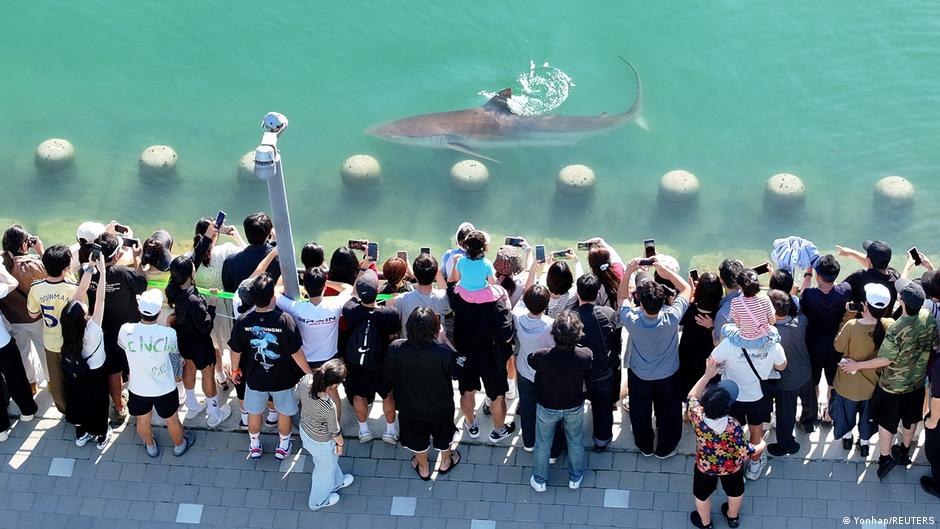
South Korea's stranded shark draws over 500,000 visitors to Busan
A shark that became stranded off the South Korean port city has been named an honorary ambassador after drawing huge crowds.

Worker dies, another badly injured in accident at Fincantieri shipyard
A 55-year-old Tunisian worker died from burns sustained in the incident, according to ANSA.
Iran's Pezeshkian Says Persian Gulf Security Requires Shared Regional Responsibility
The Iranian president stressed the strategic importance of the Strait of Hormuz and called for a stability-focused approach among regional states.