Evacuating Civilians From Kharkiv Grows More Dangerous as Russian Attacks Intensify
Although the front line in Ukraine has appeared largely static for months, intensifying Russian strikes are making the evacuation of civilians from areas around Kharkiv increasingly risky.

The front line in Ukraine has looked largely frozen from a distance for months, with neither side making a significant breakthrough. But on the ground, the situation remains far from static, and towns and villages once considered relatively safe can suddenly find themselves at risk of becoming battlegrounds.
That shifting reality is forcing residents in areas around Kharkiv to evacuate under increasingly dangerous conditions, as Russian attacks in the region intensify.
A precarious evacuation effort
Civilians in the Kharkiv area now face growing danger simply in the process of leaving their homes, as intensified strikes complicate efforts by authorities and aid workers to move people out of threatened areas. The risks facing evacuees underscore how, even in a conflict often described as stalemated at the strategic level, the situation for civilians on the ground can deteriorate quickly and without warning.
Local populations near the front have repeatedly had to adjust to sudden changes in the security situation, with communities that had gone largely untouched by fighting for extended periods suddenly finding themselves within range of attacks.
The intensification of Russian strikes in the Kharkiv sector adds to the broader humanitarian strain the war has placed on Ukraine's northeastern regions, which have been a recurring target since the early stages of the full-scale invasion. Evacuation operations in active or near-active combat zones typically require careful coordination to minimize risk, and any escalation in attacks can force authorities to alter routes or timing on short notice.
The developments highlight the continued vulnerability of civilian populations near the front, even as the broader battle lines have shown little movement in recent months.
Sources
- Ukraine: face à l’intensification des attaques russes, l’évacuation de civils à Kharkiv est de plus en plus risquée — RFI — Français
EGazette résume des articles de plusieurs sources ; suivez les liens pour les originaux.
Articles liés

Les frappes russes coupent le courant dans cinq régions ukrainiennes, selon Ukrenergo
L’opérateur du réseau d’État ukrainien a signalé de nouvelles pannes mercredi matin après de nouvelles attaques russes contre le système énergétique du pays.

Une frappe russe frappe un centre commercial dans la région d’Odessa, déclenchant un incendie majeur
Une attaque russe a frappé un centre commercial dans la région d’Odessa en Ukraine dans la matinée du 23 septembre, déclenchant un important incendie sur le site.

L’attaque russe sur Kyiv fait un mort et huit blessés
Un homme blessé lors d’une frappe russe sur Kyiv est décédé à l’hôpital, portant le bilan de l’attaque à un mort et huit blessés.

Zelensky s’adressera à l’Assemblée générale de l’ONU alors que Kyiv rapporte des frappes meurtrières russes
Le président ukrainien s’apprêtait à présenter son dossier auprès des dirigeants mondiaux, alors que le maire de Kyiv a déclaré que des attaques de drones russes avaient tué au moins une personne et en ont blessé sept en une nuit.

Guerre en Ukraine : les drones dopés à l'intelligence artificielle se multiplient des deux côtés du front
L'armée ukrainienne mène déjà des missions quotidiennes avec des drones intégrant des modules d'IA, tandis que la Russie développe rapidement des appareils capables de frapper leurs cibles en totale autonomie.
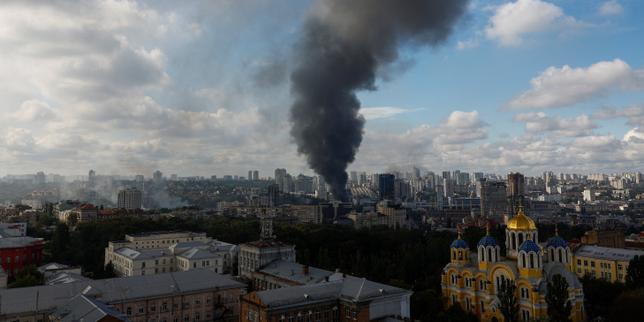
Guerre en Ukraine : un mort et plusieurs blessés à Kiev après des bombardements nocturnes
Un drone s'est écrasé sur un immeuble de bureaux dans la capitale ukrainienne, touchant également une station-service et des infrastructures ferroviaires.
Comments
Loading comments…