Dutch PM Says Netanyahu Should Attend UN Despite ICC Warrant
Dutch Prime Minister Rob Jetten said Israeli Prime Minister Benjamin Netanyahu should be able to attend the UN General Assembly even though he is wanted by the International Criminal Court.

Dutch Prime Minister Rob Jetten has said that Israeli Prime Minister Benjamin Netanyahu should be permitted to attend the United Nations General Assembly in New York, despite an outstanding arrest warrant issued for him by the International Criminal Court.
Netanyahu is among the individuals wanted by the ICC, which issues warrants for individuals it accuses of serious international crimes. The court's warrants apply to member states, which are generally obligated to arrest wanted individuals present in their territory, though enforcement in practice has varied depending on the cooperation of individual governments.
Jetten's comments highlight what has been described as a contrasting approach compared with how ICC-wanted individuals are treated in other cases, including that of Russian President Vladimir Putin, who is also subject to an ICC warrant. The comparison underscores the complicated and sometimes inconsistent way governments around the world have responded to the court's warrants depending on the individual involved and the broader diplomatic context.
The United Nations headquarters in New York operates under a host country agreement with the United States that has traditionally allowed foreign leaders to attend General Assembly sessions, a practice that has at times put the U.S. and other governments in a position distinct from their obligations as ICC member states, in cases where they are members.
The Netherlands, as the host country of the ICC itself, headquartered in The Hague, has faced particular scrutiny over how it and its allies respond to the court's warrants. Dutch officials have periodically been asked to clarify their position on enforcement of ICC warrants involving world leaders.
The remarks come amid a UN General Assembly session in which the Israeli-Palestinian conflict and related legal and diplomatic questions have featured prominently in speeches and side discussions among world leaders.
Sources
- Dutch PM’s contrasting stance on ICC-wanted Putin, Netanyahu — Al Jazeera — All
EGazette summarizes reporting from multiple sources; follow the links for the originals.
Related articles
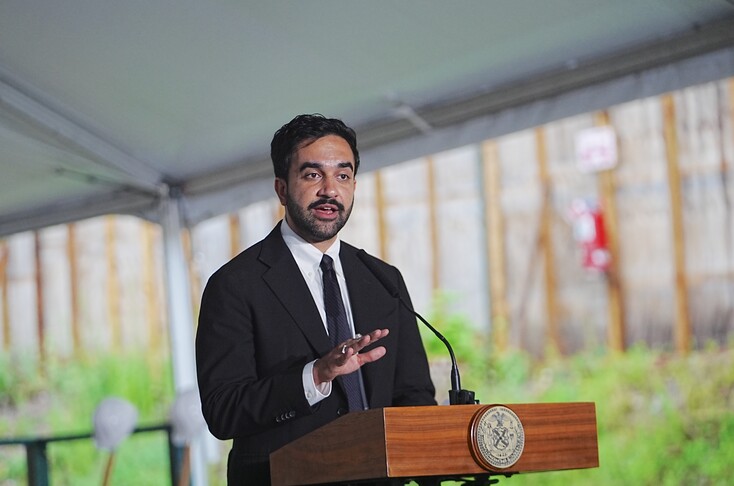
New York City Mayor Criticizes Netanyahu's UN Speech, Cites ICC Warrant
Zohran Mamdani said the Israeli prime minister's address repeated 'baseless lies' and pointed to the ICC arrest warrant against him.

Netanyahu at the UN: Israel Denies Committing 'Genocide'
The Israeli prime minister defended himself Thursday before the General Assembly as international criticism over the situation in the West Bank intensifies.
At the UN, Netanyahu rejects genocide accusations against Israel
The Israeli prime minister denounced international criticism on Thursday, as condemnations—including that of Emmanuel Macron—multiply over the occupied West Bank.

Netanyahu Downplays Settler Violence in West Bank, Blames 'Juvenile Delinquents'
Speaking at the United Nations, Israeli Prime Minister Benjamin Netanyahu described settler violence in the occupied West Bank as the work of a small number of young offenders.
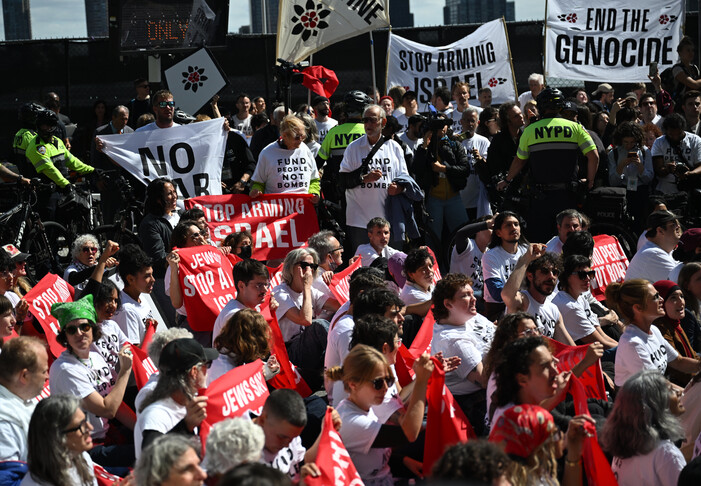
Protesters Outside UN Headquarters in New York Demand Netanyahu Face War Crimes Charges
More than 100 demonstrators, including actor Susan Sarandon, gathered as the Israeli prime minister addressed the UN General Assembly.

In brief: REPLAY: Benjamin Netanyahu addresses the United Nations General Assembly
France 24 — Français’s report summarises the main available elements, with claims kept attributed to their sources.
Comments
Loading comments…