BRICS Leaders Voice Concern Over Rising Risk of Nuclear Conflict
In a joint declaration, BRICS countries highlighted the importance of nuclear-weapon-free zones and reaffirmed commitment to global non-proliferation efforts, according to TASS.

Leaders of the BRICS group of nations have expressed concern about the growing risks of nuclear conflict, according to a declaration cited by Russian state news agency TASS.
The declaration, as reported by TASS, stated that BRICS leaders stressed the significant contribution of nuclear-weapon-free zones to strengthening the global nuclear non-proliferation regime.
TASS did not specify the exact wording of the full declaration or the summit at which it was issued, but framed the statement as part of a broader set of positions adopted by BRICS members on international security matters.
The BRICS bloc, which includes Brazil, Russia, India, China and South Africa among its members, has in recent years expanded to include additional countries and has increasingly used joint declarations to address global security and non-proliferation issues.
Nuclear-weapon-free zones are regions where countries have agreed by treaty not to develop, manufacture, test, or acquire nuclear weapons. Such zones exist in parts of Latin America, the South Pacific, Southeast Asia, Africa and Central Asia, and are generally viewed by arms control advocates as tools for reinforcing the international non-proliferation framework established under the Nuclear Non-Proliferation Treaty.
TASS did not provide additional details on specific measures proposed by BRICS leaders to address the cited risks of nuclear conflict, nor did it specify which regions or conflicts prompted the concern.
Sources
- BRICS countries express concern about growing risks of nuclear conflict — declaration — TASS (Russia)
EGazette summarizes reporting from multiple sources; follow the links for the originals.
Related articles
Russia Says Air Defenses Intercepted 1,110 Ukrainian Drones Overnight
Russian Defense Ministry reports downing over a thousand fixed-wing drones across nearly 20 regions and Crimea, according to TASS
Russia Says Drones Struck Tanker Carrying Military Supplies at Ukrainian Port
Russian state media reported that "Geran-4 Seeker" drones hit a tanker in the port of Chernomorsk, though the claim could not be independently verified.
Russian Military Says It Struck Cargo Ship and Logistics Center Near Odessa
Russia's Defense Ministry, cited by state news agency TASS, claimed strikes on a vessel it said delivered military supplies and a logistics hub north of the Ukrainian port city.

Denmark Keeps Details of Anticipated Greenland Agreement with Washington Under Wraps
Copenhagen refuses to disclose agreement terms with the United States, amid diverging portrayals by both parties

Australia appoints new diplomats to key posts in Cairo, Port Moresby, Dili, and New York
Foreign minister Penny Wong announces diplomatic appointments as part of efforts to strengthen Australia's international engagement.
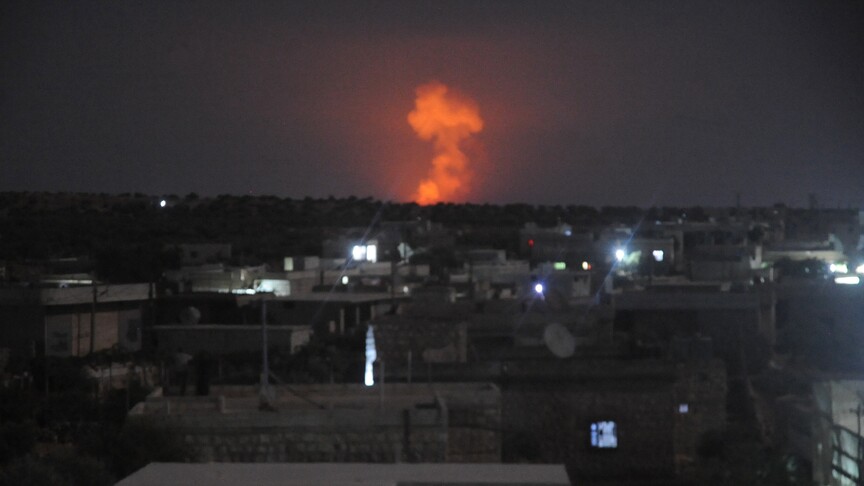
Powerful Explosions Reported in Syria's Aleppo Countryside
Blasts were heard in the town of Al-Eis, with local sources attributing them to a Defense Ministry ammunition depot, according to state media.
Comments
Loading comments…