BepiColombo Spacecraft Nears Mercury After Eight Years in Space
European-Japanese mission deploys two science orbiters in critical maneuver, entering final phase before reaching innermost planet
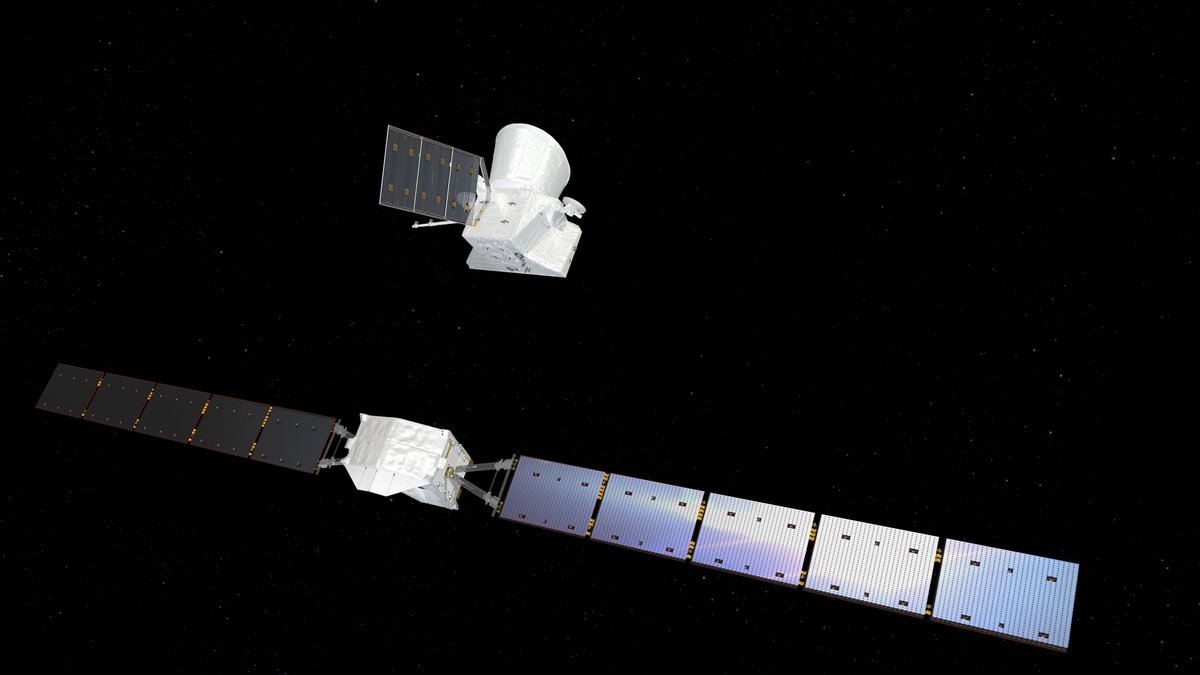
The BepiColombo spacecraft is approaching Mercury after spending eight years traveling through the solar system, according to Scientific American.
In a critical maneuver conducted on Thursday, the mission successfully deployed its two science orbiters, according to the report. The deployment marks the beginning of the final phases of the spacecraft's arrival at Mercury.
BepiColombo is a joint mission between the European Space Agency and the Japan Aerospace Exploration Agency, according to the report. The mission was designed to study Mercury, the smallest and least explored planet in the solar system.
The spacecraft's long journey has involved multiple gravity-assist flybys to gradually adjust its trajectory for entry into Mercury's orbit, according to the report. The successful separation of the two orbiters represents a significant milestone in the mission's progress toward its scientific objectives.
Sources
- The spacecraft BepiColombo is finally nearing Mercury after 8 years in space — Scientific American
EGazette summarizes reporting from multiple sources; follow the links for the originals.
Related articles
European Space Agency Launches Two Satellites to Monitor Climate Change
The new satellites will help scientists study the effects of climate change, with one instrument dedicated to observing plant life

Poison suspected in deaths of ten lions at Tanzania game reserve
The lions were discovered dead in the Ngorongoro Conservation Area, prompting wildlife officials to investigate.

Exceptional Discovery of Denisovan Fossils in a Southwestern Chinese Cave
Extremely rare remains of these Asian "cousins" of Neanderthals have been unearthed alongside stone tools, shedding new light on their way of life.
Scientific American's October Retrospective Looks Back at Smallpox, Skyscrapers and Racetrack Research
A historical column published by Scientific American revisits science and technology milestones from 50, 100 and 150 years ago, touching on smallpox eradication efforts, skyscraper excavation work and research conducted at racetracks.

NASA's Astronomy Picture of the Day Features Analemma Over Scotland's Callanish Stones
The September 20, 2026 edition of NASA's long-running APOD series highlights a composite image showing the sun's yearly path above the ancient Callanish Stones.

New Archaeological Evidence Points to Hidden Passages Behind Tutankhamun's Tomb
Archaeological study reopens the file on the lost tomb of Queen Nefertiti after detecting indicators of undiscovered chambers and passages behind the walls of the young pharaoh's tomb in the Valley of the Kings
Comments
Loading comments…