Analyst Says Israelis and Palestinians Must 'Reboot' Relations to Avoid Perpetual War
Chatham House fellow Yossi Mekelberg argues that a transition beyond the Netanyahu era could open the door to rethinking Israeli-Palestinian relations.
Written by EGazette’s AI. The facts are drawn from cited sources; the analysis is the AI’s own.
A leading Middle East analyst has argued that Israelis and Palestinians need to fundamentally reset their relationship, warning that the absence of a credible diplomatic path risks locking the region into a state of perpetual war.
Yossi Mekelberg, a senior consulting fellow with the Middle East and North Africa Programme at Chatham House, made the case in a discussion with France 24's Mark Owen, questioning whether Israel can continue to define its long-term future primarily through security operations and territorial control.
Mekelberg challenged the notion that military action, incursions into Palestinian territory, and continued settlement expansion can amount to a sustainable political objective on their own, arguing that security-focused policies cannot substitute for a genuine political process.
He pointed to a potential transition beyond the era of Israeli Prime Minister Benjamin Netanyahu as a moment that could open space to reconsider the broader relationship between Israeli and Palestinian societies, suggesting that shifts in political leadership can create opportunities to revisit entrenched positions.
Central to his argument is a warning that continuing military conflict without a defined political endgame carries the risk of establishing a state of perpetual conflict, in which violence persists without any mechanism for a durable resolution.
The discussion adds to a broader debate among Middle East analysts and policymakers over how the international community, regional powers, and the parties themselves might chart a path away from cyclical violence and toward a negotiated settlement.
Sources
- Israelis, Palestinians must 'reboot relations': Absence of diplomatic route means 'perpetual war' — France 24 — English
EGazette summarizes reporting from multiple sources; follow the links for the originals.
Related articles
Pakistan's Deputy PM Voices Deep Concern Over Regional and Middle East Security
Ishaq Dar reaffirmed Pakistan's commitment to resolving regional disputes peacefully and in line with international law.
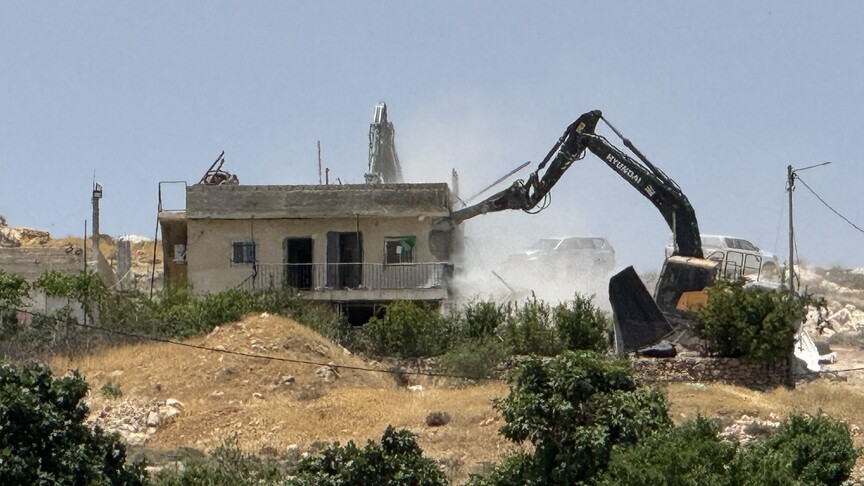
Volunteers dismantle 40-year-old Palestinian farm amid fears of Israeli demolition
More than 500 volunteers took apart farm structures over three days ahead of a feared demolition order.

Iran's Foreign Minister Says Country Is 'Victim of Aggression' by US and Israel
Abbas Araghchi said Tehran has faced aggressive and illegal actions despite its commitment to diplomacy, Mehr News reported.
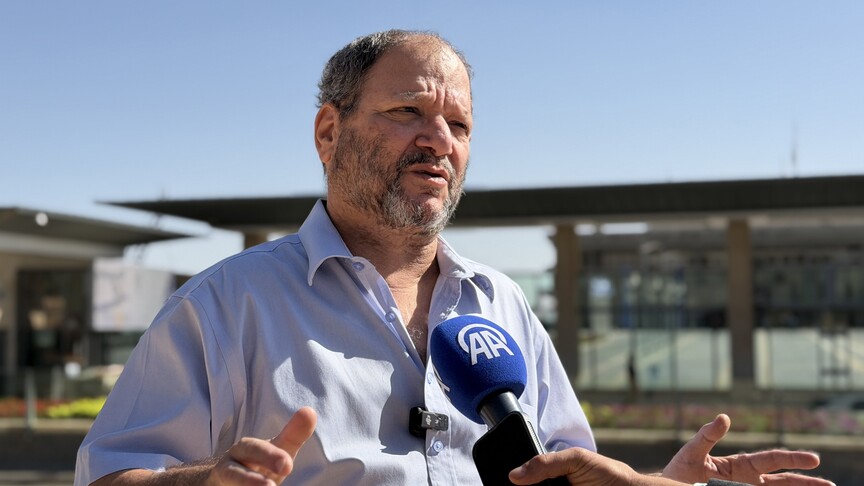
Lawmaker says Palestinian vote could be 'game-changer' in Israeli elections
Knesset member Ofer Cassif says the Arab and Palestinian citizen vote could prove decisive as elections approach.
Pezeshkian, Guterres Stress Diplomacy as Path to Regional Peace
Iranian President Masoud Pezeshkian and UN Secretary-General António Guterres emphasized dialogue as the way to resolve regional disputes.
Gulf Cooperation Council Condemns Houthi Missile and Drone Attacks on Saudi Arabia
The GCC called the strikes a 'flagrant violation' of Saudi sovereignty and a threat to civilian safety and regional stability.
Comments
Loading comments…