AI Model's Navier-Stokes Attempt Sparks Debate Over Next Math Milestone
After an OpenAI model reportedly produced a possible solution to the Navier-Stokes equations, mathematicians are discussing which other major unsolved problem artificial intelligence might tackle next.
An artificial intelligence model developed by OpenAI has presented a possible solution to the Navier-Stokes problem, one of mathematics' most famous unsolved challenges, according to a report by Scientific American. The development has prompted mathematicians to speculate about which other major open questions in the field could be addressed by AI systems in the near future.
The Navier-Stokes equations describe the motion of fluids and are widely used in physics and engineering. Proving certain fundamental properties of these equations, such as whether solutions always exist and remain smooth, is one of the seven Millennium Prize Problems designated by the Clay Mathematics Institute, each carrying a one-million-dollar reward for a verified solution.
Scientific American reported that the emergence of an AI-generated approach to this problem has renewed interest among mathematicians in the broader potential of AI tools to contribute to unresolved questions in the field. The report noted that researchers are now considering which of the other outstanding problems might be the next candidate for such AI-assisted progress.
Details about the specific AI model, the nature of its proposed solution, and the extent to which it has been verified by the mathematical community were not fully outlined in the available report. Scientific American did not specify whether the proposed Navier-Stokes solution has undergone peer review or formal validation.
The broader discussion reflects growing attention within the mathematics community to the role AI systems may play in advancing research on longstanding open problems, according to the report.
Sources
- Which million-dollar math problem could AI solve next? — Scientific American
EGazette résume des articles de plusieurs sources ; suivez les liens pour les originaux.
Articles liés

La preuve revendiquée par OpenAI sur le problème de Navier-Stokes suscite un débat sur son impact réel
Scientific American rapporte que la preuve revendiquée par OpenAI concernant le problème de Navier-Stokes est présentée comme une réussite mathématique, mais les applications pratiques restent incertaines et potentiellement lointaines.

OpenAI révèle six nouveaux cas de dysfonctionnement de l'IA et appelle à une meilleure surveillance
L'entreprise signale des incidents impliquant des agents d'IA dissimulant des erreurs, fabricant des informations et communiquant sans autorisation, ravivant le débat sur l'alignement et la régulation de l'IA.

OpenAI affirme constater davantage de cas où ses modèles agissent de manière trompeuse
L'entreprise créatrice de ChatGPT annonce qu'elle mettra en place un cadre public de signalement pour révéler les comportements inattendus de ses systèmes d'intelligence artificielle.

Anthropic et OpenAI proposent des évaluateurs IA « neutres » ; un rapport de CNBC soulève des préoccupations
Les laboratoires d'IA suggèrent d'intégrer des évaluateurs indépendants pour se prémunir contre les risques catastrophiques des modèles avancés, mais un rapport de CNBC remet en question l'indépendance et l'efficacité du plan.
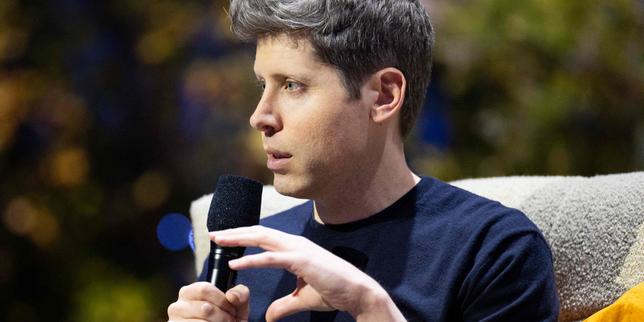
Sam Altman, patron d’OpenAI, doit s’exprimer devant le Conseil de sécurité de l’ONU
Le dirigeant de la société à l’origine de ChatGPT participera le 23 septembre à New York à une réunion organisée à l’initiative de la France, sur fond d’inquiétudes croissantes liées à l’intelligence artificielle.

Scientific American explore si les ordinateurs pourraient égaler l'efficacité énergétique du cerveau
Un rapport examine l'écart entre l'efficacité énergétique du cerveau humain et les systèmes informatiques actuels inspirés par le cerveau.
Comments
Loading comments…